WHY MAKE IT
A little comfort, a lot of flavor.
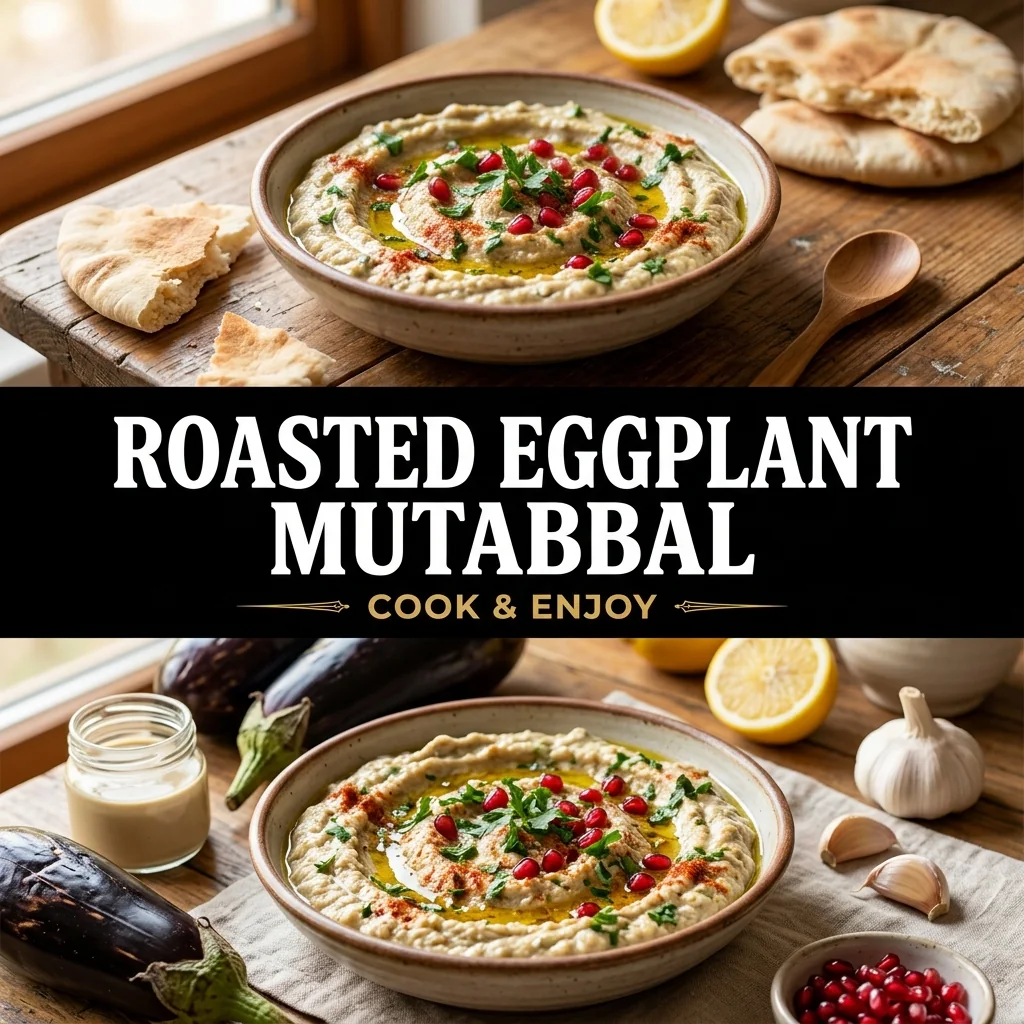
Mutabbal is a cornerstone of Levantine mezze culture, revered for its smoky depth and velvety, luxurious consistency. While often confused with baba ganoush, authentic mutabbal distinguishes itself by the generous addition of sesame tahini paste and creamy yogurt, which enrich the roasted vegetable pulp into a silky, pale emulsion. Broiling the eggplants until their outer skins are charred black imbues the interior with an alluring campfire smokiness that balances the rich nutty sesame paste, sharp grated garlic, and bright lemon juice. Finished with fruity extra virgin olive oil and vibrant pomegranate arils, this traditional plant-forward appetizer makes an extraordinary centerpiece for shared meals alongside warm pita bread.
The Importance of Char and Draining
The signature character of mutabbal relies entirely on high-heat charring. Whether roasted over an open gas flame or under an intense oven broiler, the skin must blister, blacken, and collapse until paper-thin. This process caramelizes natural plant sugars while releasing aromatic woodsmoke essence into the interior pulp. Once roasted, slicing the eggplants and letting them rest in a colander extracts excess vegetable water. Eggplants contain significant moisture that, if left unextracted, dilutes the tahini dressing and introduces a harsh, bitter aftertaste that ruins the dip's delicate balance.
Texture: Fork-Mashed vs. Pureed
A common mistake when preparing mutabbal at home is turning to a food processor or immersion blender. Mechanically pureeing the eggplant shears its long, delicate fibers into a gummy, watery paste and can aerate the tahini into an unpleasantly heavy mayonnaise-like texture. Traditional culinary technique favors hand-chopping the warm pulp on a board and mashing it into the emulsified tahini base using a sturdy fork. This preserves juicy, tender strands of eggplant that suspend gracefully within the nutty sesame sauce, delivering rich mouthfeel with distinct artisanal character.
Tahini and Yogurt Integration
The dressing for mutabbal must be mixed before combining with the vegetable pulp. Tahini paste often separates in the jar and requires thorough stirring from the bottom to redistribute its natural sesame oils. Whisking tahini with fresh lemon juice initially causes it to seize and stiffen, but continued whipping with Greek yogurt, minced garlic, and olive oil produces a velvety, pale cream. Adding a modest spoonful of halal-suitable Greek yogurt introduces lactic tang and softens the earthy bitterness of the sesame seed paste, producing an exceptionally well-rounded finish.
Before you start
Do not fear deeply blackening the skin of the eggplants. That dramatic char is where the essential smoky flavor originates, permeating the sweet interior flesh while it steams in its own skin. Allowing the opened eggplants to drain in a colander for the full 20 minutes is equally critical; removing this watery, bitter fluid concentrates the roasted flavor and prevents the finished mutabbal from separating into a soupy dip.
THE RECIPE
Roasted Eggplant Mutabbal
4 servings · 15 minutes preparation · 40 minutes cooking · 20 minutes cooling, chilling or resting
Ingredients
Step-by-step instructions
- Adjust the top oven rack to sit 4 inches below the broiler element and preheat the oven broiler to high, lining a sturdy rimmed baking sheet with heavy-duty aluminum foil.
- Rinse and dry the eggplants, then pierce each eggplant 6 to 8 times all over using the tines of a fork to prevent pressure buildup during roasting.
- Place the whole eggplants on the prepared baking sheet and roast under the high broiler for 35 to 40 minutes, using metal tongs to turn them every 10 minutes, until the skins are completely charred, black, and papery, and the flesh collapses softly.
- Transfer the blackened eggplants to a colander set over a large bowl, make a deep lengthwise slit down the center of each with a paring knife, and let them rest for 20 minutes so excess bitter liquid drains away as they cool.
- Using a large spoon, scrape the soft, smoky eggplant pulp from the charred skins, discarding large seed clusters and any burnt skin fragments; place the pulp onto a cutting board and roughly chop.
- In a medium ceramic bowl, combine 1/3 cup of tahini, 3 tablespoons of lemon juice, the grated garlic, 3 tablespoons of Greek yogurt, 3/4 teaspoon of sea salt, 1/4 teaspoon of cumin, and 1 tablespoon of extra virgin olive oil, whisking vigorously until the sauce turns creamy and pale.
- Add the chopped roasted eggplant pulp to the tahini sauce and mash firmly with a dinner fork or potato masher for 2 minutes until thoroughly emulsified yet visibly textured, avoiding a smooth puree.
- Taste the mutabbal and adjust with additional salt or lemon juice if needed, then transfer to a wide, shallow serving bowl.
- Use the back of a spoon to create shallow circular swirls on the surface, drizzle the remaining 1 tablespoon of extra virgin olive oil into the groves, and garnish with pomegranate arils, chopped parsley, and Aleppo pepper before serving.
Kitchen notes
Do not fear deeply blackening the skin of the eggplants. That dramatic char is where the essential smoky flavor originates, permeating the sweet interior flesh while it steams in its own skin. Allowing the opened eggplants to drain in a colander for the full 20 minutes is equally critical; removing this watery, bitter fluid concentrates the roasted flavor and prevents the finished mutabbal from separating into a soupy dip.
Storage & make-ahead
Transfer leftover mutabbal to an airtight glass container, smooth the top, and drizzle a very thin layer of olive oil over the surface to prevent oxidation. Refrigerate within 2 hours of preparation and consume within 3 days. Do not freeze, as the emulsion of tahini, yogurt, and vegetable fiber breaks down completely upon defrosting.
An original recipe guide inspired by themes in our Pinterest research. Recipe has not been independently kitchen-tested. AI-generated image is illustrative; your finished dish may look different.
Frequently asked questions
What is the difference between Mutabbal and Baba Ganoush?
While both dishes feature fire-roasted mashed eggplant, mutabbal prominently incorporates sesame tahini and often yogurt, giving it a creamy, pale, and rich profile. Authentic baba ganoush generally omits tahini, instead combining the smoky eggplant with chopped tomatoes, onions, walnuts, parsley, and pomegranate molasses for a lighter, salad-like consistency.
Can I roast the eggplants on a stovetop gas burner?
Yes, roasting eggplants directly over the open flame of a gas burner is an excellent traditional technique. Place the pierced eggplants directly onto the burner grates over medium flame, turning frequently with metal tongs for 15 to 20 minutes until the skin is entirely charred and the center is soft.
Can I make mutabbal dairy-free without yogurt?
Yes, you can omit the Greek yogurt entirely for a dairy-free version. Simply replace the yogurt with an additional tablespoon of tahini and 1 tablespoon of cold water to achieve the desired creamy consistency, adjusting the lemon juice and salt slightly to maintain the dip's bright acidity.