WHY MAKE IT
A little comfort, a lot of flavor.
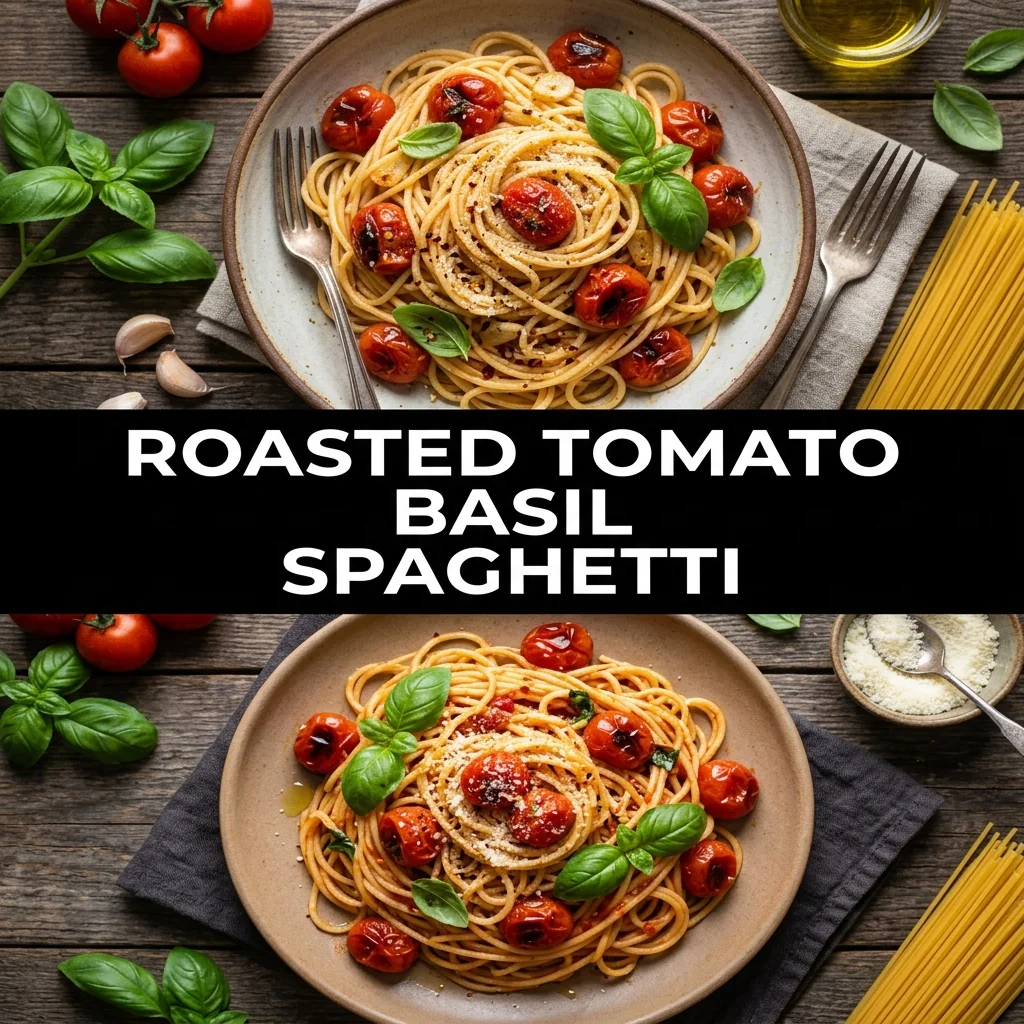
Roasted tomato basil spaghetti demonstrates how dry oven heat can transform simple summer produce into a luxurious, naturally sweet pasta sauce. Rather than slowly stewing canned tomatoes on the stovetop, roasting high-moisture cherry or grape tomatoes condenses their natural sugars through gentle evaporation, blistering their skins and creating charred, smoky flavor notes. When these concentrated pan drippings mingle with fruit-forward extra-virgin olive oil, gently softened garlic slivers, and starchy pasta cooking water, they emulsify into a light yet clingy sauce without a drop of butter or cream. Finished with pungent Pecorino Romano and an abundance of hand-torn sweet Genovese basil right at the end of cooking, this dish represents classic Italian home cooking at its purest and most fragrant.
The Science of Oven-Roasting Tomatoes
Cherry and grape tomatoes work well for roasting because they are easy to halve and give sweet, concentrated juices. At 400 F (204 C), moisture evaporates and the cut edges begin to brown. Roast until softened and blistered rather than relying on deep browning on every piece. Balsamic vinegar contributes sweet-tart flavor.
Emulsifying Pasta Water and Olive Oil
The key to binding roasted tomatoes to smooth spaghetti lies in mechanical agitation and starch chemistry. Spaghetti cooked slightly underdone releases amylose starch into the boiling water. When a measured splash of this cloudy water enters the sauté pan alongside extra-virgin olive oil and crushed roasted tomatoes, rapid tossing coats every strand. The starch molecules suspend the oil droplets within the tomato juices, transforming watery pan runoff into a cohesive, velvety glaze. Never rinse cooked pasta, as washing away the surface starch prevents this critical emulsion from adhering.
Basil Handling and Cheese Pairings
Fresh sweet basil leaves are remarkably delicate and bruise easily under a dull blade, which causes dark oxidation and releases bitter compounds. Tearing the leaves by hand directly over the skillet preserves their aromatic essential oils until the final toss. Pecorino Romano, crafted from sheep's milk, delivers a sharp, salty contrast that cuts through the caramelized sweetness of the blistered tomatoes. If you prefer a milder, nuttier finish, aged Parmigiano-Reggiano serves as an admirable alternative. Stir the grated cheese in off high heat to prevent stringiness.
Before you start
Avoid crowding the tomatoes on a small sheet pan, which traps moisture and causes the fruit to steam rather than roast. Using an 18-by-13-inch rimmed half-sheet pan gives each tomato half adequate space to caramelize. If using tomatoes with tough skins, gently mashing half of them in the pan creates enough rich liquid to coat the spaghetti while leaving the remaining half intact for satisfying textural contrast throughout the final dish.
THE RECIPE
Roasted Tomato Basil Spaghetti
4 servings · 15 minutes preparation · 35 minutes cooking · 5 minutes cooling, chilling or resting
Ingredients
Step-by-step instructions
- Preheat the oven to 400 F (204 C) with a rack set in the center. Line a large 18-by-13-inch rimmed baking sheet with parchment paper to catch the bubbling tomato juices and make cleanup effortless.
- Spread the halved cherry tomatoes across the prepared baking sheet in a single layer. Drizzle with 2 tablespoons of extra-virgin olive oil, then sprinkle evenly with the kosher salt, black pepper, and balsamic vinegar, tossing gently with clean hands to coat thoroughly.
- Roast the seasoned tomatoes in the preheated oven for 25 to 30 minutes until skins blister, burst, and show deep caramelization along the edges. Remove the sheet pan from the oven and let rest on a cooling rack for 5 minutes.
- While the tomatoes finish roasting, bring 4 quarts of generously salted water to a rapid rolling boil in an 8-quart stockpot over high heat. Add the spaghetti and cook for 8 to 9 minutes until just short of al dente, reserving 3/4 cup starchy cooking water before draining.
- Heat the remaining 2 tablespoons of olive oil in a wide 12-inch straight-sided sauté pan over medium-low heat. Add the sliced garlic and crushed red pepper flakes, cooking gently for 2 minutes until the garlic softens and turns pale golden, being careful not to brown it.
- Tip the roasted tomatoes and all their concentrated pan juices into the garlic oil. Press about half of the blistered tomatoes with the back of a wooden spoon to release their juices, creating a rustic, chunky sauce base that simmers over low heat for 2 minutes.
- Add the drained spaghetti, torn basil leaves, and 1/4 cup of reserved pasta cooking water directly into the skillet. Toss vigorously over medium heat for 2 minutes until glossy and emulsified. Stir in the Pecorino Romano cheese, adding extra pasta water if needed, and serve immediately.
Kitchen notes
Avoid crowding the tomatoes on a small sheet pan, which traps moisture and causes the fruit to steam rather than roast. Using an 18-by-13-inch rimmed half-sheet pan gives each tomato half adequate space to caramelize. If using tomatoes with tough skins, gently mashing half of them in the pan creates enough rich liquid to coat the spaghetti while leaving the remaining half intact for satisfying textural contrast throughout the final dish.
Storage & make-ahead
Cool leftover spaghetti and transfer to an airtight container within 2 hours of serving. Store refrigerated for up to 4 days. When ready to reheat, warm the pasta in a skillet over medium heat with 2 tablespoons of water or chicken broth, tossing frequently until the pasta reaches 165 F (74 C). Avoid freezing this dish, as thawed cooked spaghetti becomes mushy and the roasted tomato skins turn unpleasantly leathery.
An original recipe guide inspired by themes in our Pinterest research. Recipe has not been independently kitchen-tested. AI-generated image is illustrative; your finished dish may look different.
Frequently asked questions
Can I use large vine-ripened tomatoes instead of cherry tomatoes?
Yes, though you should cut them into uniform 1-inch chunks and remove excess seeds before roasting. Large tomatoes carry higher water content, so roast them 5 to 10 minutes longer to evaporate surplus moisture and achieve comparable sweetness and skin caramelization.
Why should I tear the basil rather than slicing it with a knife?
Tearing is a convenient way to keep the leaves in larger pieces. A sharp knife also works well; prepare basil just before adding it and avoid prolonged cooking to preserve its fresh aroma.
Is it essential to use the pasta cooking water?
Yes, starchy pasta water is the vital bonding agent for oil-based sauces. Its dissolved starches and salt emulsify with the roasting juices and olive oil, ensuring the sauce clings tightly to the spaghetti rather than pooling uselessly at the bowl bottom.