WHY MAKE IT
A little comfort, a lot of flavor.
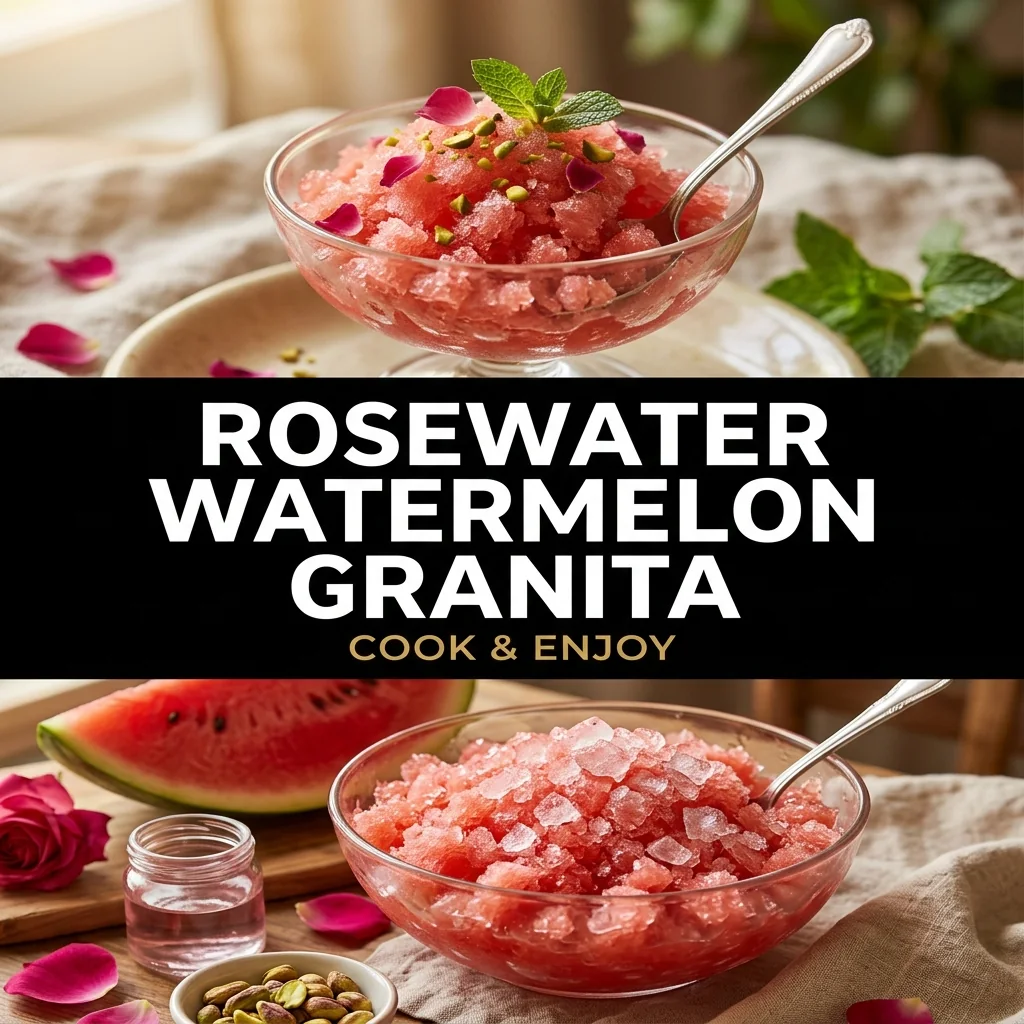
Rosewater watermelon granita is a revitalizing frozen dessert that marries the natural cooling properties of ripe summer watermelon with the subtle floral elegance of distilled rosewater. Originating conceptually from Sicilian semi-frozen treats, granita is defined by its distinctive coarse, flaky ice crystals, achieved through periodic fork-scraping rather than machine churning. Sweet summer watermelon provides abundant natural hydration and vibrant color, requiring only a modest addition of sugar to balance freezing temperatures, which naturally dull sweetness on the palate. A splash of freshly squeezed lime juice sharpens the melon flavor, while a pinch of mineral salt grounds the aromatic floral profile. Light, clean, and completely alcohol-free, this granita provides an uplifting finish to any feast.
Sugar Ratios in Frozen Desserts
The balance of sugar in granita dictates its final physical structure. Sugar acts as a natural antifreeze by lowering the freezing point of water. If too little sugar is present, the puree freezes into an impenetrable block of dense ice that resists scraping. Conversely, an excess of sugar prevents the liquid from crystalizing firmly, yielding a sticky slush rather than distinct, sparkling flakes. The specified three tablespoons of sugar perfectly balance the natural Brix sweetness of ripe watermelon.
Culinary Rosewater Dosing
Culinary rosewater is produced via the steam distillation of fresh rose petals, yielding a concentrated floral essence. Because aromatic thresholds are exceptionally sensitive, caution is necessary during measurement. The rosewater should float gently in the background, complementing the crisp sweetness of watermelon rather than dominating it with perfumed intensity. Pairing rosewater with the acidity of fresh lime juice tempers soapy floral notes, transforming the aroma into a balanced, sophisticated bouquet.
The Scraping Technique
Proper texture hinges on regular mechanical agitation during the freezing cycle. Unlike sorbet, which requires continuous mechanical churning to minimize ice crystal size, granita celebrates visible crystalline shards. Scraping every forty-five minutes with the tines of a fork breaks apart freezing planes before they fuse into solid mass. Pulling ice from the chilled pan edges toward the center ensures uniform crystallization, resulting in delicate, snow-like flakes that melt instantaneously upon tasting.
Before you start
Use a shallow metal pan rather than glass or ceramic; metal conducts cold rapidly, speeding freezing and yielding finer crystalline flakes. Culinary rosewater varies significantly in intensity by producer. Begin with 1 teaspoon if your rosewater is potent, as excessive floral water can overpower the clean melon sweetness. If the granita freezes into a solid block overnight, rest the pan at room temperature for 10 minutes before scraping vigorously with a fork.
THE RECIPE
Rosewater Watermelon Granita
4 servings · 15 minutes preparation · 0 minutes cooking · 240 minutes cooling, chilling or resting
Ingredients
Step-by-step instructions
- Place fresh seedless watermelon cubes, granulated sugar, fresh lime juice, culinary rosewater, and fine sea salt into a high-speed blender container.
- Purée on high speed for 60 seconds until completely liquified and no fruit chunks remain.
- Pour pureed watermelon mixture through a fine-mesh strainer into a 9x13-inch shallow metal baking pan to remove excess fibrous pulp, ensuring liquid depth is under 1 inch.
- Place the pan uncovered on a level shelf in the freezer and rest undisturbed for 60 minutes until ice crystals begin forming around the perimeter.
- Remove pan and use the tines of a dinner fork to scrape frozen edges into the slushy center, breaking up large ice sheets.
- Return pan to freezer and scrape thoroughly with a fork every 45 minutes for 180 additional minutes (240 minutes total freezing rest) until completely transformed into fluffy, dry crystalline ice flakes.
- Spoon fluffy granita into chilled glass coupe bowls, garnish each serving with fresh mint leaves, and serve immediately.
Kitchen notes
Use a shallow metal pan rather than glass or ceramic; metal conducts cold rapidly, speeding freezing and yielding finer crystalline flakes. Culinary rosewater varies significantly in intensity by producer. Begin with 1 teaspoon if your rosewater is potent, as excessive floral water can overpower the clean melon sweetness. If the granita freezes into a solid block overnight, rest the pan at room temperature for 10 minutes before scraping vigorously with a fork.
Storage & make-ahead
Store granita directly in the freezer inside an airtight container for up to 5 days. Before serving stored granita, rake the surface firmly with a metal fork to loosen compacted ice crystals and restore its original fluffy, crystalline texture.
An original recipe guide inspired by themes in our Pinterest research. Recipe has not been independently kitchen-tested. AI-generated image is illustrative; your finished dish may look different.
Frequently asked questions
Can I omit the sugar completely to make a lighter granita?
Eliminating sugar entirely causes the watermelon puree to freeze into a solid block of ice that cannot be flaked with a fork. Sugar is essential to depress the freezing point and create delicate, scrapeable ice crystals.
Why did my granita turn into a dense slush instead of flakes?
A dense slush indicates that the freezer temperature is not cold enough or sugar content was too high. Ensure your freezer is set to 0 F (-18 C) or lower, and measure sweeteners precisely to allow firm ice crystals to form.
Can I prepare this granita with yellow or orange watermelon?
Yes. Yellow or orange seedless watermelon works wonderfully and provides a striking visual presentation. The sweetness and water content are virtually identical, so no modifications to the lime juice or rosewater measurements are required.