WHY MAKE IT
A little comfort, a lot of flavor.
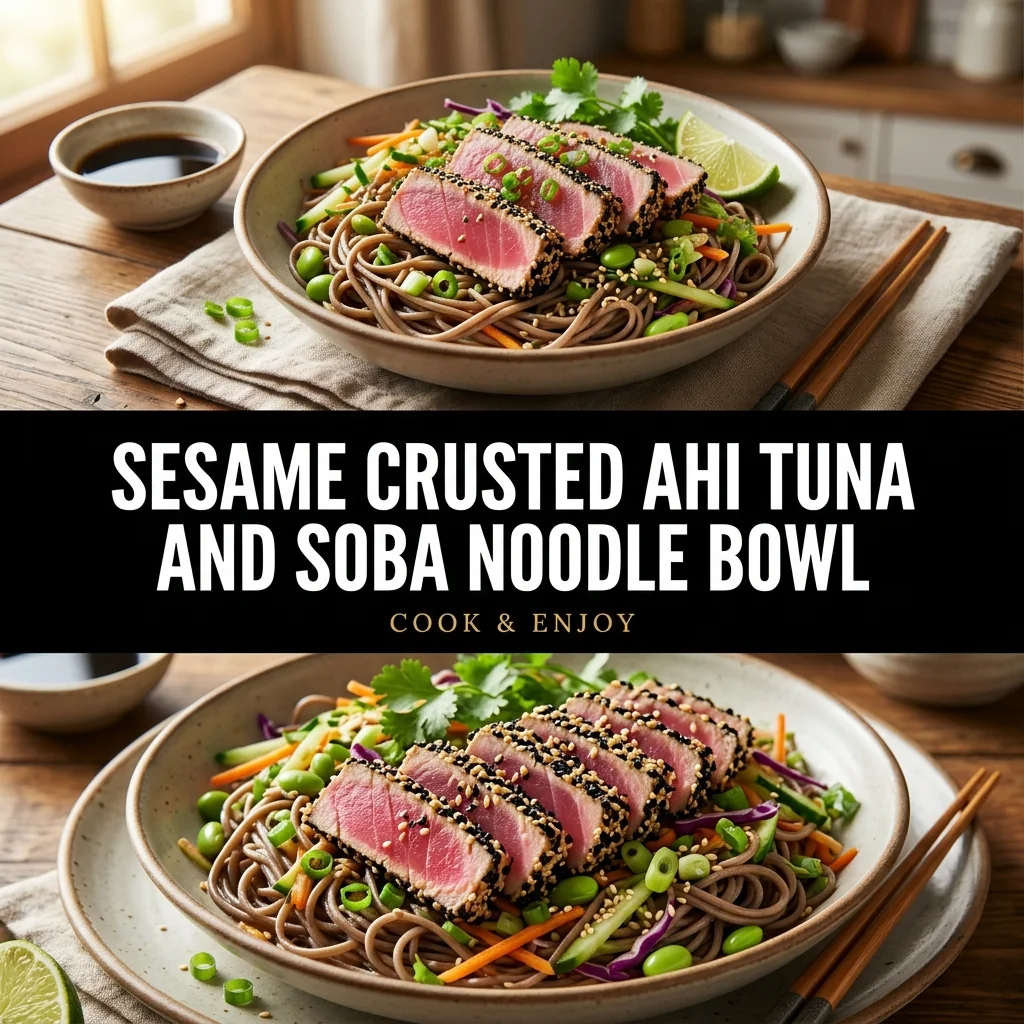
Sesame Crusted Ahi Tuna and Soba Noodle Bowl presents a harmonious synthesis of savory depth, nutty aroma, and crisp refreshment. The focal point is fresh ahi tuna, coated in a mosaic of black and white sesame seeds, seared to an internal temperature of 145°F (63°C) to ensure tender, flaky fish with a crisp seed shell. Resting underneath is a nest of earthy buckwheat soba noodles, rinsed chilled to preserve their distinct chew. Crisp ribbons of English cucumber and slivered scallions lend garden freshness, while a piquant ginger-soy dressing ties the bowl together with citrusy acidity, warming ginger, and rich toasted sesame oil.
Handling and Cooking Ahi Tuna
Selecting fresh, high-quality ahi tuna steaks guarantees a clean, oceanic flavor that shines alongside toasted seeds. Thoroughly blotting moisture from the exterior of the fish with paper towels is essential before applying the sesame seed coating. Excess moisture creates steam in the skillet, preventing the seeds from adhering and crisping properly. Searing in high smoke-point avocado oil creates a uniform, toasted exterior while allowing the thick fillet to gently reach the required safe internal temperature of 145°F (63°C) without drying out the flaky flesh.
Mastering Buckwheat Soba Texture
Buckwheat noodles carry an earthy, nutty profile, but their lack of dense gluten requires precise timing to avoid a mushy result. Cook the noodles in unsalted boiling water just until tender to the tooth. As soon as cooking finishes, dumping them directly into a colander and vigorously washing them with cold running water stops carryover cooking. This physical agitation washes off the sticky external starch that would otherwise turn the noodles clumpy, leaving silky strands that absorb the fragrant soy-ginger dressing effortlessly.
Building the Balanced Dressing
The dressing relies on the classic balance of umami, acid, sweetness, and heat. Naturally brewed halal-certified soy sauce forms a robust foundation, layered with freshly squeezed lime juice for a vibrant lift. Freshly grated ginger supplies spicy warmth, smoothed by a touch of pure maple syrup. Whisking in toasted sesame oil creates a temporary emulsion that clings evenly to both the chilled soba strands and shaved cucumber ribbons, unifying the aquatic and terrestrial elements of the dish.
Before you start
To prevent buckwheat soba noodles from becoming gummy, wash them thoroughly in cold water immediately after draining. Rinsing strips away surface starches and yields clean, separate strands. When slicing the sesame-crusted tuna, use a single smooth drawing stroke with a sharp knife rather than a sawing motion, which preserves the delicate sesame crust and maintains clean, appealing medallions.
THE RECIPE
Sesame Crusted Ahi Tuna and Soba Noodle Bowl
4 servings · 25 minutes preparation · 12 minutes cooking · 10 minutes cooling, chilling or resting
Ingredients
Step-by-step instructions
- Bring 3 quarts of water to a rolling boil in a large pot over high heat, add 8 ounces of dry buckwheat soba noodles, cook for 5 minutes until tender yet firm, then drain thoroughly in a colander.
- Rinse the boiled soba noodles immediately under cold running water for 60 seconds to halt cooking and eliminate excess starch, then submerge them in a bowl of ice water for 5 minutes before draining dry.
- Whisk together 1/4 cup halal-certified soy sauce, 1 tablespoon toasted sesame oil, 2 tablespoons fresh lime juice, 1 tablespoon grated fresh ginger, and 1 tablespoon maple syrup in a medium bowl until the dressing is fully integrated.
- Pat the ahi tuna steaks thoroughly dry using paper towels, season both sides with 1/4 teaspoon fine sea salt, and brush with the remaining 1 tablespoon of toasted sesame oil.
- Combine the white and black sesame seeds on a wide shallow plate, then press all sides of each tuna fillet firmly into the seeds to create an even, dense crust.
- Heat 1 tablespoon avocado oil in a 12-inch heavy stainless steel skillet over medium-high heat until shimmering, lay the tuna steaks down, and cook for 3 to 4 minutes per side until the seeds are toasted and the fish reaches an internal temperature of 145°F (63°C).
- Transfer the cooked tuna to a cutting board to rest for 5 minutes, then slice against the grain into 1/3-inch thick medallions using a very sharp chef's knife.
- Toss the chilled soba noodles with half of the ginger soy dressing, divide into four wide serving bowls, arrange cucumber ribbons and scallions alongside, fan the sliced tuna on top, and drizzle with remaining dressing.
Kitchen notes
To prevent buckwheat soba noodles from becoming gummy, wash them thoroughly in cold water immediately after draining. Rinsing strips away surface starches and yields clean, separate strands. When slicing the sesame-crusted tuna, use a single smooth drawing stroke with a sharp knife rather than a sawing motion, which preserves the delicate sesame crust and maintains clean, appealing medallions.
Storage & make-ahead
Store leftover sliced tuna and dressed soba noodles in separate sealed containers in the refrigerator within 2 hours. Enjoy the noodles within 2 days and the cooked fish within 24 to 48 hours for optimal flavor and food safety. Soba noodles are best enjoyed chilled; do not freeze cooked buckwheat noodles, as their structural integrity breaks down completely upon thawing.
An original recipe guide inspired by themes in our Pinterest research. Recipe has not been independently kitchen-tested. AI-generated image is illustrative; your finished dish may look different.
Frequently asked questions
Are all soba noodles gluten-free?
Not necessarily. Many commercial brands blend buckwheat flour with standard wheat flour for structure. If gluten is a concern, check the ingredient panel carefully to locate packages made from one hundred percent pure buckwheat.
Can I use a non-stick skillet for searing the sesame-crusted fish?
Yes, a heavy non-stick or cast-iron skillet works well. Just ensure the pan is sufficiently preheated so the sesame seeds toast into a crunchy crust without absorbing excess cooking oil.
What if my tuna steaks are thinner than one inch?
Thinner steaks will cook much faster. Reduce the cooking time to roughly 2 minutes per side and monitor closely with an instant-read thermometer until the internal temperature reaches 145°F (63°C).