WHY MAKE IT
A little comfort, a lot of flavor.
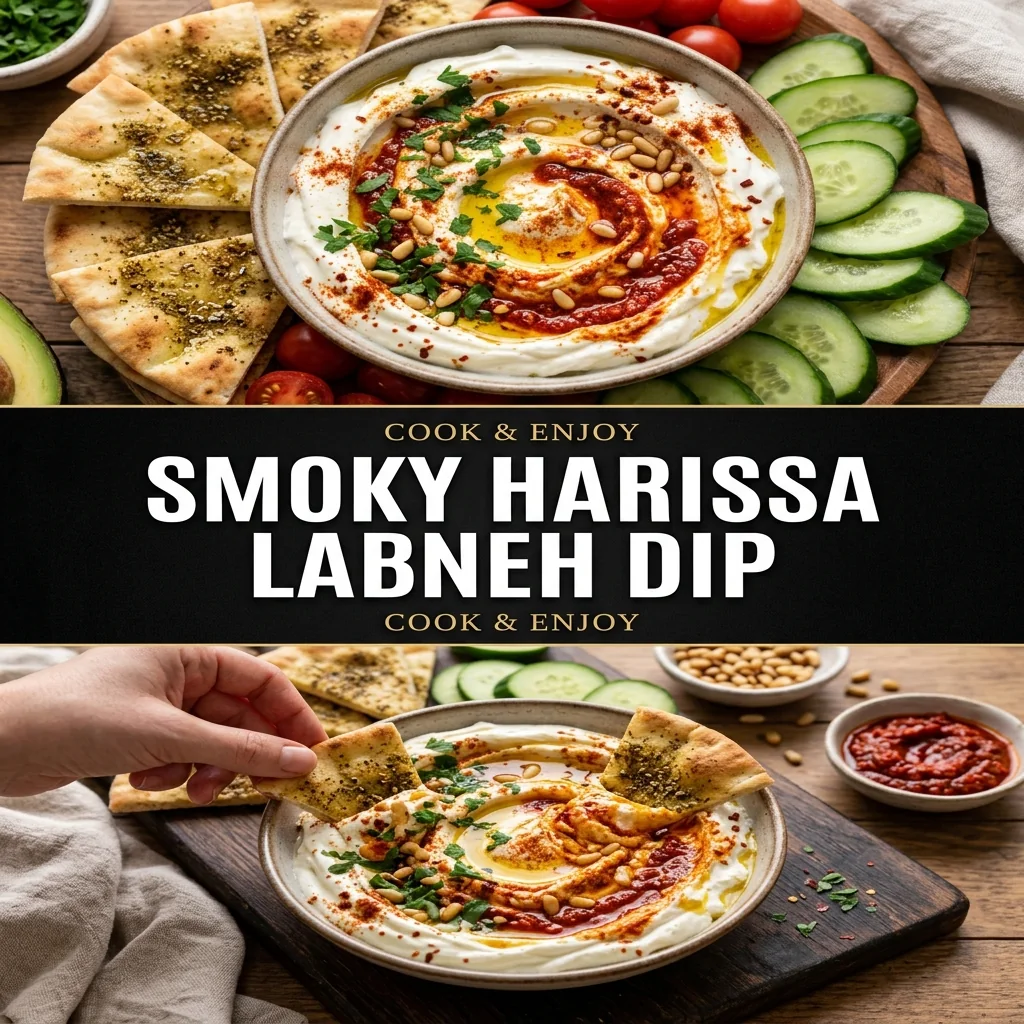
Smoky harissa labneh dip unites the cooling, dense tang of traditional Middle Eastern strained yogurt with the assertive, fiery warmth of aromatic spiced oil. Labneh, renowned for its spreadable cream-cheese consistency and probiotic brightness, serves as the canvas for this dip. The dairy's natural acidity provides balance against rich olive oil infused with North African harissa, smoked paprika, toasted cumin, and earthy coriander. A scattering of golden, buttery pine nuts introduces essential textural contrast, while fresh mint leaves cut through the savory fat. Beautifully plated in swirling ridges, this vibrant shared appetizer requires only a few minutes of stovetop infusion yet offers extraordinary complexity when paired with hot hearth breads.
Understanding Quality Labneh
Authentic labneh is produced by straining whole milk yogurt until the bulk of liquid whey separates, leaving behind a thick, dense spread with microbial cultures and clean lactic tartness. When purchasing commercial varieties, verify that only milk, active cultures, and salt are listed on the label. If commercial labneh is unavailable, you can substitute whole-milk Greek yogurt strained through several layers of cheesecloth over a colander in your refrigerator for 12 hours. This density is essential to prevent the warm spiced oil from dissolving the base.
The Art of Spiced Oil Infusion
Warming extra virgin olive oil with whole spices and chili paste blooms fat-soluble flavor compounds that remain dormant at cold temperatures. The low-heat sizzle extracts the rich capsanthin pigments from smoked paprika and harissa, resulting in a brilliant crimson oil that pools cleanly in the ridges of the dip. Toasting the raw pine nuts directly in this oil extracts their natural nut essences into the fat while roasting their exteriors to a tender crunch, creating a cohesive, deeply aromatic topping.
Plating and Texture Contrast
Visual appeal in Mediterranean mezze relies heavily on contrasting colors and dynamic textures. By using the curved back of a soup spoon in sweeping circular motions, you create peaks and troughs that cradle the seasoned oil rather than allowing it to run off the edges. The interplay between chilled, tangy yogurt and warm, peppery oil awakens the palate. Adding fresh herbs right before serving prevents the delicate mint leaves from wilting against the residual warmth of the pan.
Before you start
Control your stovetop heat diligently when warming the spiced oil. Harissa paste contains ground chilis, garlic, and tomato or pepper concentrates, which can turn bitter and acrid if exposed to high temperatures. Swirling the pan constantly keeps the pine nuts golden and prevents the ground cumin and smoked paprika from burning. Pouring the warm oil directly over chilled labneh creates an exquisite thermal and sensory contrast that elevates the presentation.
THE RECIPE
Smoky Harissa Labneh Dip
6 servings · 15 minutes preparation · 5 minutes cooking
Ingredients
Step-by-step instructions
- In a medium mixing bowl, whisk together 2 cups labneh, grated garlic, 1 tbsp olive oil, 1 tbsp lemon juice, and 1/4 tsp flaky sea salt until silky and light.
- Spread the seasoned labneh across a wide, shallow serving bowl or rimmed plate, using the back of a large spoon to create deep, decorative swooshes and valleys.
- Heat a small stainless steel skillet over medium-low heat and add the remaining 2 tbsp extra virgin olive oil.
- Add 2 tbsp raw pine nuts to the warm oil and toast for 2 to 3 minutes, swirling the pan continuously until the nuts turn light golden brown.
- Reduce the heat to low, then add 2 tbsp harissa paste, 1/2 tsp smoked paprika, 1/4 tsp ground cumin, and 1/4 tsp ground coriander directly into the warm oil.
- Stir the spiced oil mixture for 1 minute until fragrant and bubbling gently, taking care not to scorch the dry spices.
- Remove the skillet from the heat source and allow the spiced oil to settle for 60 seconds.
- Spoon the warm harissa oil and toasted pine nuts generously into the grooves and crevices of the chilled labneh.
- Garnish the top with fresh torn mint leaves and the remaining 1/4 tsp flaky sea salt, then serve immediately alongside warm pita bread.
Kitchen notes
Control your stovetop heat diligently when warming the spiced oil. Harissa paste contains ground chilis, garlic, and tomato or pepper concentrates, which can turn bitter and acrid if exposed to high temperatures. Swirling the pan constantly keeps the pine nuts golden and prevents the ground cumin and smoked paprika from burning. Pouring the warm oil directly over chilled labneh creates an exquisite thermal and sensory contrast that elevates the presentation.
Storage & make-ahead
Store leftover labneh dip in a sealed airtight glass container in the refrigerator for up to 4 days. As it sits, the red chili oil will slowly permeate the surface of the yogurt, intensifying the garlic and smoke profiles. Serve leftovers cold or allow them to sit at room temperature for 15 minutes before dipping. Discard any portions left at room temperature longer than 2 hours.
An original recipe guide inspired by themes in our Pinterest research. Recipe has not been independently kitchen-tested. AI-generated image is illustrative; your finished dish may look different.
Frequently asked questions
Can I adjust the heat level of this dip?
Yes. Harissa pastes vary dramatically in spice levels depending on the brand and region of origin. For a milder dip, reduce the harissa paste to 1 tablespoon and increase the smoked sweet paprika by a half teaspoon to maintain rich color without excess heat.
What is the best way to reheat leftovers?
This dip should not be reheated as a whole, because heating labneh causes the strained dairy proteins to split and weep liquid. Enjoy leftovers chilled directly from the refrigerator, or let it temper slightly at cool room temperature for 15 minutes before serving.
Can I substitute walnuts or almonds for the pine nuts?
Crushed raw walnuts or slivered blanched almonds make wonderful alternatives. Toast them gently in the olive oil over low heat for 3 to 4 minutes following the same technique until fragrant and lightly browned before adding the harissa paste.