WHY MAKE IT
A little comfort, a lot of flavor.
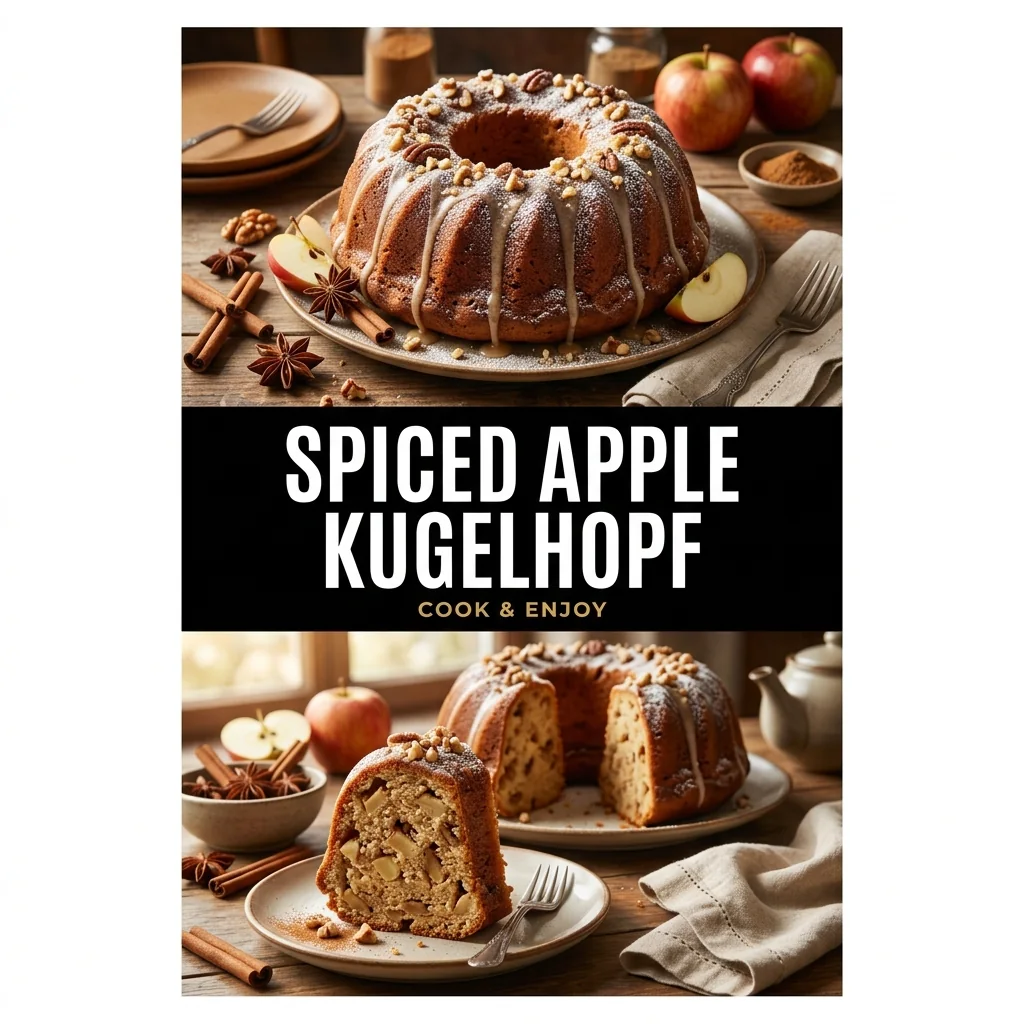
The spiced apple kugelhopf bridges the boundary between artisanal brioche and celebratory European tea cake. Baked in a distinctive high-walled fluted pan with a central chimney, this yeasted cake features an airy, pillowy crumb enriched with generous amounts of butter and farm-fresh eggs. Crisp diced apples melt into tender fruit pockets during baking, perfumed by cinnamon and freshly ground nutmeg. Plump golden raisins scattered throughout offer bursts of natural sweetness against the buttery dough, while whole blanched almonds bake into the fluted crests for decorative crunch. Mastering this cake requires attentive yeast fermentation and systematic butter emulsion, yielding a refined, aromatic bake worthy of festive morning spreads or elegant dessert tables.
Managing Brioche-Style Dough Hydration
A traditional kugelhopf dough contains considerably more moisture, butter, and eggs than standard bread dough, making it notoriously sticky during early mixing. Resist the temptation to dump excess flour into the bowl, which converts a delicate, airy crumb into heavy, dry bread. Rely instead on prolonged mechanical kneading in a stand mixer. As gluten proteins intertwine, the glossy dough naturally cleans the sides of the bowl, transforming from a loose paste into an elastic, supple web capable of trapping steam.
Preventing Fruit Sinkage
Heavy diced fruit routinely sinks to the bottom of rich yeast batters if incorporated improperly. Peeling the apple and dicing it into uniform, modest third-inch cubes ensures the fruit cooks through completely without weeping excess water. Tossing the diced apples and plumped raisins in a portion of dry all-purpose flour creates a thin exterior coating that grips the moist dough webbing. This simple mechanical friction suspends the spiced fruit evenly from bottom crown to fluted tip.
Pan Preparation and Almond Placement
The visual majesty of a kugelhopf depends on its clean demolding. Fluted pans contain dozens of deep crevices where sticky dough can weld during baking. Use softened butter applied with a pastry brush to coat every corner thoroughly. Placing blanched almonds into the lowest grooves creates a decorative ring on the demolded crown. When the cake finishes baking, invert it after precisely ten minutes; leaving it longer allows trapped steam to soften the caramelized crust.
Before you start
Butter incorporation requires patience when making rich yeasted doughs. Never add butter until your initial flour-and-egg mixture develops baseline gluten strength. Cold butter causes greasy separation, while liquid melted butter ruins dough structure; use pliable room-temperature cubes. Plumping golden raisins in hot water prevents them from siphoning hydration from the tender crumb during baking. Generously butter every groove of the fluted pan to guarantee a clean release for your almond-crested peaks.
THE RECIPE
Spiced Apple Kugelhopf
10 servings · 35 minutes preparation · 45 minutes cooking · 120 minutes cooling, chilling or resting
Ingredients
Step-by-step instructions
- Whisk warm milk, yeast, and 1 tablespoon of granulated sugar in the bowl of a stand mixer fitted with a dough hook; let stand for 10 minutes until foamy.
- Add remaining granulated sugar, 3 cups of all-purpose flour, salt, 1/2 teaspoon ground cinnamon, ground nutmeg, eggs, and alcohol-free vanilla extract; mix on low speed for 3 minutes until a soft, sticky dough forms.
- Add softened butter two tablespoons at a time on medium-low speed, incorporating each addition before adding the next, then knead for 8 minutes until dough is silky, glossy, and elastic.
- Toss diced apples and drained raisins with the remaining 1/2 cup flour and remaining 1/2 teaspoon ground cinnamon in a small bowl; fold into the kneaded dough on low speed until evenly distributed.
- Cover mixer bowl with a damp towel and let dough rise in a warm, draft-free spot for 75 minutes until doubled in bulk.
- Brush an 8-to-10-cup traditional fluted kugelhopf or Bundt pan generously with melted butter, place one blanched almond into the bottom groove of each fluted ridge, then punch down the dough.
- Shape dough into a smooth ring with a hole in the center, lower it into the prepared pan, press gently to settle, cover loosely with oiled plastic wrap, and let rise for 45 minutes until dough reaches just below the rim.
- Bake at 375 F (190 C) for 40 to 45 minutes until dark golden brown and an internal probe thermometer reads 195 to 200 F (90 to 93 C), tenting with foil after 25 minutes if browning quickly.
- Cool in pan on a wire rack for 10 minutes, invert onto the rack, brush the warm crown lightly with melted butter, cool completely, and dust with powdered sugar before slicing.
Kitchen notes
Butter incorporation requires patience when making rich yeasted doughs. Never add butter until your initial flour-and-egg mixture develops baseline gluten strength. Cold butter causes greasy separation, while liquid melted butter ruins dough structure; use pliable room-temperature cubes. Plumping golden raisins in hot water prevents them from siphoning hydration from the tender crumb during baking. Generously butter every groove of the fluted pan to guarantee a clean release for your almond-crested peaks.
Storage & make-ahead
Keep cooled kugelhopf wrapped snugly in foil or stored inside a cake dome at room temperature for up to 3 days. To refresh day-old slices, toast lightly in a toaster oven or warm covered in a 300 F (150 C) oven for 6 to 8 minutes. Reheat any perishable leftovers thoroughly to 165 F (74 C). Transfer to airtight storage within 2 hours.
An original recipe guide inspired by themes in our Pinterest research. Recipe has not been independently kitchen-tested. AI-generated image is illustrative; your finished dish may look different.
Frequently asked questions
Can I bake this kugelhopf in a standard Bundt pan?
Yes, a standard 10-cup fluted Bundt pan works exceptionally well. Butter the ridges thoroughly and place the blanched almonds into the bottom indentations exactly as you would with a traditional ceramic kugelhopf mold.
Why did my dough take longer than 75 minutes to double?
Enriched doughs laden with butter and eggs rise much slower than lean bread doughs. If your kitchen ambient temperature is below 70 F (21 C), move the covered bowl to an unheated oven with the interior light switched on.
Can I let the shaped dough rise overnight in the refrigerator?
Yes, after shaping the dough in the pan, cover it tightly with oiled wrap and refrigerate overnight. Bring the pan to room temperature for 60 to 75 minutes before baking to allow the chill to dissipate and final expansion to occur.