WHY MAKE IT
A little comfort, a lot of flavor.
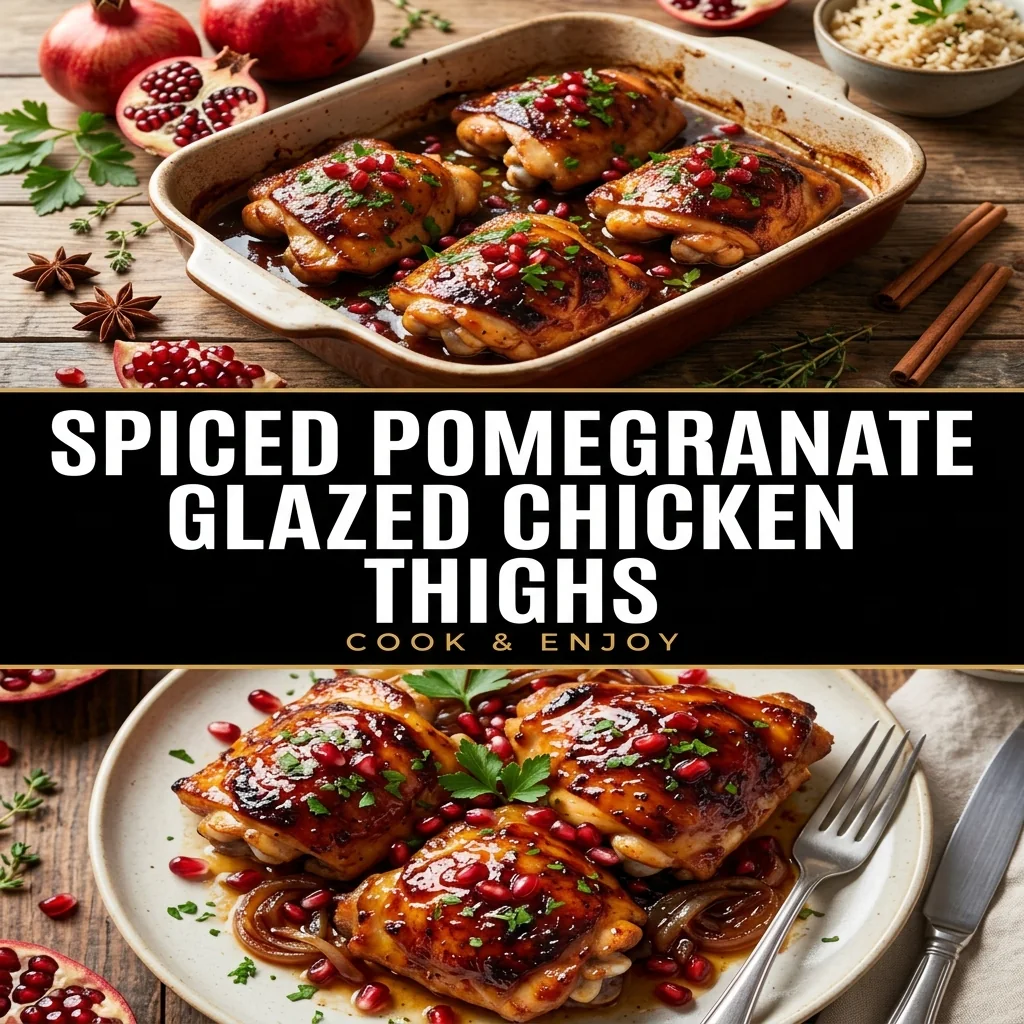
Pomegranate molasses is a cornerstone of Levantine cooking, offering an intensely concentrated sweet-tart profile that elevates simple roasted meats. In this recipe, the dark, tangy syrup is paired with warm spices—fragrant allspice, earthy cumin, pungent garlic, and sharp cracked black pepper—to create an irresistible glaze for bone-in chicken thighs. As the chicken roasts, rendered fat blends with the fruit reduction, developing a sticky, savory crust with a glossy sheen. The natural acidity of pomegranate cuts through the rich chicken skin, balancing each bite with bright, tangy complexity. Finished with fresh crunchy pomegranate seeds and chopped parsley, this stunning skillet roast delivers impressive culinary sophistication using straightforward weeknight roasting methods.
Understanding Pomegranate Molasses
True pomegranate molasses consists solely of fresh pomegranate juice boiled down into a thick, dark, pourable syrup. When purchasing, check the ingredient panel carefully to confirm it contains only pure pomegranate juice, citric acid, or a small trace of salt, avoiding commercial versions packed with high-fructose corn syrup, artificial food colors, or added cane sugar. Genuine molasses possesses an intensely tart, almost astringent bite that balances the savory, fatty richness of chicken skin without making the finished dinner unpleasantly sweet.
Achieving Sticky, Crisp Chicken Skin
Skin preparation determines whether your roast chicken achieves a sticky glaze or becomes soggy. Thoroughly patting the poultry dry with paper towels eliminates surface moisture, which allows rendered fat to fry the skin beneath the glaze. Roasting on a rimmed baking sheet with ambient spacing promotes convection airflow. Adding chicken broth to the bottom of the pan prevents dripping sugars from smoking while supplying steam that keeps the interior meat exceptionally juicy throughout the forty-minute oven cooking duration.
Pairing and Presentation Ideas
The bold, tangy-sweet flavors of pomegranate glaze harmonize effortlessly with warm grain salads, such as toasted bulgur pilaf, jeweled basmati rice, or seasoned couscous. Roast seasonal vegetables alongside the poultry—thickly sliced fennel, carrots, and red onions caramelize wonderfully when tossed in the pan drippings. For a fresh, vibrant contrast, serve a crisp side salad featuring bitter greens like wild arugula or baby spinach, tossed with a simple lemon juice and cold-pressed olive oil vinaigrette.
Before you start
Pomegranate molasses contains naturally concentrated fruit sugars that can scorch quickly if subjected to extreme dry heat too early in the roasting cycle. Dividing the glaze into two applications prevents burning while building deep color. Applying the first coating lightly provides base seasoning, while painting the second thick layer during the final 15 minutes of roasting creates a deep, mahogany, lacquer-like shine that remains glossy and aromatic without bitter charring.
THE RECIPE
Spiced Pomegranate Glazed Chicken Thighs
4 servings · 15 minutes preparation · 40 minutes cooking · 10 minutes cooling, chilling or resting
Ingredients
Step-by-step instructions
- Preheat the oven to 400 F (204 C) and line a rimmed baking sheet or shallow roasting pan with parchment paper.
- Pat the chicken thighs thoroughly dry on both sides using paper towels to ensure the skin crisps effectively during roasting.
- In a small mixing bowl, whisk together the pomegranate molasses, extra-virgin olive oil, minced garlic, cracked black pepper, sea salt, ground allspice, cumin, and cinnamon.
- Place the chicken thighs skin-side up on the prepared baking sheet, leaving at least 1 inch of space between each piece for even airflow.
- Brush both sides of the chicken thighs generously with half of the prepared pomegranate glaze mixture, reserving the remaining half in the bowl.
- Pour the 1/4 cup of halal chicken broth carefully into the base of the pan around the chicken pieces to prevent pan drippings from burning.
- Roast in the center of the preheated oven for 25 minutes until the skin begins to brown.
- Remove the baking sheet from the oven, brush the remaining glaze thickly over the top skin of each thigh, and return to the oven for an additional 15 minutes.
- Confirm the thickest part of the meat reaches an internal temperature of at least 165 F (74 C) away from the bone.
- Transfer the chicken to a warm serving platter and let rest for 10 minutes before scattering with fresh pomegranate arils and chopped parsley.
Kitchen notes
Pomegranate molasses contains naturally concentrated fruit sugars that can scorch quickly if subjected to extreme dry heat too early in the roasting cycle. Dividing the glaze into two applications prevents burning while building deep color. Applying the first coating lightly provides base seasoning, while painting the second thick layer during the final 15 minutes of roasting creates a deep, mahogany, lacquer-like shine that remains glossy and aromatic without bitter charring.
Storage & make-ahead
Store leftover chicken thighs in a shallow airtight container in the refrigerator within 2 hours of roasting. Consume within 3 to 4 days. To reheat while preserving crisp skin, place thighs on a foil-lined baking tray in a 350 F (177 C) oven for 12 to 15 minutes until warmed through to 165 F (74 C). Microwaving is possible but softens the caramelized skin.
An original recipe guide inspired by themes in our Pinterest research. Recipe has not been independently kitchen-tested. AI-generated image is illustrative; your finished dish may look different.
Frequently asked questions
Can I use boneless chicken breasts instead?
Yes, but bake them at 375 F (190 C) for only 18 to 22 minutes to prevent drying out. Bone-in thighs provide superior moisture retention and tolerate the sticky reduction better, but breasts can succeed if checked closely with a meat thermometer to ensure 165 F (74 C).
Where can I purchase authentic halal pomegranate molasses?
Halal pomegranate molasses is readily available at Middle Eastern grocery stores, international supermarkets, or well-stocked halal food retailers. Look for imported brands from Lebanon, Turkey, or Syria with 100% concentrated pomegranate juice listed as the primary ingredient.
Is the cracked black pepper necessary?
Yes, the cracked black pepper is essential to balancing the syrup's sweetness. Coarsely cracked peppercorns provide sharp, biting pockets of heat that complement the sweet-tart pomegranate molasses and ground allspice far better than fine pre-ground pepper.