WHY MAKE IT
A little comfort, a lot of flavor.
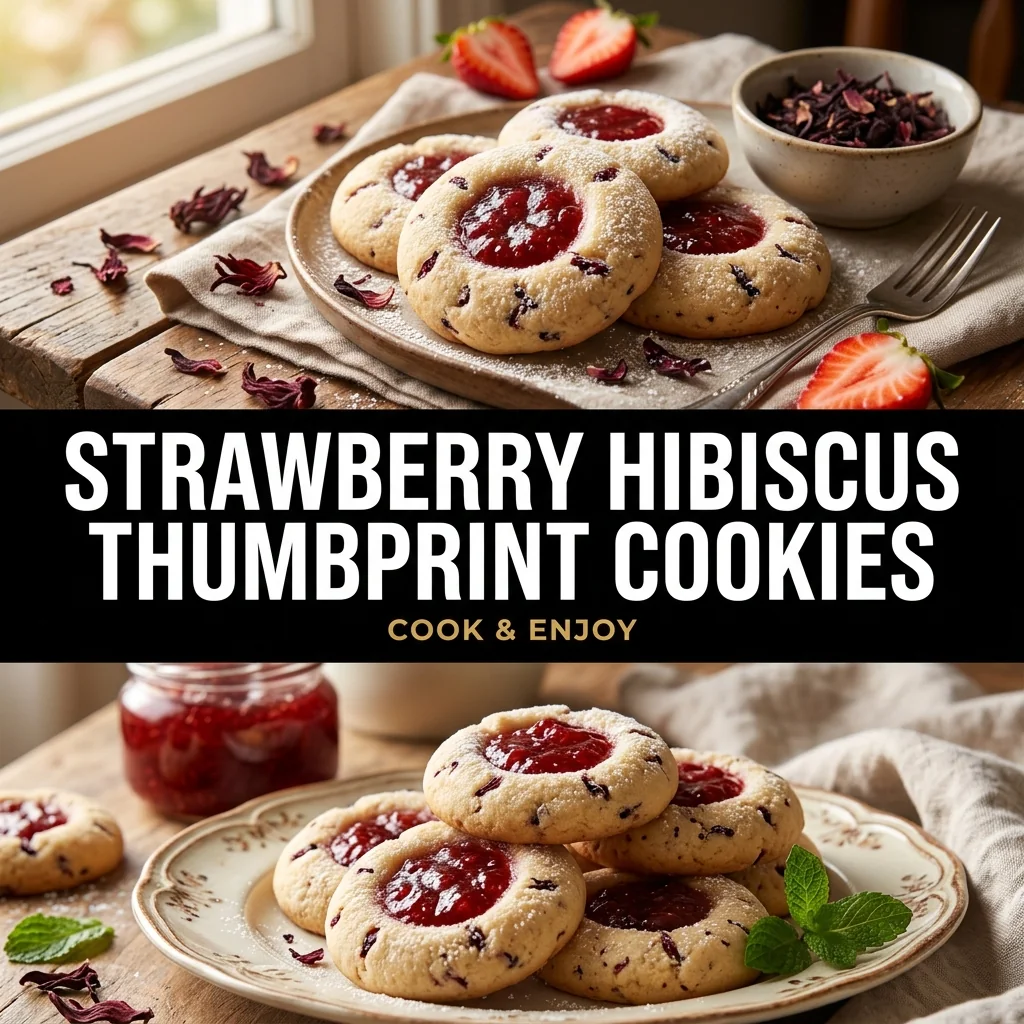
These strawberry hibiscus thumbprint cookies combine classical European shortbread technique with the vivid, botanical tartness of culinary hibiscus calyces. Dried hibiscus flowers contribute not only an intense ruby pigment to the strawberry compote but also an assertive acidity that balances the rich sweetness of sweet cream butter. The cookie base relies solely on an egg yolk to bind the flour, ensuring a tender, delicate crumb that crumbles gently rather than snapping firmly. Baked until barely pale gold around the base, the cookies preserve their buttery softness while anchoring a shimmering jewel of ruby fruit spread in each cavity. They provide an elegant, bright option for afternoon gatherings and special tea service.
Infusing Hibiscus Flavor
Culinary hibiscus calyces contain natural acids and intense anthocyanin pigments that elevate standard berry preserves. When simmered alongside fresh strawberries, the dried flowers soften and release tart, cranberry-like notes that temper the natural sugar of the ripe fruit. Straining the mixture through a fine-mesh sieve removes the fibrous petals while leaving behind a silky, ruby-tinted compote. Cooking this concentrated syrup briefly with a small starch slurry provides the necessary structure, guaranteeing the fruit filling remains stable within the cookie cavity during high-heat baking without boiling over onto the baking sheet.
Shortbread Dough Essentials
A successful thumbprint cookie starts with a balanced, tender dough that holds its structural integrity without spreading excessively. Creaming butter and sugar lightly forms an emulsion without whipping excessive air into the matrix, which helps prevent the thumbprint depression from puffing up and vanishing in the oven. Incorporating a single egg yolk introduces moisture and natural lecithin to bind the all-purpose flour without introducing water from the egg white, which would otherwise develop gluten and yield a tough, rubbery texture instead of a crumbly, melt-in-your-mouth shortbread consistency.
Forming Clean Indentations
Creating uniform depressions requires a methodical touch. Rolling dough between cool palms yields smooth spheres free from surface dry spots. Using the rounded back of a clean measuring spoon coated in a light dusting of flour or cornstarch allows you to press consistent hollows into each dough ball with minimal lateral fissures. If minor cracks form, dampening a fingertip slightly with water allows you to seal fissures before adding the jam, ensuring the filling remains neatly contained within the crater during the short baking period.
Before you start
If the dough balls crack along the edges when you press the thumbprint cavity, smooth the edges gently with clean fingertips before filling. For the deepest color and distinct berry tang, ensure the hibiscus flowers steep thoroughly during the fruit simmer so their natural pectin and malic acid extract fully. Always let the cooked jam cool completely to room temperature or chilled before filling the raw dough rounds, which prevents the butter in the shortbread from softening prematurely in the oven.
THE RECIPE
Strawberry Hibiscus Thumbprint Cookies
20 servings · 35 minutes preparation · 24 minutes cooking · 85 minutes cooling, chilling or resting
Ingredients
Step-by-step instructions
- In a small non-reactive saucepan, combine 1 1/2 cups finely chopped strawberries, 1/4 cup dried hibiscus flowers, 1/3 cup granulated sugar, 1 tablespoon fresh lemon juice, and 1 tablespoon water over medium heat.
- Simmer the fruit mixture for 8 to 10 minutes, stirring and lightly mashing the berries with a wooden spoon until soft and fragrant.
- Pour the warm strawberry mixture through a fine-mesh sieve into a bowl, pressing the solids to extract all crimson syrup and pulp, then discard the spent hibiscus flowers.
- Return the strained berry mixture to the saucepan over low heat, stir in the cornstarch slurry, and simmer for 2 minutes until noticeably thick and glossy, then transfer to a shallow bowl and chill in the refrigerator for 40 minutes to set.
- Preheat your oven to 350°F (175°C) and line two large baking sheets with parchment paper.
- In a large mixing bowl, beat 1 cup softened unsalted butter and 2/3 cup granulated sugar on medium speed for 2 minutes until creamy, then beat in 1 egg yolk, 1 teaspoon alcohol-free vanilla extract, and 1/4 teaspoon fine sea salt until combined.
- Reduce mixer speed to low and add 2 1/4 cups all-purpose flour, mixing just until a soft dough forms without overworking.
- Scoop rounded 1-tablespoon portions of dough, roll into smooth balls, place 2 inches apart on baking sheets, and gently press a rounded indentation into the center of each ball using the back of a round 1/2-teaspoon measuring spoon.
- Spoon roughly 1/2 teaspoon of chilled strawberry hibiscus jam into each indentation, bake at 350°F (175°C) for 10 to 12 minutes until cookie bottoms are faintly golden, and let cool on the pans for 15 minutes before transferring to a wire rack to cool completely for 30 minutes.
Kitchen notes
If the dough balls crack along the edges when you press the thumbprint cavity, smooth the edges gently with clean fingertips before filling. For the deepest color and distinct berry tang, ensure the hibiscus flowers steep thoroughly during the fruit simmer so their natural pectin and malic acid extract fully. Always let the cooked jam cool completely to room temperature or chilled before filling the raw dough rounds, which prevents the butter in the shortbread from softening prematurely in the oven.
Storage & make-ahead
Store cooled thumbprint cookies in an airtight container separated by parchment sheets in the refrigerator within 2 hours of baking for up to 3 to 4 days. Unbaked shaped dough balls can be frozen on a tray for 1 hour, transferred to a freezer bag for up to 2 months, and filled with jam immediately prior to baking with an added minute of oven time.
An original recipe guide inspired by themes in our Pinterest research. Recipe has not been independently kitchen-tested. AI-generated image is illustrative; your finished dish may look different.
Frequently asked questions
Where can I find culinary dried hibiscus flowers?
Dried hibiscus flowers, frequently sold under the name 'flor de Jamaica' or hibiscus tea, are available in Middle Eastern, Hispanic, and specialized spice grocers, as well as natural food supermarkets. Confirm the packaging contains pure whole or crushed dried calyces without added synthetic dyes or flavorings.
Can I use frozen strawberries for the jam filling?
Yes, frozen strawberries work smoothly in place of fresh berries. Simmer them directly from frozen with the dried hibiscus, sugar, and lemon juice, allowing an additional two to three minutes of cooking time to evaporate the extra moisture released by frozen fruit cells.
Why did my cookies spread and lose their thumbprint hollows?
Excessive spreading occurs when butter is too warm during mixing or when the dough warms up on a hot counter. If your kitchen is warm, place the shaped, unfilled dough balls on their baking sheet into the refrigerator for fifteen minutes before filling and baking.