WHY MAKE IT
A little comfort, a lot of flavor.
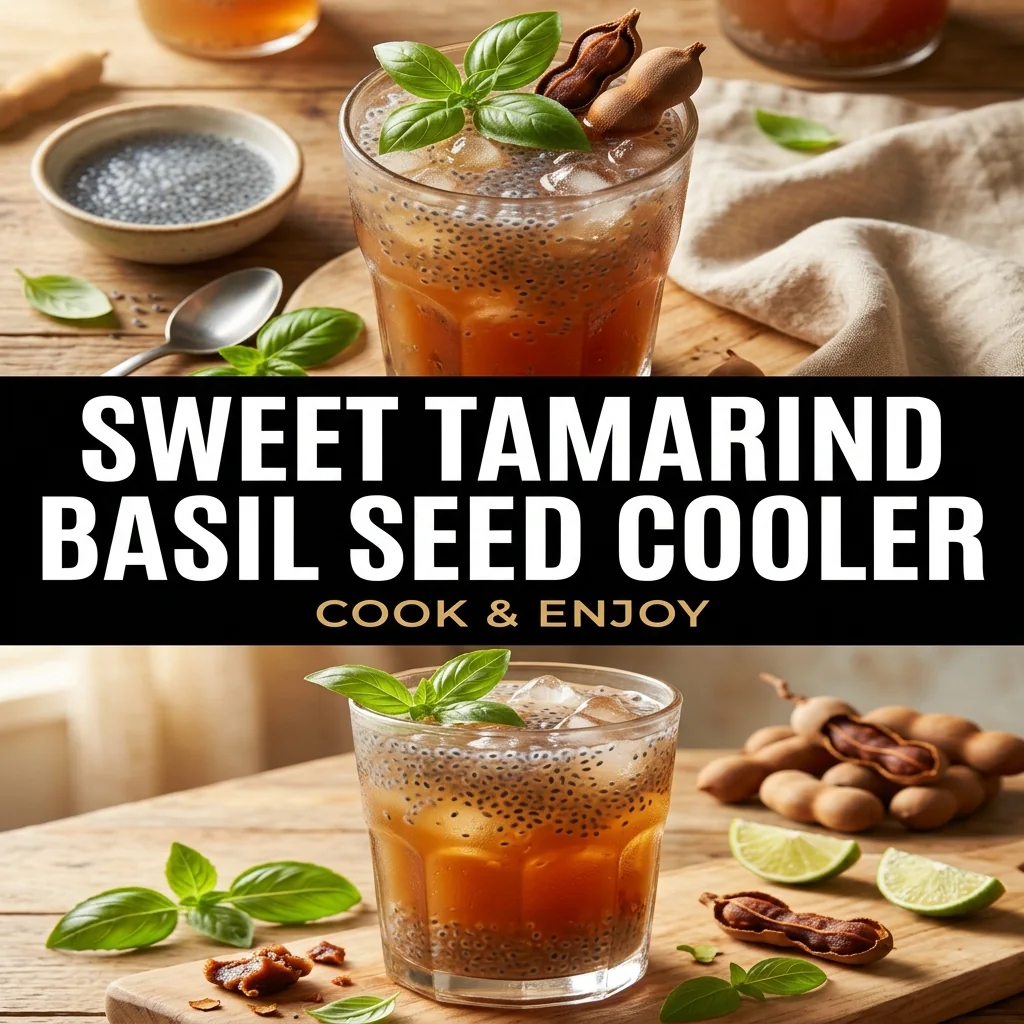
Sweet Tamarind Basil Seed Cooler offers an invigorating balance of bold tartness, earthy spice, and unique tactile texture. Tamarind fruit contains high concentrations of tartaric acid, lending a sour profile that pairs naturally with deep cane sugar and roasted cumin. Simmering tamarind pulp softens its dense fibers, allowing clean extraction of its amber nectar. When cooled and strained, this tart base is accented by hydrated sweet basil seeds (sabja), which swell in water to form soft, pearlescent spheres reminiscent of tiny boba. Popular across South Asia and the Middle East as a traditional summer refreshment, this cooler soothes the palate with its harmonious interplay of sweet, sour, and cooling botanical elements.
Working with Tamarind Pulp
Tamarind is commonly sold as a compressed, pliable block of semi-dried pulp, sometimes containing natural seed casings and fibrous strands. Chopping the block into smaller pieces increases the surface area, allowing heat and water to loosen the sticky pectin matrix during cooking. Simmering for eight minutes breaks the pulp into a thick, uniform slurry. Straining through a medium-mesh sieve separates coarse fibers while letting fine fruit solids pass through, yielding a rich, full-bodied nectar that carries deep, tangy fruit flavor without unwanted grit.
Hydrating Basil Seeds Correctly
Sweet basil seeds (sabja) possess a mucilaginous outer layer that swells rapidly upon contact with cold water. Within fifteen minutes, each tiny black seed develops a soft, clear-gray gelatinous sheath that provides a cooling sensation and light textural chew. Unlike chia seeds, which absorb liquid more slowly and form a thick, clumping gel, hydrated basil seeds remain individually suspended when stirred into cold liquids. Ensure adequate water is provided during the soaking stage so the seeds fully expand before they are introduced to the acidic tamarind liquid.
Balancing Flavor and Temperature
Tamarind's intense sourness requires adequate sugar to create balance, but an overly sweet syrup dulls the drink's thirst-quenching qualities. The addition of a small pinch of ground roasted cumin introduces a subtle earthy note that cuts through the sweetness and complements the fruit's natural acidity. Diluting the concentrated cooked base with additional cold water produces an accessible, refreshing viscosity. Pouring the mixture over plenty of hard ice chills the beverage instantly, accentuating the tartness and preserving the clean, slippery texture of the suspended basil seeds.
Before you start
Edible sweet basil seeds (known regionally as sabja or tukmaria) hydrate very quickly compared to chia seeds, developing a soft, gelatinous exterior coating while retaining a tiny, delicate interior crunch. Ensure you source culinary-grade sweet basil seeds intended for food use rather than planting seeds, which may be treated with agricultural chemicals. If the tamarind pulp block contains stray hard seeds or shell fragments, pressing firmly through a wire sieve will cleanly separate them from the rich, sour nectar.
THE RECIPE
Sweet Tamarind Basil Seed Cooler
4 servings · 15 minutes preparation · 10 minutes cooking · 45 minutes cooling, chilling or resting
Ingredients
Step-by-step instructions
- Place 1 tablespoon of sweet basil seeds into a small glass bowl, pour 1/2 cup of cold water over them, stir once to submerge, and let rest undisturbed for 15 minutes until fully hydrated into plump, translucent-rimmed pearls.
- In a 2-quart stainless steel saucepan, combine the chopped tamarind pulp, 1/2 cup of granulated cane sugar, and 1 1/2 cups of cold water over medium heat.
- Bring the liquid to a simmer, stirring with a wooden spoon and pressing the tamarind against the bottom of the pan for 8 minutes to dissolve the sugar and break down the sticky pulp into a smooth slurry.
- Remove the pan from the heat, stir in 1/4 teaspoon of ground roasted cumin, and allow the tamarind mixture to cool at room temperature for 15 minutes, then refrigerate for 30 minutes until thoroughly chilled.
- Pour the chilled tamarind mixture through a medium-mesh sieve set over a clean pitcher, using a ladle or silicone spatula to firmly rub the pulp through the mesh while trapping hard fibrous residues, then discard the fibers.
- Stir the remaining 1 cup of cold water into the strained tamarind nectar to achieve a balanced, drinkable consistency.
- Divide 2 cups of ice cubes among four 12-ounce tall glasses, spoon 2 tablespoons of hydrated basil seeds into each glass, pour the tamarind cooler over the seeds, stir gently, garnish with a mint sprig, and serve.
Kitchen notes
Edible sweet basil seeds (known regionally as sabja or tukmaria) hydrate very quickly compared to chia seeds, developing a soft, gelatinous exterior coating while retaining a tiny, delicate interior crunch. Ensure you source culinary-grade sweet basil seeds intended for food use rather than planting seeds, which may be treated with agricultural chemicals. If the tamarind pulp block contains stray hard seeds or shell fragments, pressing firmly through a wire sieve will cleanly separate them from the rich, sour nectar.
Storage & make-ahead
Store the strained tamarind nectar base in an airtight glass bottle or jar in the refrigerator for up to 5 days. Store hydrated basil seeds in a small covered container of cold water in the refrigerator for up to 3 days. Assemble with ice and fresh mint immediately before serving. Do not freeze the assembled drink, as freezing alters the delicate gelatinous halo of the hydrated seeds. Refrigerate all components promptly within 2 hours.
An original recipe guide inspired by themes in our Pinterest research. Recipe has not been independently kitchen-tested. AI-generated image is illustrative; your finished dish may look different.
Frequently asked questions
Can I use prepared bottled tamarind concentrate instead of pulp?
Yes, you can substitute 3 tablespoons of bottled pure tamarind concentrate for the pulp block. Whisk the concentrate directly with 1/2 cup of sugar and 2 1/2 cups of cold water until dissolved, omitting the simmering step, but stirring in the roasted cumin before adding the hydrated seeds.
Can chia seeds be substituted for basil seeds?
Black chia seeds can be used as an alternative if basil seeds are unavailable. Hydrate 1 tablespoon of chia seeds in 1/2 cup of water for at least 30 to 40 minutes to ensure they soften adequately, as chia seeds take longer to hydrate than sabja seeds.
What does roasted cumin add to this sweet cooler?
Ground roasted cumin adds an earthy, savory undertone that tempers the sharpness of tartaric acid in the tamarind. This traditional spice addition prevents the drink from tasting like simple fruit punch, lending a rounded, sophisticated depth common in heritage street-side coolers across warm climates.