WHY MAKE IT
A little comfort, a lot of flavor.
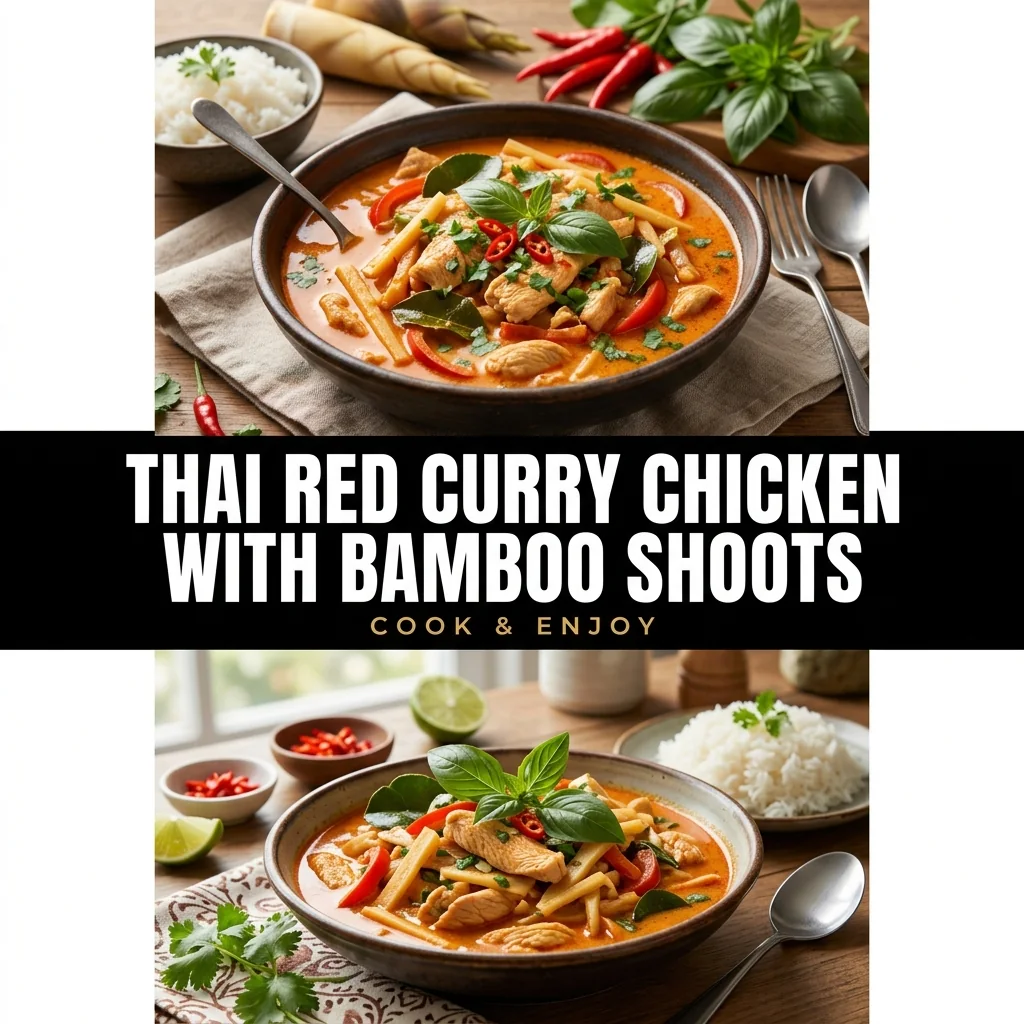
Thai red curry with chicken and bamboo shoots is an enduring classic that balances spicy, rich, savory, and herbaceous elements. In this recipe, lean chicken breast stays remarkably succulent because it cooks swiftly in an aromatic broth fortified by creamy full-fat coconut milk. Canned bamboo shoots contribute an earthy sweetness and a distinctive, pleasant crunch that offsets the tenderness of the poultry. Searing the curry paste in the natural cream from the coconut milk unlocks essential aromatics like lemongrass, galangal, and dried red chilies before the liquid base is established. Completed with torn makrut lime leaves and a generous handful of sweet Thai basil, this weeknight meal delivers vibrant restaurant-quality depth right to your kitchen dining table with minimal hands-on effort.
Selecting and Preparing Bamboo Shoots
Canned bamboo shoots are preserved in a light brine that can occasionally impart a faint metallic or acidic taste if used directly from the tin. To ensure clean flavor, tip the shoots into a colander, drain thoroughly, and rinse under cold running water for 30 seconds. For an even cleaner profile, blanch the drained shoots in boiling unsalted water for 2 minutes before incorporating them into the curry broth. This simple preparatory step allows the bamboo shoots to readily absorb the fragrant coconut curry without altering the sauce's delicate seasoning balance.
Balancing Thai Flavor Pillars
Authentic Southeast Asian curries rely on harmonizing salty, sweet, sour, and spicy profiles. The heat is dictated primarily by your chosen red curry paste, while the rich coconut milk softens sharp spices. Savory depth comes from quality halal-certified fish sauce, which provides fermented richness without unverified additives. Coconut sugar imparts a rounded, gentle sweetness that tempers the chilies better than refined white sugar. Always taste your finished sauce before serving; a quick squeeze of fresh lime juice can brighten the finish if you desire more acidity.
Serving and Accompaniments
Because this red curry produces a luscious, medium-bodied broth, it pairs best with steamed long-grain Thai jasmine rice, which absorbs the flavorful liquid readily. For lower carbohydrate alternatives, serve the curry over steamed cauliflower rice or blanched thin rice vermicelli noodles. Present the dish in wide shallow bowls, garnished with extra fresh Thai basil leaves and thin strips of fresh red chili if added heat is desired. Accompany the meal with crisp cucumber slices to provide a cooling contrast against the warming spices.
Before you start
For the most fragrant sauce, do not skip blooming the red curry paste in hot coconut cream before adding liquid. Frying the paste separates the coconut fat and cooks the raw aromatics, resulting in a glossy, vibrant red surface oil and deep flavor. If Thai sweet basil is unavailable, Italian sweet basil provides an acceptable substitute, though adding a pinch of ground star anise helps replicate that signature subtle anise aroma characteristic of traditional Thai culinary preparations.
THE RECIPE
Thai Red Curry Chicken with Bamboo Shoots
4 servings · 15 minutes preparation · 20 minutes cooking · 5 minutes cooling, chilling or resting
Ingredients
Step-by-step instructions
- Heat the virgin coconut oil in a wide 4-quart saute pan or deep skillet over medium heat.
- Spoon off 1/4 cup of the thick coconut cream from the top of the can of coconut milk and add it to the hot skillet along with the red curry paste.
- Fry the curry paste and coconut cream together over medium heat for 3 to 4 minutes, stirring constantly until the paste releases fragrant red oil droplets around the edges of the pan.
- Add the sliced chicken breast into the aromatic paste mixture and stir-fry for 3 minutes until the exterior of the meat turns completely opaque.
- Pour in the remaining coconut milk, halal chicken broth, rinsed bamboo shoots, sliced red bell pepper, and torn makrut lime leaves, stirring well to combine.
- Bring the liquid to a gentle simmer over medium-low heat and cook uncovered for 8 to 10 minutes, ensuring the chicken reaches a minimum internal temperature of 165 F (74 C) on an instant-read thermometer.
- Stir in the halal-certified fish sauce and coconut sugar, simmering for 1 additional minute to dissolve the sugar evenly throughout the curry.
- Remove the skillet from the heat source, scatter the fresh Thai basil leaves over the surface, and fold them into the broth until just wilted.
- Allow the curry to rest in the pan for 5 minutes before ladling into deep bowls alongside warm jasmine rice.
Kitchen notes
For the most fragrant sauce, do not skip blooming the red curry paste in hot coconut cream before adding liquid. Frying the paste separates the coconut fat and cooks the raw aromatics, resulting in a glossy, vibrant red surface oil and deep flavor. If Thai sweet basil is unavailable, Italian sweet basil provides an acceptable substitute, though adding a pinch of ground star anise helps replicate that signature subtle anise aroma characteristic of traditional Thai culinary preparations.
Storage & make-ahead
Cool the curry and transfer it to an airtight container within 2 hours of cooking. Store in the refrigerator for up to 3 days. Reheat gently in a saucepan over medium-low heat, stirring frequently until steaming hot and the chicken registers 165 F (74 C). Because coconut milk sauces can separate when frozen, freezing this curry is not recommended.
An original recipe guide inspired by themes in our Pinterest research. Recipe has not been independently kitchen-tested. AI-generated image is illustrative; your finished dish may look different.
Frequently asked questions
Can I use light coconut milk instead of full-fat?
Full-fat coconut milk is recommended for the richest body and authentic texture. Light coconut milk contains higher water content and will produce a thinner curry that may separate when simmered. If you must use light, reduce the added chicken broth by half.
How do I verify that my fish sauce and curry paste are halal?
Examine the packaging for recognized third-party halal certification logos. Authentic halal-certified fish sauces use clean anchovy and salt fermentation without alcohol processing aids, and certified curry pastes ensure no non-halal animal fats, wine, or unverified additives were introduced during production.
Can I replace the chicken breast with chicken thighs?
Yes, boneless skinless chicken thighs work exceptionally well. Cut the thighs into bite-sized pieces and simmer them for 12 to 14 minutes instead of 8 to 10 minutes, always confirming the internal temperature registers at least 165 F (74 C) before serving.