WHY MAKE IT
A little comfort, a lot of flavor.
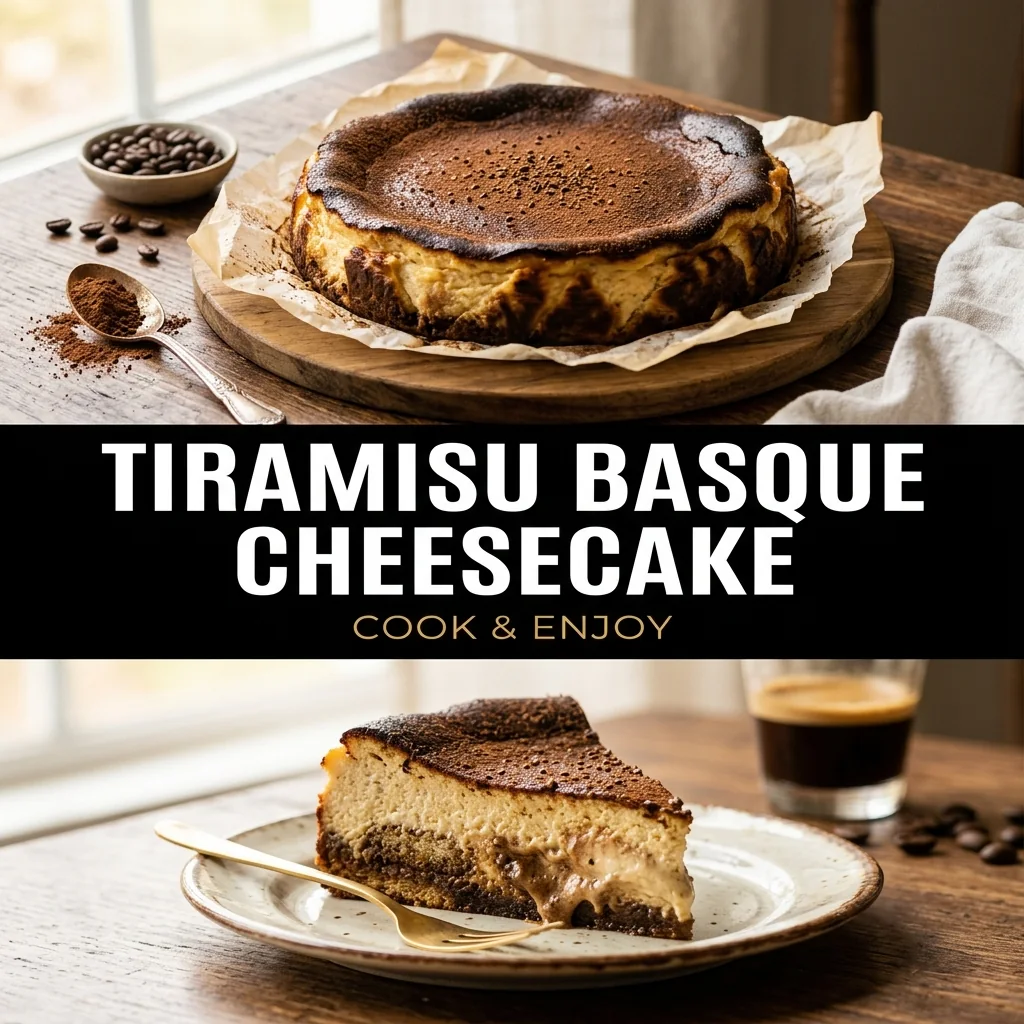
Originating in the Basque region of Spain, burnt cheesecake rejects traditional baking conventions by eschewing crusts and water baths in favor of intense direct heat. This variation marries the scorched, caramelized drama of San Sebastián with the velvety coffee-and-mascarpone architecture of classic Italian tiramisu. The inclusion of Italian mascarpone elevates the butterfat profile, producing a melting, molten center that contrasts sharply with the bitter, deeply toasted exterior. Concentrated espresso cuts through the sweet dairy richness, while dark rum echoes traditional ladyfinger soak solutions. Baked until puffed and bronzed, this dessert offers an extraordinary collision of complex toffee bitterness, dark chocolate notes, and luscious dairy cream.
Balancing Mascarpone with Standard Cream Cheese
Traditional Basque cheesecake relies solely on lactic cream cheese, which provides stability and clean acidity. Mascarpone introduces a significantly higher fat percentage and lower moisture level without cultured sourness. To preserve structural integrity while capturing authentic tiramisu flavor, this formula pairs 600 grams of firm block cream cheese with 250 grams of fresh mascarpone. This exact ratio delivers an extraordinarily silky crumb that does not collapse into grease under the oven's blistering 425°F (220°C) heat, yielding a custardy center that sets firmly upon proper refrigeration.
Mastering High-Heat Caramelization
Unlike traditional cheesecakes that demand low temperatures and steam, Basque styles harness intense dry heat to initiate the Maillard reaction and sugar pyrolysis on the top surface. The oven must be thoroughly preheated so the exterior browns before the internal eggs coagulate fully. The ideal result features a blistered, mahogany-black top and a center that remains soft and custardy when pulled from the oven. As the cake cools, the residual heat gently completes the setting process, producing a gradient from firm caramelized edge to soft core.
Dusting and Serving Parameters
Timing the cocoa application is essential for optimal visual and tactile results. If you apply the cocoa powder while the cheesecake remains warm, the butterfat on the scorched surface will dissolve the cocoa particles, creating a muddy, mottled sheen. Dust the unsweetened Dutch-process cocoa powder immediately before presentation onto a fully cooled surface. For optimal texture, remove the cheesecake from the refrigerator thirty minutes before slicing; this slight rise in temperature softens the mascarpone fat, restoring its signature spoonable creaminess.
Before you start
Do not fear the dark scorched surface; that characteristic bitter-caramel exterior is the hallmark of Basque cheesecake and provides the essential bitter contrast to the unctuous mascarpone interior. Keep the oven hot and do not reduce the temperature mid-bake. If the surface browns too fast before 40 minutes, tent loosely with foil.
THE RECIPE
Tiramisu Basque Cheesecake
10 servings · 25 minutes preparation · 50 minutes cooking · 360 minutes cooling, chilling or resting
Ingredients
Step-by-step instructions
- Adjust an oven rack to the upper-middle position and preheat your oven to 425°F (220°C). Cut two large sheets of parchment paper roughly 16 inches (40 cm) square. Lightly grease an 8-inch (20 cm) solid round cake pan or springform pan with at least 3-inch (7.5 cm) high walls.
- Overlap the two parchment sheets into the pan, pressing them firmly into the bottom and sides so the paper pleats naturally, leaving roughly 2 inches (5 cm) of overhang above the rim. Crease the folds against the metal to hold the lining securely in place.
- In a small ramekin, dissolve the instant espresso powder into the warm water, stirring thoroughly until fully liquified and free of granules. Stir in the dark rum and pure vanilla extract, then set aside to cool slightly.
- In a large mixing bowl, beat the softened cream cheese, mascarpone cheese, and granulated sugar with an electric mixer on medium speed for 2 minutes until completely uniform and glossy, ensuring you thoroughly scrape the bottom of the bowl.
- Add the whole eggs one at a time, mixing on low speed until each egg is barely incorporated. Pour in the heavy cream, the prepared espresso-rum mixture, and fine sea salt, blending on low speed until a liquid, aromatic coffee-colored custard forms.
- Sift the all-purpose flour over the batter. Whisk gently by hand until the flour is completely incorporated without residual dry streaks. Pour the thin batter into the parchment-lined pan, settling the surface evenly.
- Bake at 425°F (220°C) for 45 to 50 minutes. The top should develop a deeply browned, nearly blackened caramelized crust, while the entire center retains a pronounced, undulating jiggle when the pan is nudged. Use pasteurized eggs for this soft-centered style; the center should wobble like custard, not slosh like raw batter.
- Remove the cheesecake from the oven and set it on a wire cooling rack. The puffed crown will slowly collapse as it cools. Cool on the rack for 1 hour, then refrigerate for at least 5 hours to set the custard core.
- Prior to slicing, lift the cake gently out of the pan using the parchment overhang and peel the paper away from the dark edges. Dust the top uniformly with Dutch-process cocoa powder through a fine-mesh sieve, then cut into clean wedges.
Kitchen notes
Do not fear the dark scorched surface; that characteristic bitter-caramel exterior is the hallmark of Basque cheesecake and provides the essential bitter contrast to the unctuous mascarpone interior. Keep the oven hot and do not reduce the temperature mid-bake. If the surface browns too fast before 40 minutes, tent loosely with foil.
Storage & make-ahead
Store chilled in an airtight container for up to 4 days. Serve slightly cool or at cool room temperature for the creamiest mouthfeel. Freezing is not recommended for this particular style, as the delicate mascarpone and high-moisture custard center tend to weep liquid upon defrosting.
An original recipe guide inspired by themes in our Pinterest research. Recipe has not been independently kitchen-tested. AI-generated image is illustrative; your finished dish may look different.
Frequently asked questions
Is the top supposed to look burnt?
Yes, deep browning and localized scorch marks are deliberate. This caramelization imparts deep toffee and roasted notes that counteract the rich dairy. It should look dark mahogany to near-black in patches, not turned entirely to ash.
Why is the center of the cheesecake so loose?
Basque cheesecake has a soft custard center rather than a firm baked-cake crumb. Use the listed pasteurized eggs, bake until the edges are set and the center wobbles without sloshing, then cool and refrigerate for the full stated time. Chilling firms the dairy fats; it does not cook raw eggs.
Can I omit the alcohol in this recipe?
Yes, the dark rum can be omitted without altering the structural chemistry of the batter. Simply replace the 20 milliliters of rum with an equal volume of whole milk, brewed espresso, or heavy cream to keep total liquid ratios balanced.


