WHY MAKE IT
A little comfort, a lot of flavor.
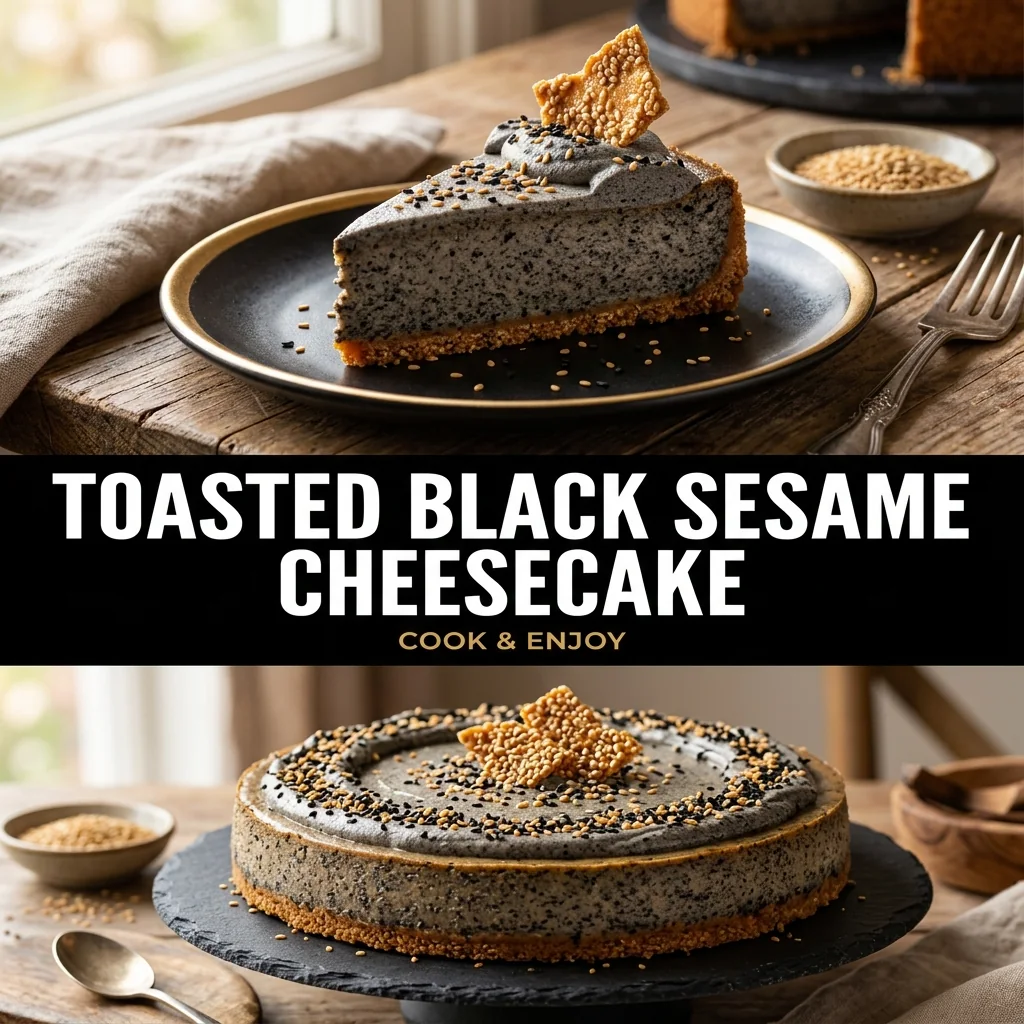
Toasted black sesame paste, known in Japanese cuisine as kurogoma, provides a deeply roasted, nutty, and slightly savory flavor profile that transforms standard cheesecake into a refined culinary dessert. The natural bitterness and rich oil content of roasted sesame seeds perfectly temper the sweetness of the sugar and the tang of the cream cheese, creating a striking slate-gray filling. Ground seeds blended into a buttery shortbread crust echo the aromatic notes found throughout the batter. Baked gently in a water bath, this dessert delivers a dense, silk-smooth crumb that balances traditional dessert richness with earthy, savory depth.
The Character of Black Sesame Paste
Pure black sesame paste consists entirely of deep-roasted unhulled black sesame seeds ground into a silky, fluid butter. Unlike white tahini, which is often made from raw or lightly toasted hulled seeds, roasted black sesame paste possesses a much smokier, bolder, and more complex taste. It contains natural oils that integrate smoothly into the cream cheese emulsion, lending not only its signature dark charcoal hue but also a velvety mouthfeel that feels luxurious on the palate without being cloying.
Textural Harmony in the Crust
Using buttery shortbread cookies rather than standard graham crackers provides a mellow, sweet backdrop that supports the robust sesame profile. Folding whole toasted black sesame seeds into the crushed cookie base introduces an enjoyable, subtle crunch that contrasts the velvety custard above. Lightly baking the crust before adding the filling seals the crumb barrier, preventing the butterfat of the wet batter from soaking into the base and ensuring the crust stays crisp after prolonged chilling.
Baking to Proper Temperature
Because black sesame batter is naturally dark, visual cues such as golden browning on the surface are difficult to detect. Instead, gauge doneness by testing the internal temperature with a digital food thermometer inserted into the center, which should register 160°F (71°C). Alternatively, observe the movement of the cake: the perimeter should appear fully matte and set, while the very center retains a slight, controlled jiggle when the roasting pan is gently shifted.
Before you start
Ensure the roasted black sesame paste is stirred thoroughly before measuring. Natural oils tend to rise to the top of the jar while dense solids settle at the base; if used unstirred, the batter will end up with an improper balance of fats and solids, leading to greasy spots or an uneven, streaky bake.
THE RECIPE
Toasted Black Sesame Cheesecake
12 servings · 25 minutes preparation · 65 minutes cooking · 420 minutes cooling, chilling or resting
Ingredients
Step-by-step instructions
- Preheat the oven to 325°F (165°C) and line the bottom of a 9-inch (23 cm) springform pan with parchment paper.
- In a bowl, mix 180 g finely crushed shortbread cookies, 25 g toasted black sesame seeds, and 65 g melted butter until evenly combined.
- Press the crumbs firmly into the bottom of the prepared springform pan and bake for 10 minutes; set aside on a wire rack to cool.
- In a stand mixer fitted with the paddle attachment, beat 680 g softened cream cheese and 160 g sugar on low speed for 3 minutes until completely smooth.
- Add 90 g roasted black sesame paste, 120 g sour cream, and 1 teaspoon alcohol-free vanilla extract, mixing on low speed until the batter turns an even, charcoal-slate color.
- Incorporate 3 room-temperature eggs one at a time, mixing on the lowest speed only until each egg is fully blended into the batter without whipping in air.
- Wrap the exterior of the springform pan with two layers of heavy-duty foil, pour the batter over the crust, and set the pan into a deep roasting tray.
- Fill the roasting tray with warm water until it reaches halfway up the side of the springform pan and bake at 325°F (165°C) for 50 to 55 minutes until the internal temperature reaches 160°F (71°C).
- Turn off the oven and let the cheesecake rest inside with the door cracked open for 60 minutes, cool at room temperature for 60 minutes, then refrigerate for at least 5 hours before garnishing with 1 tablespoon toasted black sesame seeds and slicing.
Kitchen notes
Ensure the roasted black sesame paste is stirred thoroughly before measuring. Natural oils tend to rise to the top of the jar while dense solids settle at the base; if used unstirred, the batter will end up with an improper balance of fats and solids, leading to greasy spots or an uneven, streaky bake.
Storage & make-ahead
Store the chilled cheesecake covered in the refrigerator at 35°F to 40°F (2°C to 4°C) for up to 4 days. Return any unused portions to refrigeration within 2 hours. Slices can be wrapped securely in parchment paper and aluminum foil and frozen for up to 1 month; thaw overnight in the refrigerator before serving.
An original recipe guide inspired by themes in our Pinterest research. Recipe has not been independently kitchen-tested. AI-generated image is illustrative; your finished dish may look different.
Frequently asked questions
Can I substitute white tahini for black sesame paste?
While white tahini will yield a functional cheesecake, the flavor will be significantly milder, more herbaceous, and lacking the deep, smoky roast that defines black sesame desserts. The striking charcoal color will also be lost.
Where can I find pure black sesame paste?
Look for 100% roasted black sesame paste (kurogoma paste) in East Asian specialty markets or online retailers. Check the ingredient label to ensure it contains only pure roasted black sesame seeds without added honey, sweeteners, or unverified oils.
Why did my cheesecake crack down the center?
Surface cracks usually stem from either incorporating too much air into the batter during mixing or cooling the cake too rapidly. Always mix on low speed and allow the cheesecake to rest in the cooling oven before refrigerating.


