WHY MAKE IT
A little comfort, a lot of flavor.
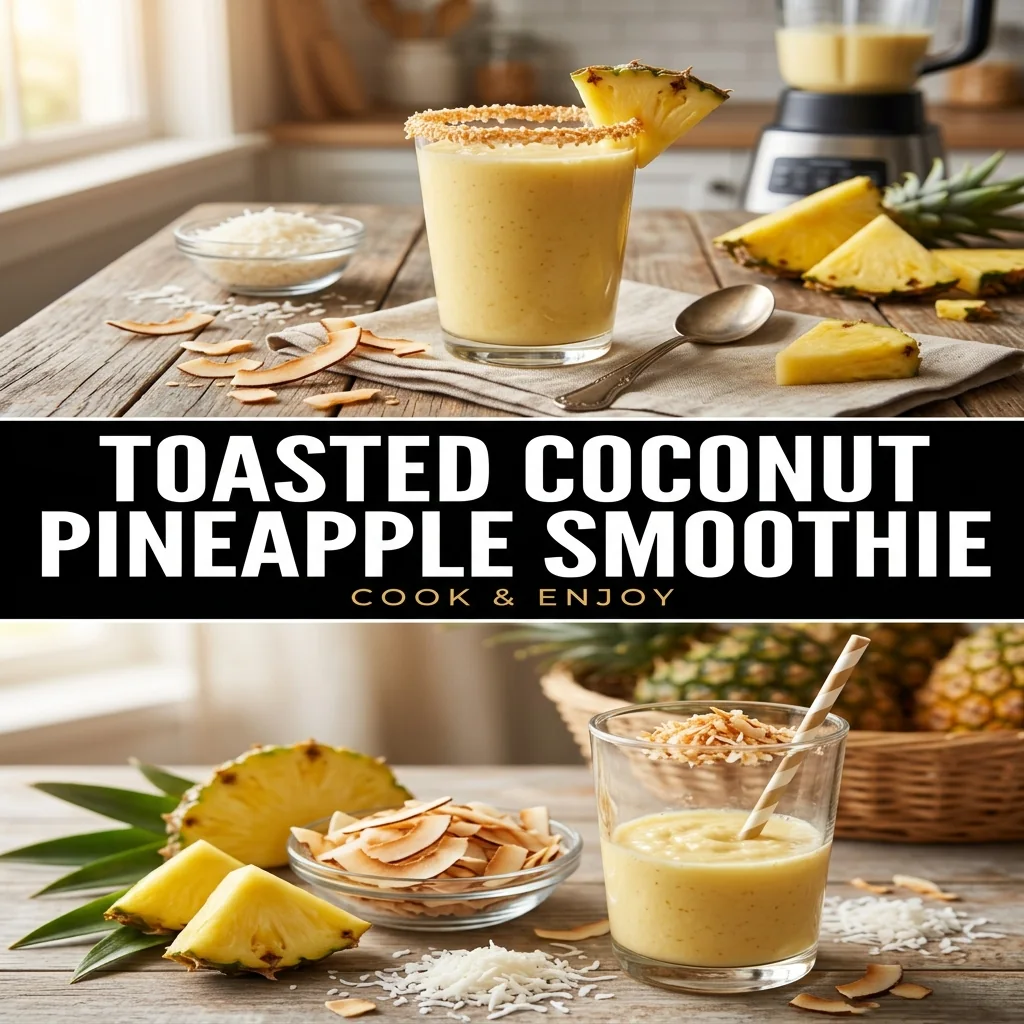
Capturing the essence of tropical fruit stands, this frosty smoothie pairs the bright acidity of frozen pineapple with the velvety body of whole coconut milk. Toasting wide-flake unsweetened coconut in a dry skillet draws out rich, nutty oils, creating a golden topping that offers crisp textural crunch against the smooth frozen purée. Pure coconut water provides light natural electrolytes and prevents the blend from becoming heavy, while a splash of fresh lime juice balances the natural sugars with citrus sharpness. Free from artificial flavorings or dairy fillers, every sip highlights authentic plant-based richness. It delivers a deeply refreshing, wholesome tropical treat that feels like an artisanal escape in the middle of a busy day.
The Science of Toasting Coconut
Coconut flakes contain delicate fats that transform under dry radiant heat through the Maillard reaction. Toasting converts raw fibrous flakes into crisp, nutty wafers with a deeper aroma. Using wide flakes rather than finely shredded desiccated coconut provides distinct, satisfying textural contrast when scattered across the blended smoothie. Always cool the toasted flakes completely before garnishing; placing hot flakes directly onto frosty pineapple puree melts the surface rapidly, resulting in soggy garnish rather than distinct crunch.
Achieving Perfect Tropical Emulsion
Canned full-fat coconut milk naturally separates into thick cream and thin liquid at room temperature. Vigorously shaking the can before measuring ensures an even emulsion of coconut fats throughout the smoothie. Combining rich coconut milk with lighter coconut water creates an ideal viscosity: dense enough to support toppings, yet liquid enough to drink easily through a wide straw. The natural bromelain in pineapple cuts through coconut lipid richness, leaving a clean, crisp palate feel.
Balancing Sweetness and Acidity
Depending on seasonal harvest, frozen pineapple can vary widely in sweetness and tartness. A single tablespoon of fresh lime juice supplies essential citric acid that sharpens the fruit profile, preventing the coconut milk from dominating the beverage. A small measure of neutral agave nectar smoothly rounds out tartness without imparting strong maple or molasses undertones. Taste your pineapple prior to blending; exceptionally sweet fruit may allow you to omit added sweetener entirely.
Before you start
Keep a close watch on the coconut flakes while they toast in the dry skillet. Unsweetened coconut contains high concentrations of natural oils that can burn from golden to charred black in a matter of seconds. Never walk away from the skillet, and move the toasted flakes to a cool ceramic dish the moment they show amber color; leaving them in the hot pan off-heat will still scorch them from residual thermal energy.
THE RECIPE
Toasted Coconut Pineapple Smoothie
2 servings · 5 minutes preparation · 4 minutes cooking · 5 minutes cooling, chilling or resting
Ingredients
Step-by-step instructions
- Place 1/4 cup unsweetened wide-flake coconut flakes into a small dry skillet over medium-low heat.
- Toast flakes for 3 to 4 minutes, tossing continuously with a silicone spatula, until edges turn golden brown and fragrant, then immediately transfer to a small plate to cool for 5 minutes.
- Pour 1 cup well-shaken full-fat coconut milk, 1/2 cup coconut water, 1 tablespoon fresh lime juice, and 1 tablespoon agave nectar into the blender pitcher.
- Add 2 1/2 cups frozen pineapple chunks on top of the liquids to help blender blades catch easily without air pockets.
- Blend on low for 20 seconds, then increase to high speed for 40 seconds, using the blender tamper if needed, until the mixture is thick, frosty, and perfectly smooth. Use only the manufacturer-supplied tamper through its designed lid opening; never put an ordinary utensil into running blades.
- Pour the smoothie into two chilled glasses and top each serving generously with the cooled skillet-toasted coconut flakes.
Kitchen notes
Keep a close watch on the coconut flakes while they toast in the dry skillet. Unsweetened coconut contains high concentrations of natural oils that can burn from golden to charred black in a matter of seconds. Never walk away from the skillet, and move the toasted flakes to a cool ceramic dish the moment they show amber color; leaving them in the hot pan off-heat will still scorch them from residual thermal energy.
Storage & make-ahead
Serve immediately after blending to experience the crisp contrast of warm-toasted coconut against frosty pineapple purée. Leftover smoothie can be refrigerated in a sealed mason jar for up to 18 hours; separate coconut solids may rise to the top, so shake vigorously before drinking. Do not leave coconut milk smoothies at room temperature longer than 2 hours.
An original recipe guide inspired by themes in our Pinterest research. Recipe has not been independently kitchen-tested. AI-generated image is illustrative; your finished dish may look different.
Frequently asked questions
Can I use boxed coconut milk instead of canned coconut milk?
Boxed coconut milk beverage is substantially diluted with water and contains lower fat content. While usable, it will yield a thinner, less decadent smoothie. Canned full-fat coconut milk provides the authentic velvety richness required for this tropical drink.
Why did my blender stall with frozen pineapple?
Frozen pineapple forms dense, icy chunks that can create an air pocket around the blender blades. Always add liquids first, followed by the fruit. If the blades spin freely without catching, pause the machine, stir the mixture, or use a tamper.
Can I blend the toasted coconut directly into the smoothie?
You can blend some toasted coconut inside, but it will lose its crispness and create a slightly fibrous texture. Reserving the toasted flakes as a top garnish preserves distinct textural contrast between crunchy coconut and silky fruit puree.