WHY MAKE IT
A little comfort, a lot of flavor.
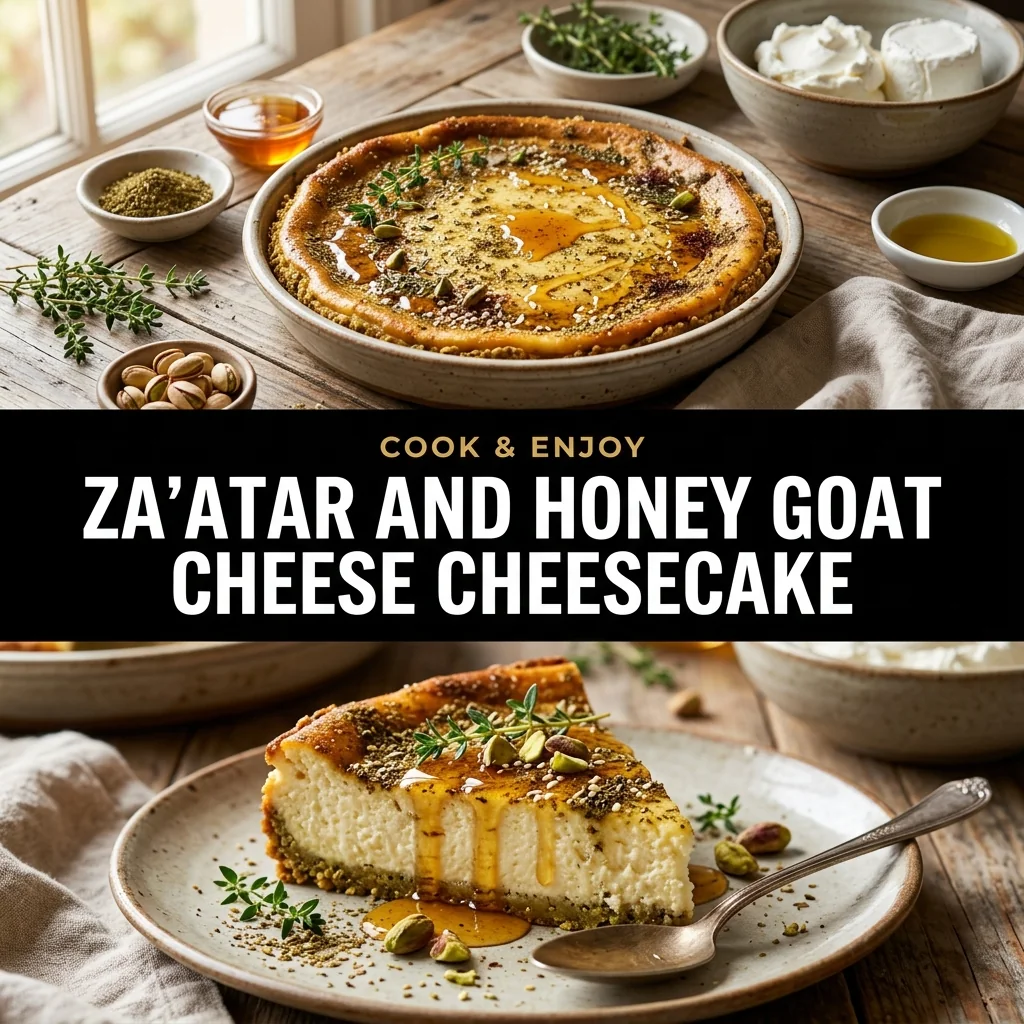
The Za'atar and Honey Goat Cheese Cheesecake sits at the refined intersection of savory mezze traditions and classic pastry craftsmanship. Fresh chèvre possesses a distinctive earthy brightness and lactic tang that balances the floral sweetness of pure honey far better than standard cream cheese alone. Grounding this sophisticated filling is a buttery cracker and pistachio crust that adds texture and nutty depth. Right before presentation, the chilled surface is finished with a deliberate drizzle of raw honey and a light dusting of authentic za'atar—an ancient Levantine spice blend combining wild thyme, toasted sesame seeds, and tart red sumac. The resulting dessert delivers an unexpected, deeply satisfying contrast that transitions effortlessly from dinner centerpiece to dessert course.
Balancing Tang and Sweetness in Chèvre
Fresh chèvre has a moisture profile and acidic punch that differs noticeably from commercial cream cheese blocks. Using one hundred percent goat cheese can occasionally yield a chalky texture when baked into custard. By pairing five hundred grams of fresh goat cheese with three hundred grams of standard cream cheese, this recipe secures the unmistakable tang and grassy perfume of chèvre while preserving the velvety, melt-in-the-mouth emulsion characteristic of high-fat dairy. Honey acts as both a sweetener and a tenderizing humectant, softening the sharp cheese notes.
The Role of Za'atar as a Dessert Garnish
Za'atar provides a striking botanical counterpoint to rich dairy fats. The dried wild thyme (Origanum syriacum) contributes herbal, woodsy warmth, while whole toasted sesame seeds introduce pleasant crunch and nutty oils. Ground sumac berries impart an astringent, citrusy bite that echoes the fresh lemon juice folded into the batter. For the cleanest taste, source fresh culinary za'atar with vivid green herbs and burgundy sumac flecks. Dust the spice blend sparingly across the honey drizzle just before slicing so the sesame seeds stay crisp.
Controlled Gentle Baking for Goat Milk Proteins
Caprine milk proteins form delicate curds under heat and are significantly more prone to whey separation (syneresis) than bovine milk if subjected to harsh temperatures. A bain-marie buffers the heat, keeping the baking temperature gentle and stable throughout the cycle. The gradual cooling method inside the turned-off oven with the door propped open ensures the delicate custard reaches a food-safe internal temperature of 160°F (71°C) without the center seizing or splitting into unsightly fissures across the surface.
Before you start
When blending goat cheese, ensure both the chèvre and cream cheese are fully brought to room temperature before mixing. Cold goat cheese remains grainy and refuses to emulsify smoothly with honey and eggs. Choose a za'atar blend that features sumac and toasted sesame prominently alongside dried wild thyme; avoid blends with artificial flavor enhancers. Warm the finishing honey slightly so it ribbons smoothly across the chilled surface without dragging.
THE RECIPE
Za'atar and Honey Goat Cheese Cheesecake
12 servings · 25 minutes preparation · 65 minutes cooking · 480 minutes cooling, chilling or resting
Ingredients
Step-by-step instructions
- Preheat the oven to 325°F (163°C). Grease a 9-inch (23 cm) springform pan with butter and line the bottom with parchment paper, wrapping the outer pan walls securely with two sheets of heavy aluminum foil.
- In a bowl, mix 180 g cracker crumbs, 30 g chopped pistachios, and 70 g melted butter until evenly moistened.
- Press the crust mixture firmly into the base of the springform pan and bake at 325°F (163°C) for 10 minutes, then place on a wire rack to cool completely.
- In a large bowl using an electric stand mixer fitted with the paddle attachment, beat 500 g softened goat cheese and 300 g cream cheese on medium speed for 2 minutes until completely smooth and lump-free.
- Reduce mixer speed to low and blend in 120 ml honey, 70 g granulated sugar, 15 ml lemon juice, and 5 ml alcohol-free vanilla extract until thoroughly incorporated.
- Add the 3 eggs and 1 egg yolk one by one, mixing on low speed after each addition until just blended, then fold in 120 ml sour cream using a rubber spatula.
- Pour the cheesecake batter over the cooled crust and place the springform pan into a large, deep roasting pan.
- Pour boiling water into the roasting pan to a depth of 1 inch around the springform pan, transfer to the oven, and bake at 325°F (163°C) for 55 minutes until the perimeter is firm and the center retains a slight wobble (custard reaches 160°F / 71°C).
- Turn off the oven, prop the oven door open 4 inches with a wooden spoon, and let the cheesecake rest in the water bath for 60 minutes; transfer the pan to a wire rack to cool at room temperature for 60 minutes, then refrigerate uncovered for 6 hours (360 minutes) until set; before serving, drizzle with 45 ml warm honey and dust with 8 g za'atar.
Kitchen notes
When blending goat cheese, ensure both the chèvre and cream cheese are fully brought to room temperature before mixing. Cold goat cheese remains grainy and refuses to emulsify smoothly with honey and eggs. Choose a za'atar blend that features sumac and toasted sesame prominently alongside dried wild thyme; avoid blends with artificial flavor enhancers. Warm the finishing honey slightly so it ribbons smoothly across the chilled surface without dragging.
Storage & make-ahead
Store the cheesecake in the refrigerator at or below 40°F (4°C) tightly covered for up to 4 days. Keep the za'atar and honey garnish separate until immediately prior to serving, as the herbs will absorb moisture from the custard and lose their crisp aromatic character over extended storage. Promptly refrigerate all leftover portions within 2 hours. Make ahead up to 2 days without the final honey-herb topping.
An original recipe guide inspired by themes in our Pinterest research. Recipe has not been independently kitchen-tested. AI-generated image is illustrative; your finished dish may look different.
Frequently asked questions
Can I use aged goat cheese instead of fresh chèvre?
No, aged goat cheeses like goat gouda or ash-ripened logs have lower moisture and higher salt concentrations that will not blend smoothly into a silky custard. Fresh, rindless soft chèvre logs are required for proper texture and balanced flavor.
Is the cheesecake overly savory for a dessert?
Not at all. The honey, granulated sugar, and sour cream provide substantial sweetness and roundness. The za'atar and goat cheese add sophisticated herbal complexity and tanginess, creating a balanced profile similar to a cheese course paired with fruit and honey.
Can I omit the pistachios from the crust?
Yes, if nut allergies are a concern, you can replace the 30 g of chopped pistachios with an equal weight of additional salted butter cracker crumbs or rolled oats without altering the structural integrity of the crust.


