WHY MAKE IT
A little comfort, a lot of flavor.
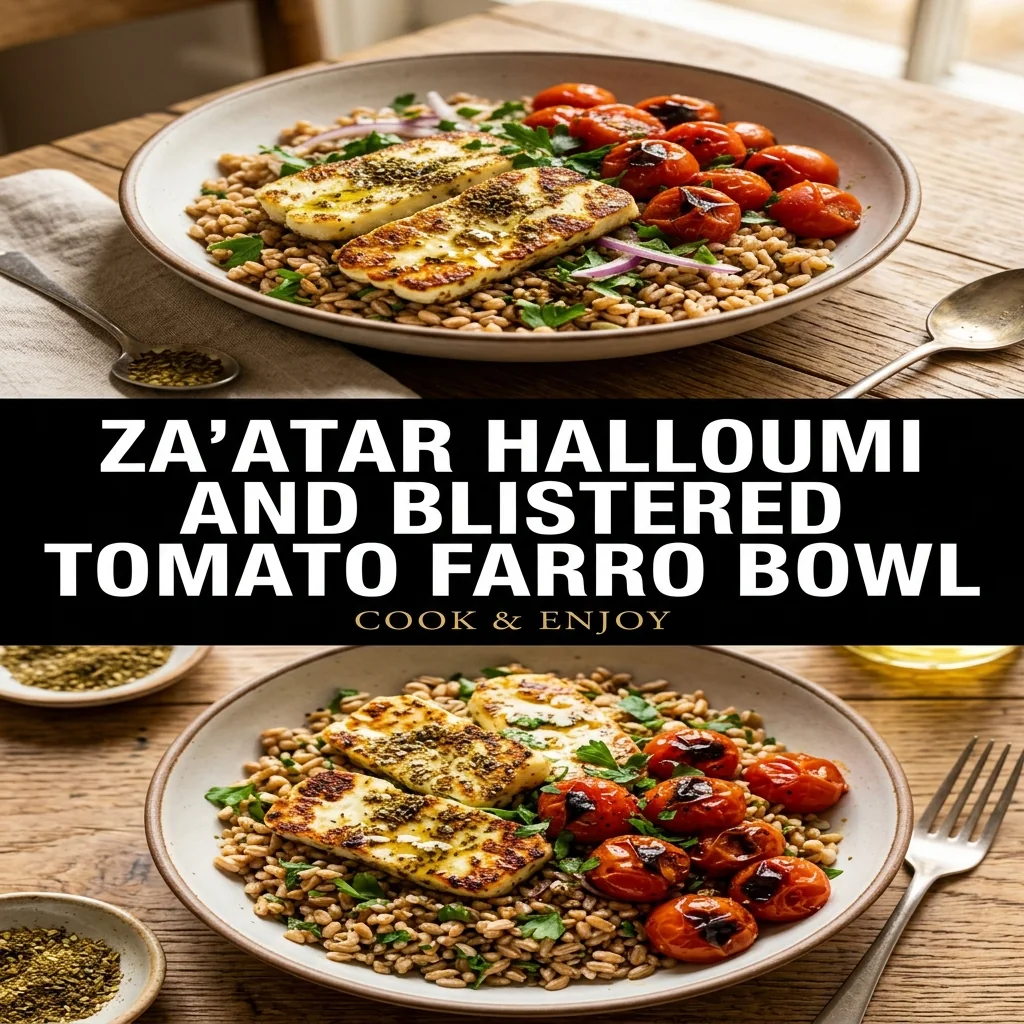
Featuring hearty textures and Mediterranean aromas, this za'atar halloumi and blistered tomato farro bowl provides a satisfying vegetarian meal made with verified halal ingredients. Semi-pearled farro offers an earthy, toothsome grain foundation that absorbs an herby dressing infused with wild za'atar, garlic, and fresh lemon. Searing thick slabs of halal-certified halloumi yields a caramelized, golden crust with an elastic, comforting interior that contrasts with juicy cherry tomatoes blistered until sweet and smoky. Finished with fresh mint and peppery arugula, this assembly balances rich dairy elements with botanical freshness, making it as vibrant visually as it is on the palate.
Understanding Halal-Certified Halloumi
Halloumi is a traditional semi-hard unripened cheese originating in Cyprus, prized for its high melting point that allows for direct grilling and frying. When sourcing halloumi for a halal diet, it is essential to inspect the ingredient label for the coagulating enzyme used during production. Authentic halal-certified halloumi uses non-animal microbial rennet or vegetarian rennet rather than animal-derived enzymes. Its distinctive salty brine keeps the cheese stable, but always pat slices dry before searing so the direct heat creates an amber crust rather than boiling off excess liquid.
Cooking Farro to Nutty Perfection
Farro is an ancient wheat grain revered for its dense chew and nutty taste. Semi-pearled farro has part of the bran scratched off, which significantly reduces the required simmering duration while maintaining fiber and structural integrity. Simmering the grains gently in salted water allows even hydration without bursting the starch granules. Cooling the drained farro on a flat plate for ten minutes prevents excess residual steam from wilting the tender baby arugula prematurely, preserving crisp leaf structure when the components are tossed together with the za'atar vinaigrette.
Blistering Tomatoes and Herb Infusion
Charring cherry tomatoes over high dry heat concentrates their natural sugars while breaking down the skins into sweet, jammy pockets of juice. When pierced by a fork in the bowl, these tomatoes release their warm juices into the farro beneath. The dressing relies on wild za'atar—a fragrant Levantine blend centered on wild thyme, tangy sumac, and nutty sesame seeds. Whisked with cold-pressed olive oil, lemon juice, and pungent garlic, the za'atar bloom coats every grain of farro, unifying the salty cheese and charred vegetables.
Before you start
Halloumi must be patted thoroughly dry with clean paper towels prior to hitting the skillet. Any residual surface moisture will cause the cheese to steam rather than sear, resulting in a soggy exterior rather than a crisp, savory crust. Ensure your skillet is well-heated before adding the cheese slabs. Cook them over medium to medium-high heat for only two minutes per side; overcooking expels interior moisture and turns the halloumi tough and rubbery.
THE RECIPE
Za'atar Halloumi and Blistered Tomato Farro Bowl
4 servings · 15 minutes preparation · 25 minutes cooking · 10 minutes cooling, chilling or resting
Ingredients
Step-by-step instructions
- Combine the rinsed semi-pearled farro, 3 cups of water, and 0.5 teaspoon of fine sea salt in a medium 2-quart saucepan.
- Bring the water to a rolling boil over high heat, reduce the heat to medium-low, cover with a tight-fitting lid, and simmer for 20 minutes until the grains are tender yet pleasantly chewy.
- Drain any residual cooking water from the saucepan, spread the hot farro onto a wide plate, and allow it to rest and cool for 10 minutes.
- Whisk together 2 tablespoons of extra-virgin olive oil, wild za'atar blend, fresh lemon juice, grated garlic, and the remaining 0.25 teaspoon of fine sea salt in a small bowl to create the herb dressing.
- Heat 1 tablespoon of extra-virgin olive oil in a 12-inch heavy stainless steel or cast-iron skillet over medium-high heat until shimmering.
- Add the cherry tomatoes to the skillet and cook undisturbed for 2 to 3 minutes until skins begin to blister, then shake the skillet and cook 2 minutes more until softened and slightly charred; transfer tomatoes to a plate.
- Pat the sliced halal halloumi slabs dry using paper towels to remove surface brine.
- Place the halloumi slices into the same hot skillet in a single layer and sear over medium heat for 2 minutes per side until deeply golden and crusty, removing promptly to prevent rubbery texture.
- Toss the rested farro with the baby arugula, chopped mint, kalamata olives, and half of the za'atar dressing, divide among four bowls, and top with seared halloumi slices, blistered tomatoes, and the remaining dressing.
Kitchen notes
Halloumi must be patted thoroughly dry with clean paper towels prior to hitting the skillet. Any residual surface moisture will cause the cheese to steam rather than sear, resulting in a soggy exterior rather than a crisp, savory crust. Ensure your skillet is well-heated before adding the cheese slabs. Cook them over medium to medium-high heat for only two minutes per side; overcooking expels interior moisture and turns the halloumi tough and rubbery.
Storage & make-ahead
Store leftover simmered farro, blistered tomatoes, and dressing in an airtight glass container in the refrigerator for up to 4 days. Store halloumi separately. Halloumi is best enjoyed immediately after cooking, but leftovers can be reheated in a dry skillet over medium heat for 1 to 2 minutes per side until warmed through to 165 F (74 C). Promptly refrigerate all perishables within 2 hours.
An original recipe guide inspired by themes in our Pinterest research. Recipe has not been independently kitchen-tested. AI-generated image is illustrative; your finished dish may look different.
Frequently asked questions
Can I make this bowl gluten-free?
Yes, substitute the farro with an equal cooked volume of brown rice, quinoa, or millet. Simmer the gluten-free grain according to package directions, drain well, and toss with the same za'atar dressing, blistered tomatoes, and seared halal halloumi.
Why did my halloumi release water in the pan instead of browning?
If halloumi is wet when added to a pan that is not sufficiently hot, the brine seeps out and boils the cheese. Ensure the cheese is blotted completely dry and the skillet is thoroughly preheated over medium-high heat before adding the slabs.
Is sumac in the za'atar blend safe for all diets?
Sumac is a natural dried red berry with a tart, citrusy profile commonly used in Middle Eastern cooking. Those with severe cashew or mango allergies should check za'atar labels, as sumac belongs to the Anacardiaceae plant family, though adverse reactions are rare.