WHY MAKE IT
A little comfort, a lot of flavor.
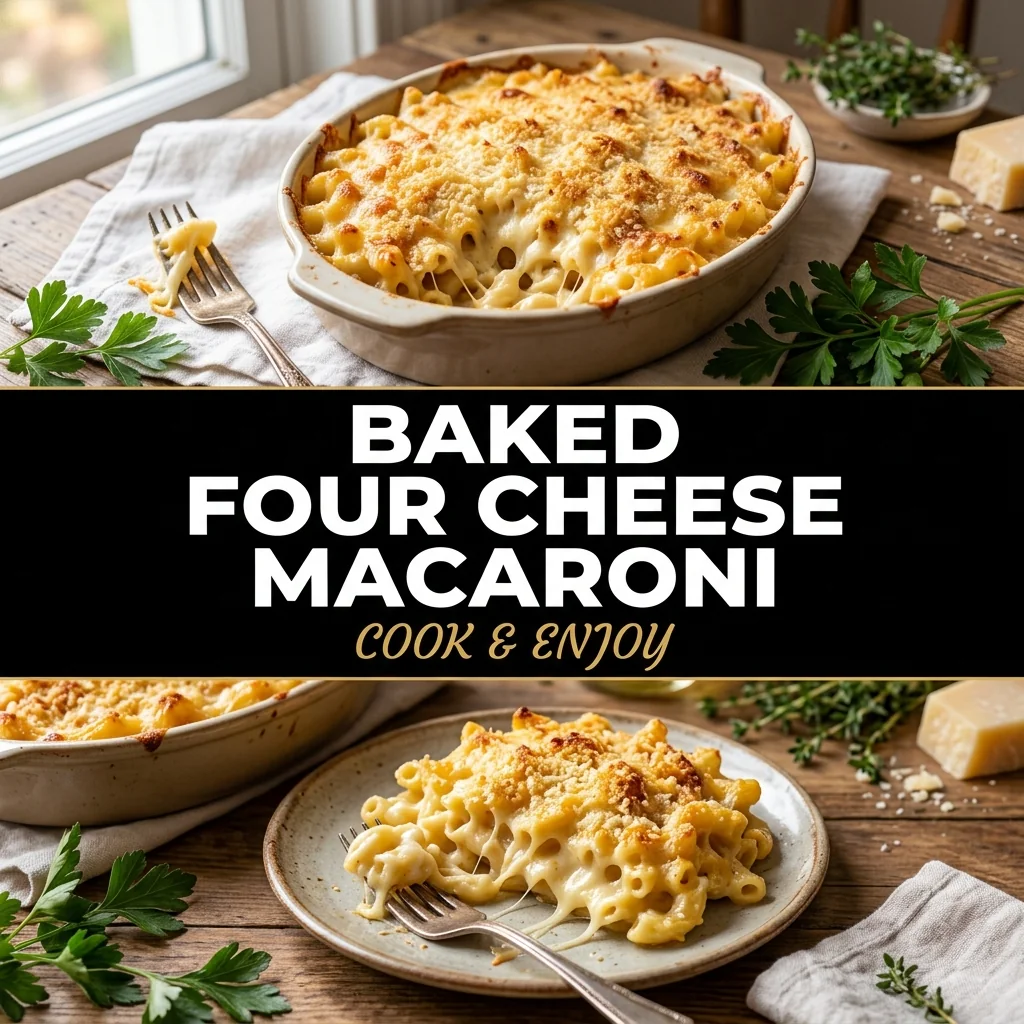
A classic homemade baked macaroni and cheese relies on balance between smooth structural sauce and expressive cheeses. Combining four distinct varieties provides complexity: sharp cheddar brings punch and color, Gruyère offers nuttiness and savory backbone, fontina melts like silk to keep the sauce supple, and Pecorino Romano supplies sharp, salty seasoning. By building a stable blond roux and introducing warmed milk gradually, the foundation suspends the cheese proteins without graininess or oil separation. Par-boiling the macaroni keeps the tubular ridges ready to capture sauce rather than softening into porridge during the oven bake. Topped with a buttery, cheese-dusted panko layer, every spoonful delivers contrasting crunch and luscious richness.
Balancing the Four-Cheese Blend
Selecting the right cheeses is not merely about intensity; it governs physical texture and fat dispersion. Sharp cheddar provides classic tang, but high-acid aged cheddars can split if overheated. Fontina acts as a mediator, with high moisture and excellent elasticity that smooths the sauce. Gruyère introduces earthy, savory notes that cut through the richness of heavy cream, while Pecorino Romano lends concentrated salinity and umami. Avoid substituting pre-shredded blends, which shed starches that disrupt the roux.
Building a Stable Mornay Sauce
The key to velvety cheese sauce lies in roux management and temperature control. Cook the flour and butter mixture just until raw cereal notes dissipate, maintaining a pale straw hue. Adding warmed dairy prevents thermal shock, allowing starch granules to hydrate evenly without clumping. Most importantly, turn off direct flame before folding in the grated cheeses. Residual heat in the béchamel base is sufficient to melt the cheese gently without curdling delicate milk proteins.
Oven Assembly and Textural Contrast
Baking uncovered at 375 degrees Fahrenheit allows the cheese on the surface to brown while letting excess surface moisture evaporate, forming a savory gratin cap. A thin layer of panko mixed with grated Pecorino shields the top pasta pieces from drying into hard nubs while yielding a distinct, shatteringly crisp crust. Letting the pan rest 10 minutes before slicing allows the mornay sauce to settle into a creamy, spoonable consistency.
Before you start
Grating cheese from whole blocks rather than buying pre-shredded varieties is essential for this recipe. Pre-shredded cheese contains anti-caking starches like potato starch or powdered cellulose that interfere with protein emulsion, causing the mornay sauce to turn grainy, oily, or chalky. Additionally, cooking the elbow macaroni roughly two minutes shy of standard al dente ensures that the pasta absorbs flavorful cream sauce during its oven bake without becoming mushy.
THE RECIPE
Baked Four Cheese Macaroni
8 servings · 20 minutes preparation · 40 minutes cooking · 10 minutes cooling, chilling or resting
Ingredients
Step-by-step instructions
- Bring a 6-quart stockpot of salted water to a rolling boil over high heat, drop in 16 ounces elbow macaroni, and cook for 6 minutes until noticeably firm to the bite, then drain thoroughly and toss with 1 tablespoon unsalted butter in a colander.
- Melt the remaining 4 tablespoons unsalted butter in a heavy 4-quart Dutch oven over medium heat, whisk in 0.25 cup all-purpose flour, and cook steadily for 2 minutes until frothy, pale gold, and smelling lightly toasted without allowing it to brown deeply.
- Slowly pour in 4 cups warmed whole milk and 1 cup heavy cream in thin streams while whisking vigorously to eliminate lumps, bring to a gentle simmer over medium heat, and cook for 5 minutes until thick enough to coat a wooden spoon.
- Remove the saucepan from direct heat, whisk in 1 teaspoon kosher salt, 0.5 teaspoon ground nutmeg, 1 teaspoon garlic powder, 0.5 teaspoon black pepper, and 1 teaspoon Dijon mustard until smoothly integrated.
- Gradually fold in three-quarters of the cheddar, Gruyère, fontina, and Pecorino Romano cheeses one handful at a time, stirring steadily until completely melted into a glossy sauce before folding in the par-cooked macaroni until completely saturated.
- Transfer the mixture into a buttered 9x13-inch ceramic baking dish, scatter the reserved cheeses evenly across the top, and sprinkle 0.75 cup panko breadcrumbs across the surface to create a light, uniform coating.
- Bake uncovered in a preheated 375 degree Fahrenheit oven for 22 to 25 minutes until bubbling steadily around the edges and deep golden brown on top, then rest 10 minutes on a wire rack before serving.
Kitchen notes
Grating cheese from whole blocks rather than buying pre-shredded varieties is essential for this recipe. Pre-shredded cheese contains anti-caking starches like potato starch or powdered cellulose that interfere with protein emulsion, causing the mornay sauce to turn grainy, oily, or chalky. Additionally, cooking the elbow macaroni roughly two minutes shy of standard al dente ensures that the pasta absorbs flavorful cream sauce during its oven bake without becoming mushy.
Storage & make-ahead
Transfer leftovers to shallow airtight containers and refrigerate within 2 hours of baking. Store in the refrigerator for up to 4 days. To reheat, place portions in an oven-safe dish, splash with 1 to 2 tablespoons of milk to restore moisture, cover loosely with foil, and bake at 350°F (177°C) until the internal temperature reaches at least 165°F (74°C). Avoid freezing whole dishes, as dairy-based emulsions tend to separate upon thawing.
An original recipe guide inspired by themes in our Pinterest research. Recipe has not been independently kitchen-tested. AI-generated image is illustrative; your finished dish may look different.
Frequently asked questions
Can I assemble this macaroni casserole ahead of time?
Yes. Assemble the pasta and sauce in the baking dish, omitting the panko topping. Cover tightly and refrigerate for up to 24 hours. Before baking, let sit at room temperature for 30 minutes, add the panko, and increase bake time by 8 to 10 minutes.
Why did my cheese sauce turn grainy or split?
Graininess typically stems from pre-shredded cheese treated with anti-caking agents, or boiling the sauce after cheese is introduced. Always remove the pan from heat before stirring in freshly shredded cheese so the proteins melt smoothly without seizing.
Can I substitute other pasta shapes?
Cavatappi, lumache, campanelle, or medium shells work exceptionally well. Choose shapes with hollow centers or deep ridges that trap sauce. Avoid long, thin varieties like spaghetti, which pack too tightly and absorb sauce unevenly.