WHY MAKE IT
A little comfort, a lot of flavor.
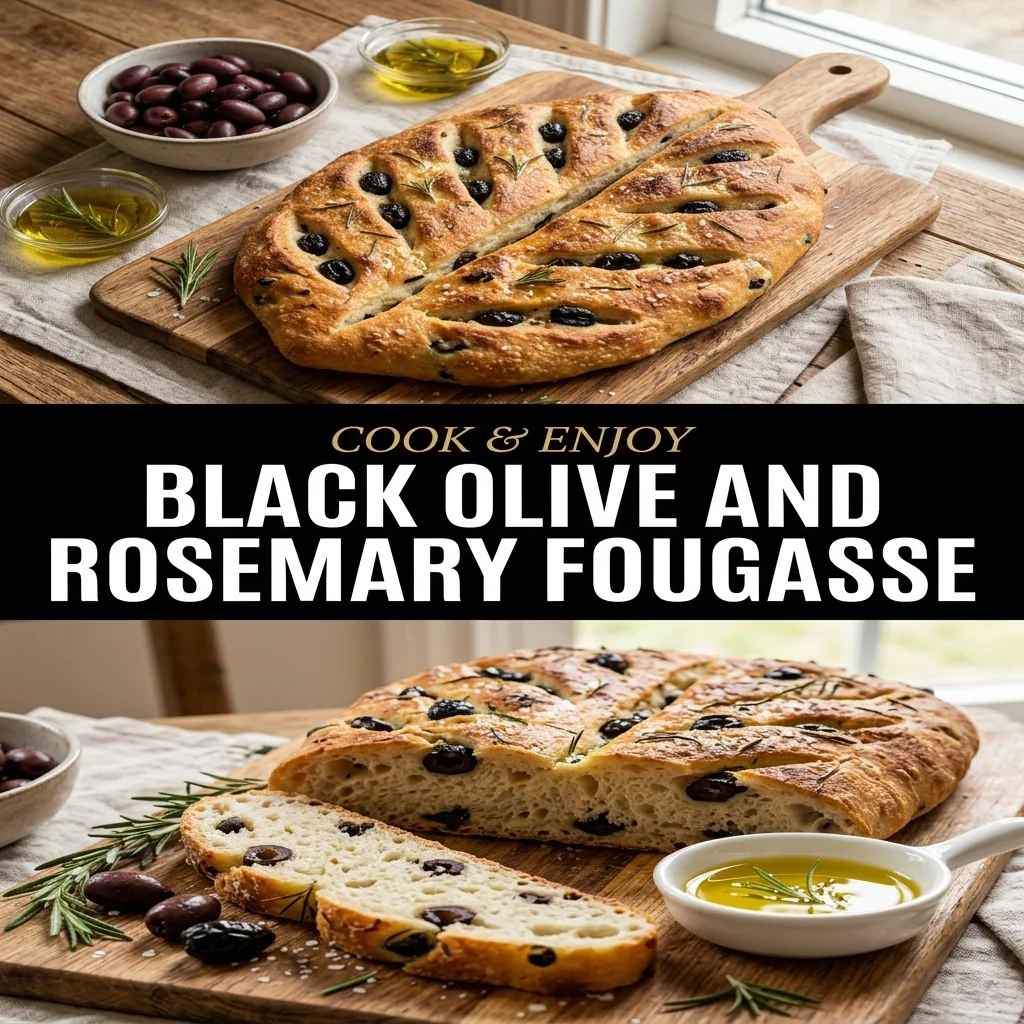
Fougasse is the traditional slashed hearth bread of Provence, historically used by French bakers to gauge the heat of wood-fired ovens before baking larger loaves. Its expansive, open-cut silhouette produces a high ratio of blistered, olive oil-scented crust to tender interior crumb. In this recipe, robust bread flour is paired with a touch of whole-wheat flour to yield substantial chew and aroma. Pitted Kalamata olives introduce briny, savory accents, while piney fresh rosemary perfumes every slice. Generous additions of extra-virgin olive oil in both dough and finishing wash produce an artisan flatbread that pulls apart easily, making it an exceptional centerpiece for savory spreads and broths.
Hydration and Olive Distribution
A hydration level around seventy percent creates an extensible dough capable of holding defined leaf cutouts without shrinking back. Chopped olives introduce localized moisture and brine oils that can inhibit gluten formation if added too early. By kneading the flour, water, yeast, and salt until a cohesive, smooth gluten network develops before folding in the olives and rosemary, you preserve the structural integrity of the crumb. Gentle secondary kneading folds the additions evenly without tearing the delicate gluten mesh.
Mastering the Ladder Cuts
The signature architectural cuts of fougasse serve a vital functional purpose: they multiply the surface area exposed to direct oven heat, yielding an exceptionally crunchy crust. Using a sharp bench knife or floured pizza wheel, slash clean lines through the dough down to the parchment surface. Gently stretch each opening with floured fingers until the slits form clear, oval windows. Adequate spacing prevents the dough bridges from swelling back together during baking, preserving the open, decorative shape.
Baking with Radiant Heat
Achieving the hollow, crisp characteristic of traditional fougasse relies on high initial heat transfer. Baking directly upon a preheated baking stone or thick overturned baking sheet ensures instantaneous bottom spring, sealing the underside before olive juices soften the base. A final glaze of good extra-virgin olive oil applied right before the bread enters the oven fries the exterior lightly, producing tiny surface blisters and giving the scattered rosemary leaves a vibrant, unburned herbal finish.
Before you start
When cutting the distinctive leaf pattern into the shaped fougasse, widen each slash aggressively using oiled fingertips. As the bread undergoes its final proof and experiences oven spring, small cuts will swell shut, ruining the lattice structure. Ensuring the olives are blotted dry on paper towels before kneading them into the dough prevents wet pockets that could create dense dough patches around the fruit.
THE RECIPE
Black Olive and Rosemary Fougasse
4 servings · 25 minutes preparation · 20 minutes cooking · 90 minutes cooling, chilling or resting
Ingredients
Step-by-step instructions
- Combine 400 grams bread flour, 50 grams whole-wheat flour, 7 grams instant yeast, and 8 grams fine sea salt in a large bowl, whisking until thoroughly distributed.
- Add 310 milliliters lukewarm water and 30 milliliters extra-virgin olive oil to the dry ingredients, stirring with a sturdy spatula until a wet, ragged dough forms.
- Turn the dough onto a clean counter and knead by hand for 8 minutes until smooth and elastic, then flatten slightly, spread 120 grams chopped Kalamata olives and 2 tablespoons chopped rosemary across the surface, and fold the dough over itself, kneading gently for 2 minutes to distribute the mix-ins.
- Transfer the dough into a lightly oiled large bowl, cover with a damp kitchen towel, and rest in a warm spot for 60 minutes until doubled in volume.
- Turn the risen dough onto a lightly floured surface, divide into two equal portions, and shape each piece into a flat oval leaf shape roughly 1/2-inch thick.
- Transfer each oval onto a parchment-lined baking sheet, then use a sharp bench scraper or pastry wheel to cut three diagonal slashes on each side of a central vertical slash, mimicking a leaf or ladder pattern.
- Gently pull the cuts open with your fingers to form distinct 1-inch wide apertures so the openings do not fuse together during baking, cover loosely, and rest for 20 minutes.
- Preheat the oven to 450°F (230°C) with a heavy baking stone or overturned baking sheet on the center rack.
- Brush each loaf with the remaining 15 milliliters extra-virgin olive oil, sprinkle with 1 teaspoon flaky sea salt, slide the parchment sheets onto the preheated stone, and bake for 20 minutes until the crust is deep golden brown and hollow-sounding when tapped; rest 10 minutes on a wire rack.
Kitchen notes
When cutting the distinctive leaf pattern into the shaped fougasse, widen each slash aggressively using oiled fingertips. As the bread undergoes its final proof and experiences oven spring, small cuts will swell shut, ruining the lattice structure. Ensuring the olives are blotted dry on paper towels before kneading them into the dough prevents wet pockets that could create dense dough patches around the fruit.
Storage & make-ahead
Store completely cooled bread in a paper bag or bread bin at room temperature for up to 2 days. For longer storage, freeze sliced or whole fougasse wrapped in foil inside a freezer bag for up to 1 month. To refresh the crust, reheat in a 375°F (190°C) oven for 6 to 8 minutes until hot and crisp throughout to at least 165°F (74°C). Avoid refrigerating, which accelerates starch retrogradation and staling. Refrigerate perishable leftovers within 2 hours of preparation (within 1 hour in temperatures above 90 F / 32 C).
An original recipe guide inspired by themes in our Pinterest research. Recipe has not been independently kitchen-tested. AI-generated image is illustrative; your finished dish may look different.
Frequently asked questions
Can I use green olives instead of Kalamata olives?
Yes. Firm green olives such as Castelvetrano or Manzanilla work well. Ensure they are pitted, thoroughly drained, and patted dry on kitchen paper towels so excess brine does not make the surrounding dough sodden or overly salty.
Why did the cuts in my fougasse close up during baking?
The cuts close if they are not widened sufficiently before the final proof. Use floured fingers to stretch each opening to at least one inch wide, ensuring the dough stays open even after the oven spring occurs.
Can I make this dough with all-purpose flour?
Yes, though bread flour provides superior chew and elasticity. If using all-purpose flour, reduce the water by 15 to 20 milliliters, as all-purpose flour absorbs less water due to its lower protein content.