WHY MAKE IT
A little comfort, a lot of flavor.
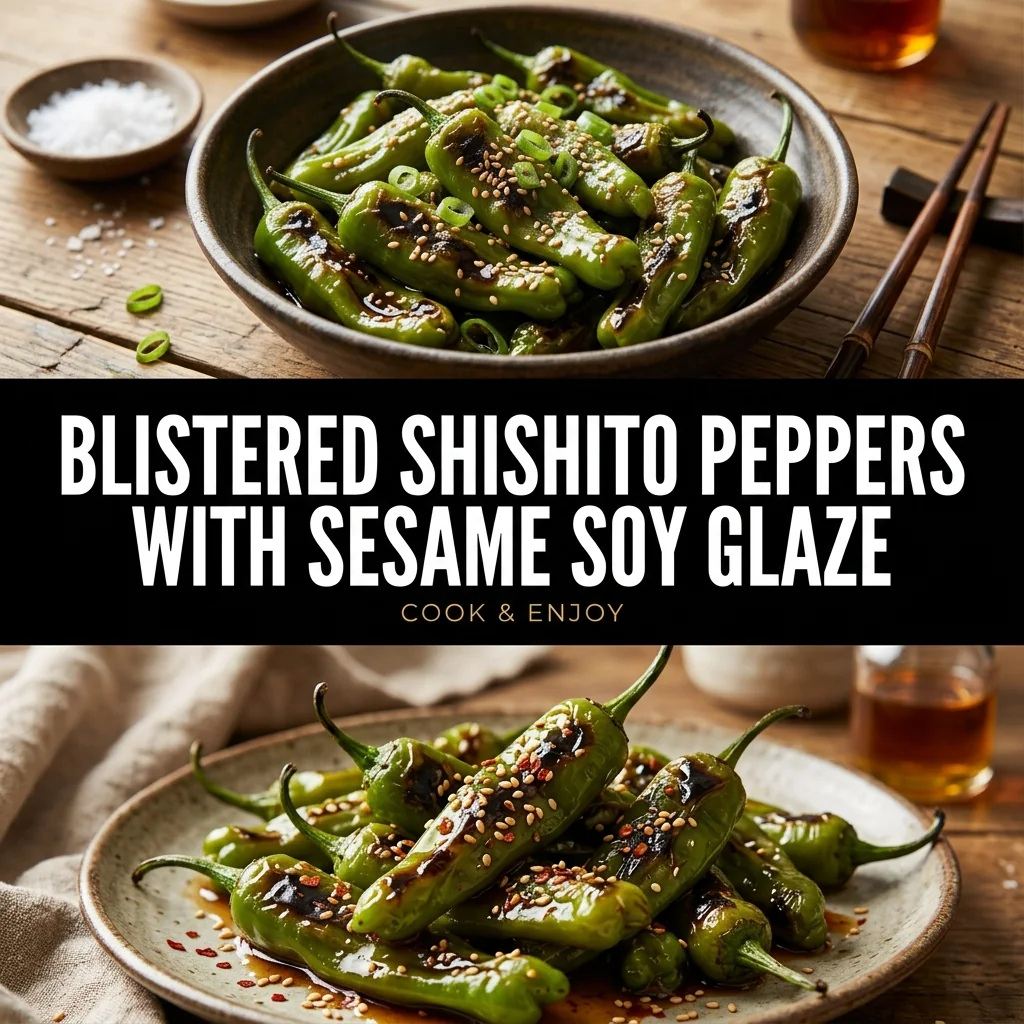
Shishito peppers are thin-skinned, mild East Asian peppers celebrated for their tender texture and vegetal sweetness, punctuated by an occasional spicy surprise. Cooking them over high heat blisters their skins, collapsing the firm walls into tender, smoky bites. A dry, heavy cast-iron skillet produces the ideal contrast: charred, paper-thin patches alongside sweet, juicy flesh. While delicious with coarse salt alone, coating the charred peppers in a quick reduction of halal-certified soy sauce, toasted sesame oil, garlic, and a hint of maple syrup elevates them into a compelling appetizer or side. The savory glaze settles into the wrinkled crevices of the blistered pods, creating a balanced, shareable plate that comes together in minutes.
Safety and Piercing the Peppers
Shishitos possess an airtight outer skin that traps expanding steam when placed into a smoking-hot skillet. If unvented, the pressure can cause the peppers to burst, spraying hot cooking oil across the stove. Taking thirty seconds to prick each pepper near the stem with the tip of a paring knife creates an escape vent for steam. This simple step keeps the searing process safe, minimizes dangerous hot-oil spatter, and allows the peppers to collapse and wrinkle evenly as their inner air vents.
Achieving the Perfect Blister
The goal when cooking shishito peppers is high-heat blistering without turning the vegetable to mush. Cast-iron is ideal because it retains heat when the cool peppers hit the metal. Leave the peppers untouched for the first couple of minutes to develop prominent char marks. Constant stirring prevents proper blister formation, leading to dull, steamed peppers. You want distinct white-hot blisters and dark char spots while the interior retains enough structural moisture to feel juicy when bitten.
The Quick Glazing Technique
Because the cast-iron skillet holds intense heat, introducing the glaze requires swift handling. Whisking the halal-certified soy sauce, maple syrup, ginger, and garlic together beforehand ensures even distribution. Lower the stove heat before pouring the liquid to prevent immediate scorching. Stir or toss the peppers constantly as the glaze hits the hot metal; it will bubble into a glossy lacquer within thirty to forty-five seconds. Remove promptly from the pan to preserve the delicate aromatics.
Before you start
Puncturing each shishito pepper with a tiny slit is essential. As the internal moisture heats up in the dry, scorching skillet, steam builds rapidly within the sealed pod and can cause whole peppers to pop violently, splattering hot oil. Work with a dry cast-iron skillet that is thoroughly heated before adding the oil. Once the glaze enters the pan, keep the peppers moving constantly; the soy sauce and maple syrup will scorch within seconds if left stationary on high residual heat.
THE RECIPE
Blistered Shishito Peppers with Sesame Soy Glaze
4 servings · 10 minutes preparation · 8 minutes cooking
Ingredients
Step-by-step instructions
- Rinse 1/2 pound whole shishito peppers under cool running water and dry them completely with a lint-free cloth towel.
- Using the tip of a small paring knife, pierce a tiny slit into the shoulder of each pepper to allow steam to escape safely during high-heat searing.
- In a small mixing bowl, whisk together 1 1/2 tablespoons halal-certified soy sauce, 1 teaspoon pure maple syrup, 1 teaspoon toasted sesame oil, 1 finely grated garlic clove, and 1/2 teaspoon grated fresh ginger until combined; set aside.
- Heat 1 tablespoon neutral cooking oil in a heavy 12-inch cast-iron skillet over high heat until it just begins to smoke lightly.
- Add the prepared shishito peppers to the skillet in a single, uncrowded layer; they should sizzle loudly on contact.
- Cook undisturbed for 2 to 3 minutes until the undersides are heavily charred and blistered with white and black spots.
- Toss or turn the peppers with tongs and sear for another 2 to 3 minutes, blister-cooking until the peppers are tender, wrinkled, and softened throughout.
- Reduce the skillet heat to low, pour the prepared sesame soy glaze over the blistered peppers, and toss vigorously for 30 to 45 seconds until the glaze bubbles, thickens, and clings glossy to the wrinkled skins.
- Remove the skillet from the heat immediately, transfer the glazed peppers to a serving dish, and sprinkle with 1 tablespoon toasted white sesame seeds before serving hot.
Kitchen notes
Puncturing each shishito pepper with a tiny slit is essential. As the internal moisture heats up in the dry, scorching skillet, steam builds rapidly within the sealed pod and can cause whole peppers to pop violently, splattering hot oil. Work with a dry cast-iron skillet that is thoroughly heated before adding the oil. Once the glaze enters the pan, keep the peppers moving constantly; the soy sauce and maple syrup will scorch within seconds if left stationary on high residual heat.
Storage & make-ahead
Blistered shishitos are best eaten hot directly from the pan. If you have leftovers, cool and place them in an airtight container in the refrigerator within 2 hours. Keep refrigerated for up to 2 days. Reheat briefly in a dry skillet over medium-high heat for 2 to 3 minutes until warmed through (165 F / 74 C). Freezing is not recommended as it destroys the delicate skin structure.
An original recipe guide inspired by themes in our Pinterest research. Recipe has not been independently kitchen-tested. AI-generated image is illustrative; your finished dish may look different.
Frequently asked questions
Are shishito peppers spicy?
Most shishito peppers are mild and sweet, registering low on the Scoville heat scale. However, roughly one in every ten peppers naturally develops higher capsaicin levels due to sunlight exposure and growing conditions, offering an occasional, moderately spicy kick.
Can I use Padron peppers instead?
Padron peppers make an excellent substitute for shishitos. They have slightly thicker flesh and a higher likelihood of heat, but blister beautifully using the exact same searing technique and sesame soy glaze. Puncture them before cooking just as you would shishitos.
Is all soy sauce halal-certified?
Not all soy sauces are halal-certified, as some naturally brewed varieties contain unacceptably high residual alcohol from fermentation. Always check the label and purchase a bottle explicitly certified halal to ensure it meets strict dietary standards.