WHY MAKE IT
A little comfort, a lot of flavor.
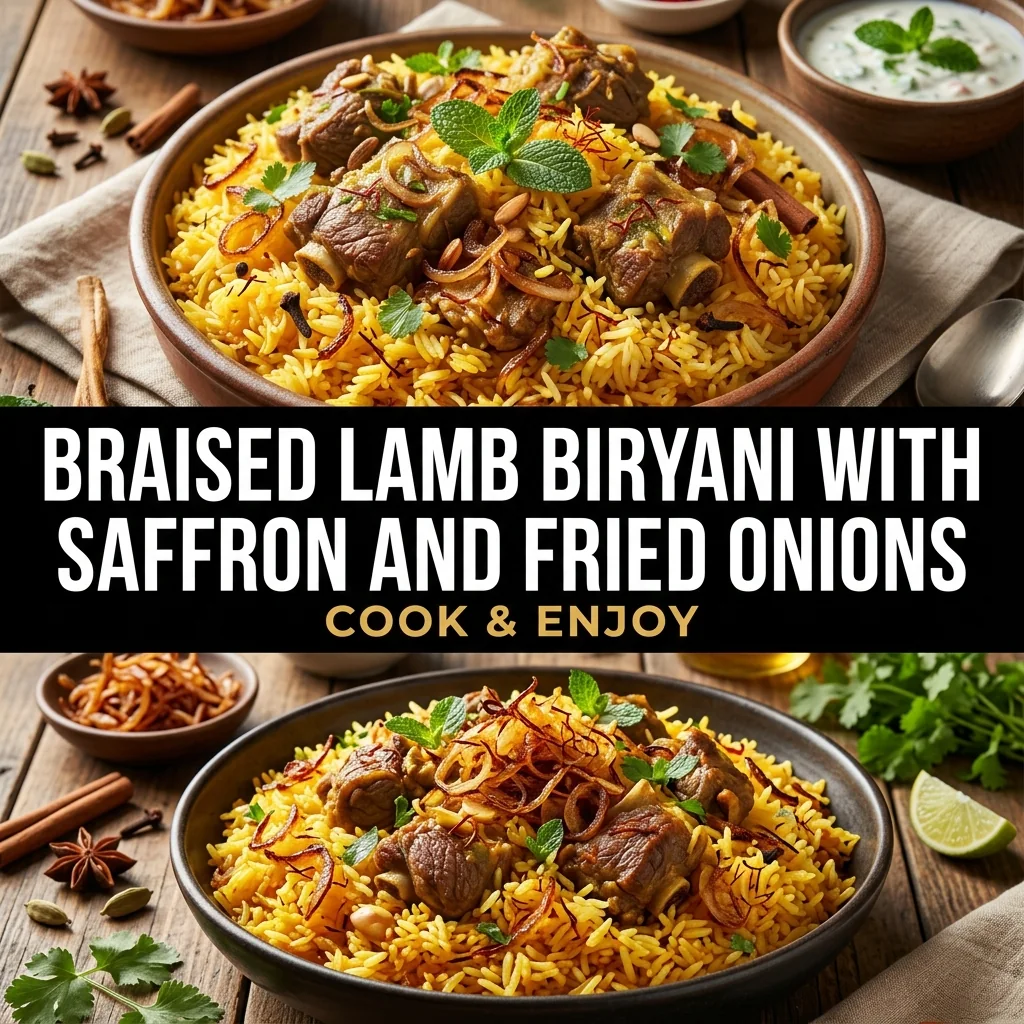
Braised lamb biryani represents the pinnacle of layered rice cookery, pairing rich spices and slow-cooked meat with fragrant, aged basmati grains. Prepared using tender halal bone-in lamb shoulder, the meat is steeped in a yogurt marinade infused with whole spices and ginger-garlic paste. Slow braising yields a succulent foundation smothered in a thick masala gravy. Parboiled long-grain rice is layered over the meat alongside crispy caramelized onions, fresh mint, and precious saffron-steeped milk. Trapped steam under a tightly sealed lid finishes the cooking process, allowing the rice to absorb the meat's perfume while maintaining distinct, separated grains. The result is a celebratory dish offering contrasting colors, tender textures, and deeply harmonious flavors.
The Art of Dum Cooking
The dum method of slow steaming in a sealed environment is what defines genuine biryani. By locking the heavy lid over a double barrier of aluminum foil, high-pressure steam is trapped within the Dutch oven. This gentle, recirculating moisture forces the essential oils of whole cloves, cardamom, and saffron deep into the parboiled rice kernels. Simultaneously, the bottom layer of lamb continues to braise gently in its yogurt sauce without scorching. This closed ecosystem ensures the meat remains juicy while the rice grains elongate to their maximum length without becoming wet or sticky.
Rice Selection and Parboiling Precision
Achieving the prized separation of grains requires aged, long-grain basmati rice. Aging reduces moisture content inside the grain, helping it absorb cooking liquids without bursting. Soaking the dry rice for 30 minutes hydrates the starches evenly. When parboiling, the water must be seasoned generously with salt and whole spices to flavor the rice from within. Draining the rice at precisely 70 percent doneness—when the outer layer is soft but the inner core remains firm—leaves enough capacity for the grains to finish cooking on the steam generated by the lamb curry.
Layering Aromatic Elements
Layering the biryani is a deliberate process designed to distribute moisture and aroma without blending the elements into a uniform pilaf. The rich lamb curry stays at the bottom, shielded from direct heat once the flame is lowered. Spreading the rice evenly over the curry creates a protective blanket. Scattering deep-fried onions provides sweetness, while mint and cilantro inject herbal freshness. Pouring saffron milk in ribbons creates the characteristic visual mosaic of bright white and deep golden grains, ensuring every spoonful offers unique nuances in flavor and appearance.
Before you start
Pay close attention to the parboiling step for the basmati rice. The grains should bend slightly without snapping but remain firm and chalky in the center when pinched. If the rice is cooked beyond 70 percent during boiling, it will absorb excess braising liquid during the sealed steaming phase and turn mushy. Be sure to seal the Dutch oven securely with aluminum foil beneath the lid to trap every bit of steam.
THE RECIPE
Braised Lamb Biryani with Saffron and Fried Onions
6 servings · 35 minutes preparation · 75 minutes cooking · 40 minutes cooling, chilling or resting
Ingredients
Step-by-step instructions
- In a large bowl, toss the halal lamb pieces with whisked yogurt, ginger-garlic paste, biryani masala, red chili powder, and 1 teaspoon salt; cover and marinate at room temperature for 30 minutes.
- Melt 1/4 cup ghee in a 6-quart heavy Dutch oven over medium heat, add sliced onions, and fry for 15 to 18 minutes until deep amber brown; transfer two-thirds of the fried onions to a paper towel-lined plate.
- Add the marinated lamb and all its marinade directly into the Dutch oven with the remaining onions, increase heat to medium-high, and sear for 5 minutes while stirring.
- Lower the heat to medium-low, cover tightly, and braise the lamb for 45 minutes until the meat is tender and the yogurt forms a thick, aromatic gravy.
- Meanwhile, bring 8 cups of water to a rolling boil in a separate large pot with cardamom pods, cloves, cinnamon stick, and 1/2 teaspoon salt; add drained basmati rice and boil for 7 minutes until 70 percent cooked.
- Drain the parboiled rice completely through a fine colander, discarding the cinnamon stick.
- Spread the drained parboiled rice in an even layer directly over the braised lamb gravy in the Dutch oven, then scatter the reserved fried onions, mint, cilantro, saffron milk, and remaining melted ghee across the top.
- Cover the pot tightly with a double layer of aluminum foil, press the heavy lid firmly onto the rim, and steam over low heat for 20 minutes, then turn off the heat and let rest for 10 minutes before fluffing gently to serve.
Kitchen notes
Pay close attention to the parboiling step for the basmati rice. The grains should bend slightly without snapping but remain firm and chalky in the center when pinched. If the rice is cooked beyond 70 percent during boiling, it will absorb excess braising liquid during the sealed steaming phase and turn mushy. Be sure to seal the Dutch oven securely with aluminum foil beneath the lid to trap every bit of steam.
Storage & make-ahead
Refrigerate leftovers promptly within 2 hours of cooking in an airtight container for up to 3 days. To reheat, transfer the biryani to an oven-safe dish, sprinkle with two tablespoons of water to revive moisture, cover tightly with foil, and bake at 350 F (175 C) until heated completely through to 165 F (74 C).
An original recipe guide inspired by themes in our Pinterest research. Recipe has not been independently kitchen-tested. AI-generated image is illustrative; your finished dish may look different.
Frequently asked questions
Why is bone-in lamb preferred over boneless lamb for biryani?
Bone-in halal lamb shoulder provides richer flavor because bone marrow dissolves into the yogurt marinade during the initial 45-minute braise. The bones also slow heat transfer, preventing the meat from overcooking and shrinking during the prolonged steaming process.
How do I know when the rice is at 70 percent doneness?
Take a grain of rice from the boiling pot and break it between your thumb and forefinger. It should yield easily on the outside but still display a hard, chalky white point in the very center. This typically happens at exactly 6 to 7 minutes.
Can I use store-bought fried onions instead of frying them myself?
Yes, commercially prepared halal fried onions (birista) save time and work well. Measure out approximately one cup of crisp fried onions, scattering half into the lamb braise and the remaining half across the top rice layer before sealing the pot.