WHY MAKE IT
A little comfort, a lot of flavor.
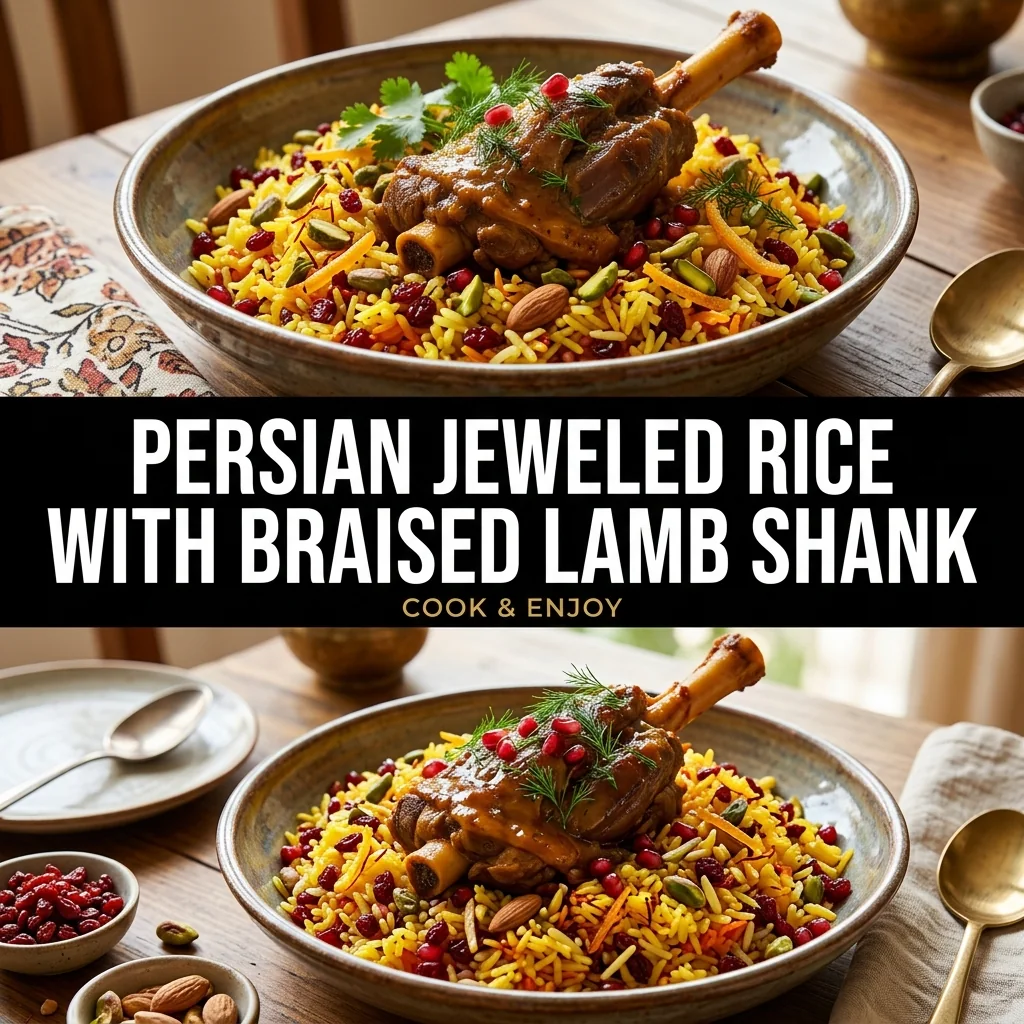
Persian Jeweled Rice, historically known as Javaher Polow, represents one of the most celebrated centerpieces of Persian culinary tradition. This dish mirrors an array of precious gems across a bed of pristine, long-grain basmati rice. Crimson barberries resemble rubies, slivered pistachios shine like emeralds, and vibrant saffron imparts an unmistakable golden hue. Pairing this aromatic rice with halal lamb shanks braised in an aromatic broth of turmeric, sweet onions, and cinnamon elevates a celebratory meal into a complete dining experience. The slow braising technique breaks down the collagen in the lamb, creating tender meat that pulls effortlessly from the bone, providing a rich, savory counterbalance to the tart barberries and fragrant saffron steam.
Selecting and Prepping Halal Lamb Shanks
For the most succulent braise, source high-quality halal-certified lamb hindshanks, which provide generous meat-to-bone ratios and rich connective tissue. Patting the shanks completely dry before seasoning is critical; excess surface moisture prevents the Maillard reaction, diminishing the depth of your braising liquor. Sear the meat deliberately in batches if necessary, allowing a deep mahogany crust to form. This fond forms the primary flavor foundation of the sauce. As the shanks braise slowly under a tight lid, collagen melts into natural gelatin, bodying the broth without needing artificial thickeners.
Mastering the Parboil and Steam Rice Technique
Achieving authentic separated basmati grains requires a two-stage cooking method: parboiling and gentle steaming. Soaking the rice washes away excess surface amylose and hydrates the grain core, reducing broken kernels. When parboiling in salted boiling water, time the cooking strictly to seven minutes. The grain should bend slightly between fingers while remaining slightly chalky inside. Draining thoroughly halts cooking before layering into the pot. Wrapping the pot lid with a clean kitchen towel prevents condensing water droplets from falling back onto the rice, ensuring steam escapes properly to yield perfectly separated grains.
Balancing the Jeweled Garnishes
The balance of Persian jeweled rice depends on the contrast between sour, sweet, and nutty textures. Dried Iranian barberries (zereshk) deliver a sharp, clean tartness that cuts through the unctuous lamb fat. Rinsing them eliminates residual dust and rehydrates the dried fruit skins. A minute pinch of sugar tempers their mouth-puckering bite without turning them into candy. Raw slivered almonds and unsalted pistachios should remain unroasted prior to their brief sauté, maintaining their crisp, buttery crunch. Fold half the garnish into the top layer of rice and scatter the remainder across the platter.
Before you start
Barberries burn rapidly when exposed to high heat because of their natural acidity and added sugar. Always cook them over low heat for under two minutes, stirring constantly until they puff up slightly. Blooming the crushed saffron in warm—not boiling—water releases both water-soluble color and delicate aroma. Soaking basmati rice for thirty minutes prior to parboiling elongates the grains and prevents breakage during steaming, guaranteeing individual, fluffy grains essential for authentic Persian rice presentation.
THE RECIPE
Persian Jeweled Rice with Braised Lamb Shank
4 servings · 35 minutes preparation · 140 minutes cooking · 30 minutes cooling, chilling or resting
Ingredients
Step-by-step instructions
- Season 4 halal-certified lamb shanks evenly with 1 1/2 teaspoons fine sea salt, 1 teaspoon black pepper, and 1 teaspoon ground turmeric.
- Heat 2 tablespoons olive oil in a wide, heavy Dutch oven over medium-high heat, sear the shanks until deeply browned on all sides, about 10 to 12 minutes total, then transfer them to a plate.
- Reduce heat to medium, add the sliced yellow onions to the rendered fat, and cook until golden brown and caramelized, about 10 minutes, stirring in the minced garlic, whole cinnamon stick, and remaining 1/2 teaspoon turmeric during the final 2 minutes.
- Pour in 2 cups halal-certified beef broth and 1 tablespoon bloomed saffron water, scraping up browned fond from the pot bottom; return the shanks along with accumulated juices, bring to a boil, cover tightly, reduce heat to low, and braise gently for 1 hour 45 minutes until the meat is fork-tender.
- While the shanks braise, bring 10 cups of water with 1 teaspoon fine sea salt to a rolling boil in a separate large pot, add the soaked basmati rice, parboil uncovered for exactly 7 minutes until the grains are tender outside with a firm core, then drain in a colander.
- Coat the bottom of a clean 5-quart nonstick pot with 1 tablespoon olive oil and 1 tablespoon melted butter, layer the drained rice gently into a loose pyramid, drizzle with 2 tablespoons melted butter, poke 4 steam holes to the base with the handle of a wooden spoon, cover with a lid wrapped in a clean kitchen towel, and steam over low heat for 35 minutes.
- Melt the remaining 1 tablespoon butter in a small skillet over medium-low heat, stir in 1/2 cup rinsed barberries and 1 tablespoon sugar, cook gently for 90 seconds until plumped without burning, then remove from heat and toss with slivered pistachios and almonds.
- Scoop 1 cup of steamed rice into a small bowl, stir with the remaining bloomed saffron water, mound the fluffy white steamed rice onto a wide serving platter, scatter the saffron rice and the warm barberry-nut mixture over top, and arrange the braised lamb shanks around the jeweled rice, ladling strained braising jus over the meat.
Kitchen notes
Barberries burn rapidly when exposed to high heat because of their natural acidity and added sugar. Always cook them over low heat for under two minutes, stirring constantly until they puff up slightly. Blooming the crushed saffron in warm—not boiling—water releases both water-soluble color and delicate aroma. Soaking basmati rice for thirty minutes prior to parboiling elongates the grains and prevents breakage during steaming, guaranteeing individual, fluffy grains essential for authentic Persian rice presentation.
Storage & make-ahead
Store leftover lamb and jeweled rice in separate airtight containers in the refrigerator within 2 hours of cooking. Lamb shanks and sauce keep well for up to 3 days, while rice maintains optimal texture for up to 2 days. To reheat, warm the lamb shanks in their braising jus over medium-low heat in a covered pan until the center reaches at least 165 F (74 C). Reheat rice gently in a covered saucepan with a tablespoon of water or broth.
An original recipe guide inspired by themes in our Pinterest research. Recipe has not been independently kitchen-tested. AI-generated image is illustrative; your finished dish may look different.
Frequently asked questions
Can I make the braised lamb shanks a day ahead?
Yes, braised lamb develops deeper flavor when chilled overnight in its braising jus. Skim any solidified surface fat before reheating gently on the stovetop until the internal temperature reaches 165 F (74 C). Prepare the steamed jeweled rice fresh on the day of serving for optimal texture.
What can I substitute if dried barberries are unavailable?
If dried barberries are hard to source, unsweetened dried cranberries chopped finely and tossed with a small squeeze of fresh lemon juice provide an acceptable tart profile. Avoid overly sweetened dried cranberries, as they will throw off the delicate sweet-sour harmony required for genuine jeweled rice.
Why is blooming saffron in warm water necessary?
Grinding saffron threads with a mortar and pestle breaks the protective cell walls, and steeping them in warm water allows crocin, the primary pigment and flavor compound, to disperse thoroughly. Adding dry whole threads directly to rice results in patchy yellow spotting rather than a rich, uniform golden color.