WHY MAKE IT
A little comfort, a lot of flavor.
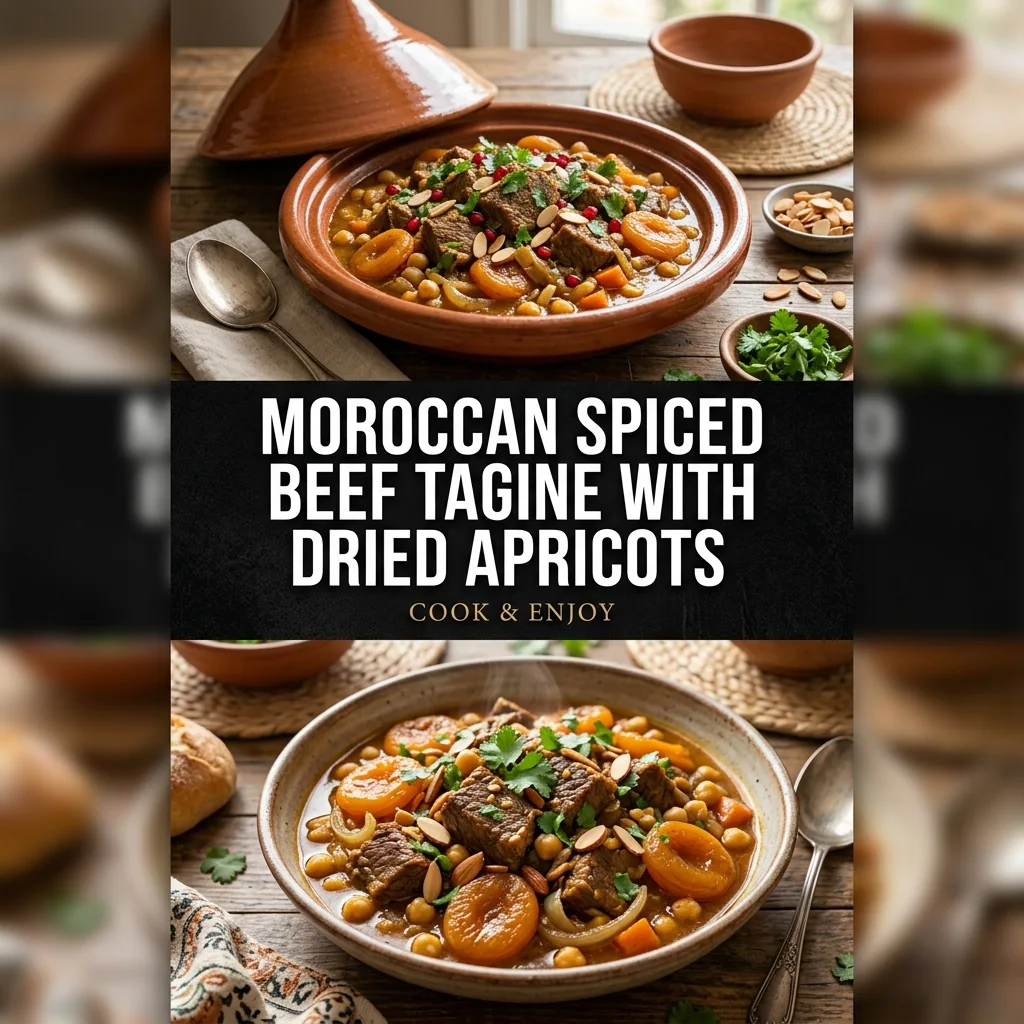
The Moroccan tagine is a culinary icon, uniting savory meats with sweet fruits and warming aromatic spices. This beef variation honors the classic Mrouzia-inspired balance, pairing well-marbled chuck beef with succulent dried apricots, sweet honey, and warm cinnamon. As the meat simmers inside a heavy-bottomed vessel, the rendered marrow and onions melt into an unctuous sauce enriched with golden saffron and fiery ginger. Whole Turkish apricots soak up the spiced broth, plumping into soft sweet jewels that contrast against the deeply browned, tender beef. Finished with crisp toasted almonds, this traditional tagine is intended to be shared communally with warm, crusty bread to dip into every drop of the spiced reduction.
Choosing the Best Beef Cut for Tagine
Halal-certified beef chuck roast provides an ideal balance of intramuscular fat and collagen required for prolonged braising. Leaner cuts like sirloin dry out and become stringy when subjected to extended simmering, while chuck slowly softens into meltingly tender morsels. Trimming excessive outer fat caps prevents an overly greasy sauce, but ensure sufficient intermuscular marbling remains intact. Cutting the beef into consistent 1 1/2-inch cubes guarantees uniform cooking times and allows each piece to hold its shape neatly during long simmering without disintegrating into the spiced onion gravy.
Developing the Aromatic Sauce Base
The signature velvety texture of a traditional Moroccan sauce, known as 'daghmira,' relies on grated onions cooked down thoroughly with spices. Grating releases onion juices immediately into the cooking oil, creating a rich slurry that softens without burning. Blooming the ground ginger, cinnamon, coriander, and turmeric directly with the onions and searing fond extracts their lipid-soluble flavor compounds. Incorporating genuine saffron water near the start infuses the entire broth with an unmistakable floral warmth and rich golden amber tone that complements the sweet notes introduced later by the apricots.
Incorporating Fruits and Textural Garnishes
Introducing dried fruit too early in the braising cycle causes it to dissolve completely into mush, muddling the clarity of the tagine. Adding the honey-tossed apricots during the final thirty minutes allows them to rehydrate fully while retaining their structural integrity. The sugars in the honey caramelize slightly in the braising steam, lending a glossy sheen to the beef. Blanching and frying raw almonds in a teaspoon of olive oil right before serving ensures they stay delightfully crunchy, providing a necessary textural offset to the meltingly soft beef and stewed fruit.
Before you start
Grating the onions rather than dicing them is an authentic Moroccan culinary technique that creates a thick, cohesive sauce that clings to the beef without using starch thickeners. Ensure your dried apricots are tender Turkish apricots rather than sulfurous, extra-tart varieties, as their honey-like flavor blooms beautifully in the cinnamon broth. Keep the braise at a low, steady simmer; boiling vigorously tightens the beef fibers and makes the chuck tough.
THE RECIPE
Moroccan Spiced Beef Tagine with Dried Apricots
6 servings · 25 minutes preparation · 125 minutes cooking · 15 minutes cooling, chilling or resting
Ingredients
Step-by-step instructions
- Toss the cubed halal-certified beef chuck in a bowl with 1 1/2 teaspoons fine sea salt, 1 teaspoon ground black pepper, 1 1/2 teaspoons ground ginger, 1 teaspoon ground cinnamon, ground coriander, ground cumin, and ground turmeric until thoroughly coated.
- Heat 3 tablespoons extra-virgin olive oil in a wide heavy Dutch oven or cast-iron tagine base over medium-high heat, and sear the beef cubes in two uncrowded batches until browned on all sides, about 6 to 8 minutes per batch, transferring seared meat to a clean platter.
- Reduce the heat to medium, add the grated yellow onions to the remaining oil, and cook until softened and translucent, about 5 minutes, scraping up browned bits with a wooden spatula.
- Add the minced garlic and cook for 1 minute until fragrant, then return the seared beef along with any rested juices back into the pot.
- Pour in 2 cups halal-certified beef broth and the steeped saffron water, bring the liquid to a rolling simmer, cover with a tight-fitting lid, reduce the heat to low, and simmer gently for 1 hour 30 minutes, stirring occasionally.
- In a small heatproof bowl, combine the whole dried apricots, pure honey, remaining 1/2 teaspoon ground cinnamon, and remaining 1/2 teaspoon sea salt, spooning 1/2 cup of hot braising broth from the tagine over the apricots to soften them.
- Stir the apricot-honey mixture into the simmering beef tagine, cover again, and cook over medium-low heat for an additional 25 minutes until the beef is fork-tender and the sauce thickens into a glossy glaze.
- Remove from the heat, let the tagine rest uncovered for 15 minutes to settle the rich sauce, then scatter the toasted blanched almonds and fresh cilantro across the surface before serving hot with crusty bread or couscous.
Kitchen notes
Grating the onions rather than dicing them is an authentic Moroccan culinary technique that creates a thick, cohesive sauce that clings to the beef without using starch thickeners. Ensure your dried apricots are tender Turkish apricots rather than sulfurous, extra-tart varieties, as their honey-like flavor blooms beautifully in the cinnamon broth. Keep the braise at a low, steady simmer; boiling vigorously tightens the beef fibers and makes the chuck tough.
Storage & make-ahead
Cool the tagine completely and store in an airtight container in the refrigerator within 2 hours of cooking. This tagine keeps exceptionally well for up to 4 days, with the warming spices melding deeper over time. Reheat gently in a covered saucepan over medium-low heat, stirring occasionally and adding a splash of water or broth, until the center of the meat reaches at least 165 F (74 C).
An original recipe guide inspired by themes in our Pinterest research. Recipe has not been independently kitchen-tested. AI-generated image is illustrative; your finished dish may look different.
Frequently asked questions
Can I use a traditional clay tagine on a modern stovetop?
Yes, but you must place an inexpensive metal heat diffuser between the gas or electric burner and the unglazed clay tagine to distribute heat evenly. Heating clay tagines too rapidly or directly causes sudden thermal shock that can crack the vessel instantly.
Can I substitute halal lamb or bone-in shank for beef?
Halal lamb shoulder or bone-in shanks make an outstanding substitute for beef chuck. Lamb pairs naturally with dried apricots and cinnamon. Maintain the same cooking time and simmer until the meat pulls easily from the bone with a dinner fork.
Why did my sauce turn out too thin?
If the sauce remains thin after the beef is tender, uncover the pot for the final 10 to 15 minutes of cooking. Increasing the heat slightly will reduce the braising broth into a thick, glossy syrup that coats the back of a spoon.