WHY MAKE IT
A little comfort, a lot of flavor.
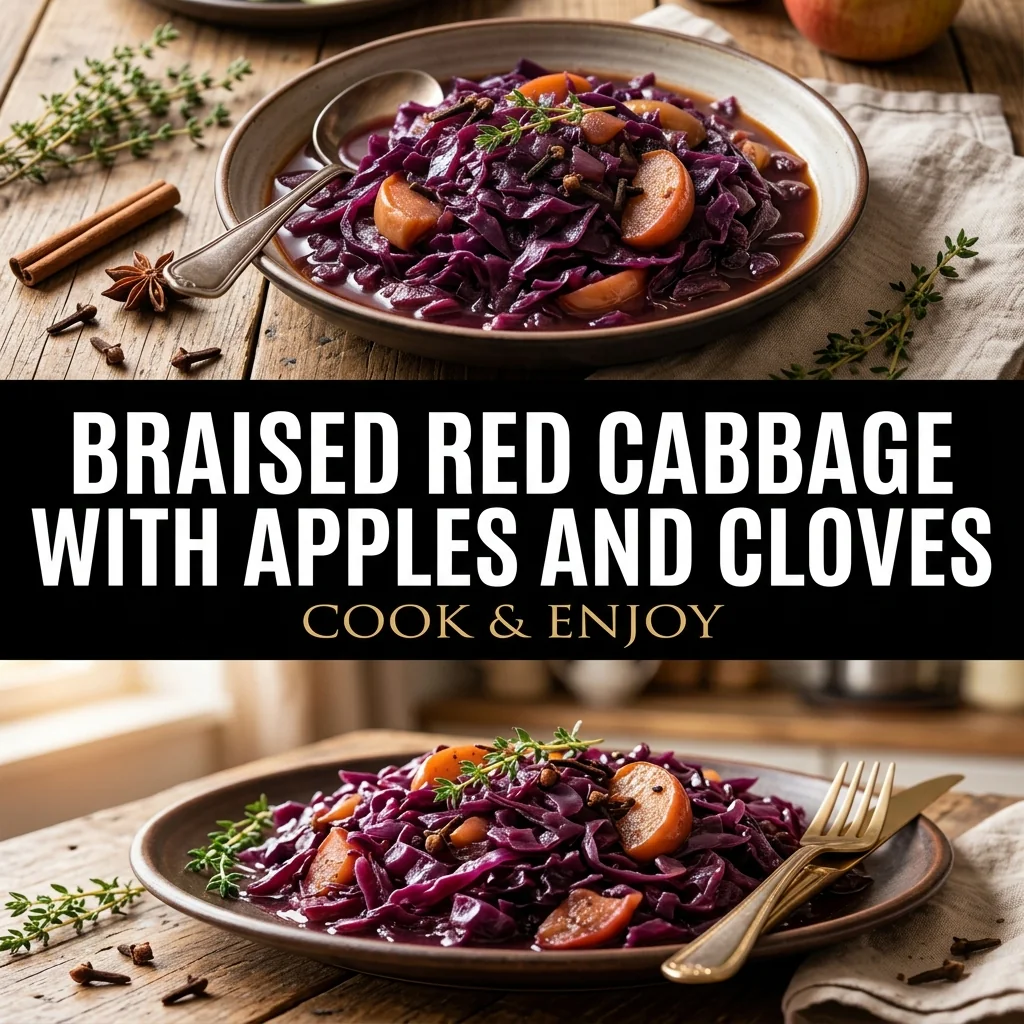
Braised red cabbage is an enduring cool-weather classic that achieves a delightful balance of sweet, tart, and warm spiced flavors. Slow simmering over gentle heat softens the dense, fibrous structure of red cabbage until it becomes meltingly tender without turning into puree. Tart, firm cooking apples melt partially into the sauce to create a velvety background body, while whole cloves, cinnamon bark, and a laurel leaf perfume every strand with comforting fragrance. Finished with pure maple syrup and tangy apple cider vinegar, this richly pigmented dish cuts through the richness of roasted meats, poultry, or roasted root vegetables, bringing vivid color and refined balance to your dinner table.
Acidity and Anthocyanin Preservation
Red cabbage owes its deep coloring to anthocyanins, a family of water-soluble pigments highly sensitive to pH shifts. In neutral tap water, red cabbage quickly oxidizes into a muted slate-blue shade. Introducing raw unfiltered apple cider vinegar right as the cabbage hits the warm pot maintains a low pH balance, locking in a stunning ruby-magenta color throughout the extended braising cycle while imparting clean, fruity acidity that balances the natural sweetness of caramelized onions.
Layering Whole Warm Spices
Whole spices impart nuance without muddying the silky texture of the finished braise. Whole aromatic cloves release eugenol, an essential oil that pairs harmoniously with cooked brassicas, while true cinnamon stick delivers woody warmth without artificial sweetness. Tying these whole aromatics in cheesecloth or tracking their count permits simple removal prior to plating, avoiding the unpleasant surprise of someone biting down directly on a hard, intensely concentrated clove or piece of bark.
Texture Control and Slow Reduction
The choice of apple dictates the final mouthfeel of the dish. Selecting a high-acid, firm variety like Granny Smith prevents the fruit from dissolving entirely during a 40-minute braise. Half of the apple pieces soften to enrich the pan juices, while remaining chunks retain a pleasant chew. Simmering uncovered for the final three minutes evaporates remaining water, reducing the vinegar, maple syrup, and vegetable broth into a rich, clinging glaze that blankets the tender ribbons.
Before you start
The vibrant purple color of red cabbage relies directly on acidity. Raw red cabbage contains anthocyanin pigments that shift toward an unappealing dull blue or grey hue if cooked in a neutral or alkaline environment. Adding raw unfiltered apple cider vinegar at the very start of the braise preserves and intensifies its brilliant ruby-magenta tone. For easy removal before serving, you can tie the whole cloves, cinnamon stick, and bay leaf into a small cheesecloth bundle.
THE RECIPE
Braised Red Cabbage with Apples and Cloves
6 servings · 20 minutes preparation · 45 minutes cooking · 5 minutes cooling, chilling or resting
Ingredients
Step-by-step instructions
- Halve the red cabbage through the core, cut out the tough white wedge at the base, and slice the halves into fine, paper-thin shreds using a sharp chef's knife or mandoline.
- Melt 2 tablespoons of unsalted butter in a heavy 5-quart Dutch oven or deep enameled pot over medium heat.
- Add the diced yellow onion to the melted butter and sauté for 5 minutes, stirring frequently, until translucent and soft without browning.
- Add the diced apples, 6 whole cloves, the cinnamon stick, and the bay leaf, stirring constantly for 2 minutes to awaken the warm whole spices.
- Add the shredded red cabbage to the pot in batches, stirring to integrate it with the warm butter, onions, and spices.
- Pour in 1/3 cup of raw apple cider vinegar, 1/3 cup of vegetable broth, 2 tablespoons of pure maple syrup, 1 teaspoon of kosher salt, and 1/4 teaspoon of black pepper, bringing the liquid to an active simmer.
- Cover the Dutch oven with a tight lid, reduce the heat to low, and braise gently for 35 to 40 minutes, stirring every 10 minutes, until the cabbage is tender and silky.
- Uncover the pot, raise heat to medium, and simmer for 2 to 3 minutes until excess free liquid reduces to a glossy glaze clinging to the cabbage.
- Remove from heat, discard the cinnamon stick, cloves, and bay leaf, let rest for 5 minutes to allow the flavors to harmonize, and serve warm.
Kitchen notes
The vibrant purple color of red cabbage relies directly on acidity. Raw red cabbage contains anthocyanin pigments that shift toward an unappealing dull blue or grey hue if cooked in a neutral or alkaline environment. Adding raw unfiltered apple cider vinegar at the very start of the braise preserves and intensifies its brilliant ruby-magenta tone. For easy removal before serving, you can tie the whole cloves, cinnamon stick, and bay leaf into a small cheesecloth bundle.
Storage & make-ahead
Cool the braised cabbage completely and refrigerate in an airtight container within 2 hours. This dish stores exceptionally well for up to 4 days, developing deeper flavor over time. Reheat gently in a covered saucepan over medium-low heat with a splash of water, stirring occasionally until thoroughly hot throughout and reaching a safe internal temperature of 165°F (74°C).
An original recipe guide inspired by themes in our Pinterest research. Recipe has not been independently kitchen-tested. AI-generated image is illustrative; your finished dish may look different.
Frequently asked questions
Can I make this braised cabbage a day ahead?
Yes, braised red cabbage tastes even better the next day as the vinegar, spices, and apple juices permeate the cabbage fibers. Reheat gently on the stovetop over low heat with two tablespoons of water until steaming and reaching 165°F (74°C).
What can I use if I do not have maple syrup?
Dark brown sugar, coconut sugar, or mild honey serve as excellent substitutes. Use an equal measure of two tablespoons, stirring thoroughly into the simmering braising liquid along with the vinegar and vegetable broth to balance the tart acidity.
Why did my cabbage turn bluish while cooking?
A bluish color indicates insufficient acidity. Red cabbage pigments require an acidic environment to maintain their ruby-purple hue. Stir in an extra tablespoon of apple cider vinegar or fresh lemon juice immediately to restore its vivid magenta color.