WHY MAKE IT
A little comfort, a lot of flavor.
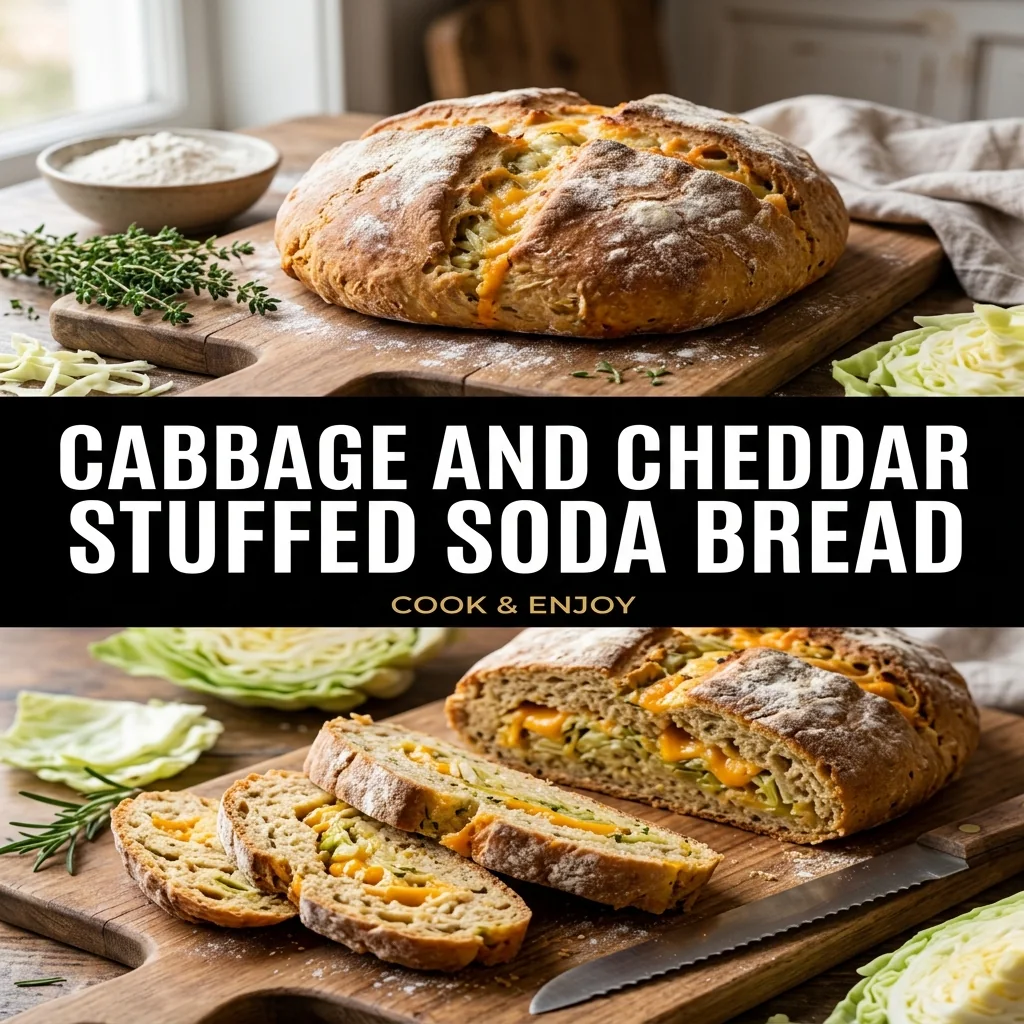
Traditional soda bread relies on the rapid chemical reaction between lactic acid in real buttermilk and sodium bicarbonate to leaven hearty loaves without commercial yeast. This savory adaptation elevates the classic rustic loaf by folding in sweet sautéed green cabbage and bold, sharp white cheddar cheese made with microbial rennet. The cabbage lends sweetness and natural moisture, ensuring the crumb stays tender rather than crumbly, while chives and cracked black pepper impart an aromatic savory finish. Because soda bread requires no prolonged proofing stages or rigorous kneading, it transitions effortlessly from pantry prep to the oven, delivering a crusty, golden bake that pairs wonderfully with hearty vegetable stews, rich lentil soups, or savory breakfast platters.
Managing Moisture in Savory Soda Bread
Vegetable additions introduce variable water content into quick breads, which can interfere with crumb structure. Raw cabbage releases significant water as it bakes, which will make the interior dough gluey. Cooking the cabbage beforehand drives off raw water while concentrating natural sugars through gentle caramelization. Tossing the cooled cooked cabbage and grated cheddar thoroughly through the dry flour blend prior to pouring in buttermilk ensures the inclusions distribute evenly without clumping together or sinking to the bottom.
Selecting Halal-Suitable Sharp Cheddar
Traditional hard cheeses often rely on animal rennet harvested from ruminant stomachs. To ensure full compliance with halal dietary requirements, select cheddar certified halal or explicitly labeled as made with microbial, vegetarian, or non-animal enzymes. A mature, sharp white cheddar holds up best against the hearty whole wheat notes in this recipe, delivering punchy pockets of savory fat that blister against the crust without disappearing entirely into the crumb during baking.
Handling Technique and Slashing Traditions
Unlike yeast bread, soda bread suffers severely if kneaded vigorously. Working the dough develops gluten excessively, yielding a heavy, rubbery loaf rather than a tender crumb. Stir only until the buttermilk absorbs the dry flour, then shape gently using cupped hands. Slashing a deep cross across the crown is not merely symbolic; it relieves surface tension, allowing thermal steam to escape evenly so the dense loaf expands upward rather than splitting awkwardly around the base.
Before you start
It is critical that the sautéed cabbage is cooled completely before introducing it to the flour and buttermilk. Warm cabbage will prematurely activate the baking soda and melt the shredded cheddar, resulting in a gummy, dense center. Shred the cabbage as thinly as possible so it weaves seamlessly throughout the dough without creating large wet pockets.
THE RECIPE
Cabbage and Cheddar Stuffed Soda Bread
8 servings · 25 minutes preparation · 50 minutes cooking · 20 minutes cooling, chilling or resting
Ingredients
Step-by-step instructions
- Melt 2 tablespoons of unsalted butter in a wide skillet over medium heat. Add the shredded green cabbage, 1/4 teaspoon fine sea salt, and black pepper; sauté for 8 to 10 minutes, stirring frequently, until the cabbage is soft, wilted, and slightly caramelized. Transfer to a plate and cool completely.
- Preheat your oven to 375°F (190°C) and line a heavy baking sheet or a 10-inch cast-iron skillet with parchment paper.
- In a large mixing bowl, whisk together the unbleached all-purpose flour, stone-ground whole wheat flour, baking soda, cream of tartar, and the remaining 1/4 teaspoon fine sea salt.
- Add the shredded microbial-rennet sharp cheddar, chopped chives, and completely cooled sautéed cabbage to the dry ingredients, tossing lightly with your fingers to coat the inclusions in flour.
- Make a well in the center of the flour mixture, pour in the cold buttermilk, and stir gently with a wooden spoon or silicone spatula just until the dough comes together into a soft, shaggy mass. Do not overmix.
- Turn the dough onto a lightly floured board, shape gently into a cohesive round loaf roughly 7 inches in diameter, and transfer onto the prepared baking sheet. Cut a 1/2-inch-deep traditional cross across the top of the loaf with a sharp knife and brush lightly with beaten egg.
- Bake at 375°F (190°C) for 38 to 40 minutes until the crust is deeply golden brown, the cheese is melted and bubbling, and the bottom sounds hollow when firmly tapped, reaching an internal temperature of 200°F (93°C). Cool on a wire rack for 20 minutes before slicing.
Kitchen notes
It is critical that the sautéed cabbage is cooled completely before introducing it to the flour and buttermilk. Warm cabbage will prematurely activate the baking soda and melt the shredded cheddar, resulting in a gummy, dense center. Shred the cabbage as thinly as possible so it weaves seamlessly throughout the dough without creating large wet pockets.
Storage & make-ahead
Cool briefly, then refrigerate in a sealed container within 2 hours for up to 3 days. Freeze tightly wrapped baked portions for up to 2 months. Reheat in a 350 F (177 C) oven until hot throughout and the center reaches 165 F (74 C).
An original recipe guide inspired by themes in our Pinterest research. Recipe has not been independently kitchen-tested. AI-generated image is illustrative; your finished dish may look different.
Frequently asked questions
Can I use powdered buttermilk or a milk-and-lemon substitute?
Real cultured buttermilk provides optimal acidity and body. If unavailable, combine 325 ml whole milk with 25 ml fresh lemon juice or white vinegar, letting it stand for 10 minutes until slightly curdled before use.
Why is cream of tartar included alongside baking soda?
Cream of tartar supplies supplemental tartaric acid to guarantee that all the alkaline baking soda neutralizes completely, ensuring an energetic rise while preventing any soapy or metallic aftertaste in the finished crumb.
Why did the bottom of my loaf brown too quickly?
Dense quick breads bake for long durations. If your oven has strong bottom heat, bake the loaf on a double sheet pan or elevate it to the center rack to protect the base from excess scorching.