WHY MAKE IT
A little comfort, a lot of flavor.
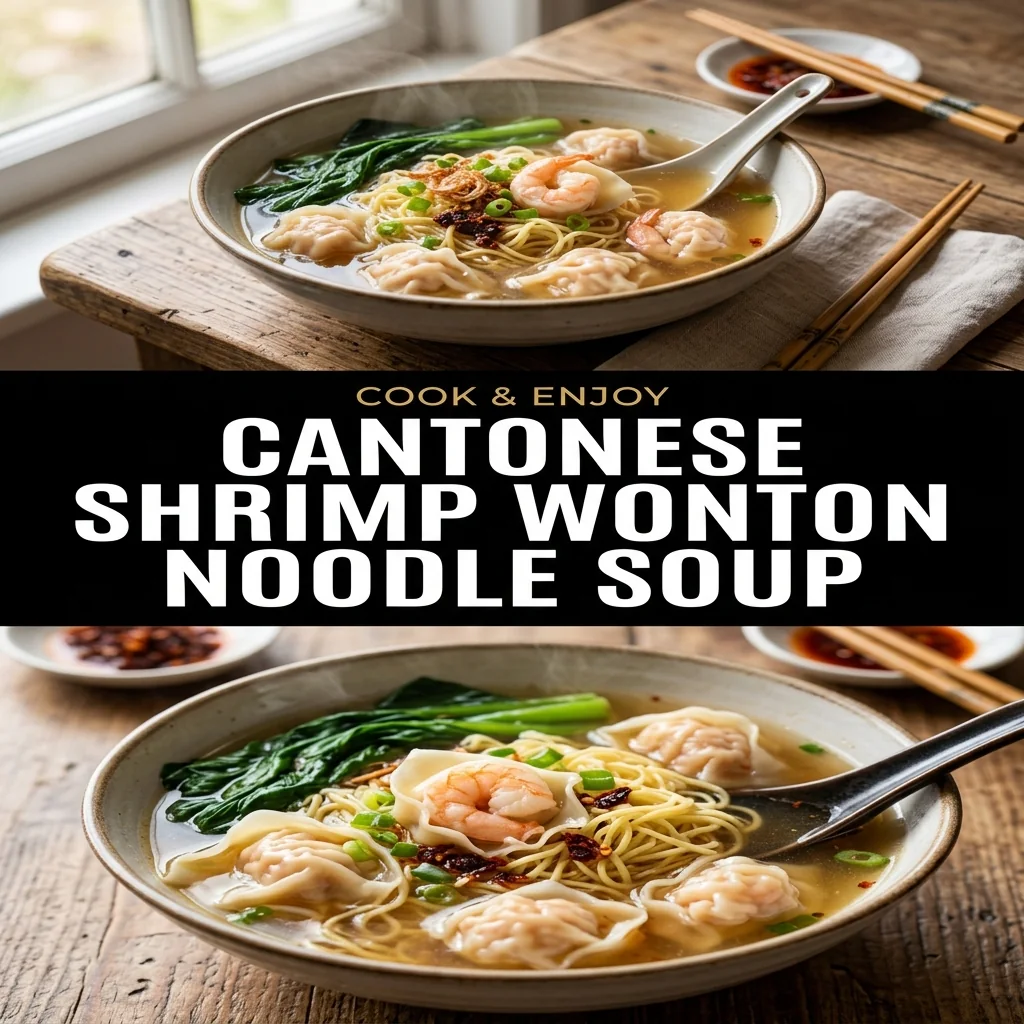
Cantonese Shrimp Wonton Noodle Soup represents the pinnacle of Southern Chinese noodle craftsmanship, celebrated for its clean, ocean-scented broth and contrasting springy textures. Thin, pleated wontons cradle sweet, bouncy shrimp, floating atop nests of wiry egg noodles bathed in an aromatic stock infused with toasted dried flounder and yellow chives. Every element requires deliberate timing, from mixing the shrimp filling in a single direction to activate natural proteins, to rapidly blanching the thin noodles so they maintain their prized snap. This recipe honors traditional Hong Kong tea-restaurant standards using entirely halal-certified poultry stock and pure seafood ingredients, delivering an invigorating bowl that feels restorative, deeply fragrant, and masterfully balanced.
Crafting the Signature Shrimp Texture
The signature bouncy mouthfeel of Cantonese shrimp wontons relies entirely on moisture control and mechanical agitation. Shrimp must be dried thoroughly with paper towels before prep, as excess water prevents the emulsion from binding properly. Mincing a portion of the shrimp into a paste while roughly chopping the remainder creates textural pockets inside each wrapper. Stirring the mixture continuously in one circular direction develops the proteins, transforming loose shellfish into an elastic filling that contracts firmly into a juicy sphere upon hitting the boiling water bath.
Building the Flounder-Infused Broth
Authentic wonton soup does not rely on plain poultry broth alone; its distinct character comes from toasted marine umami. Dried flounder, roasted gently until fragrant and pulverized into a coarse powder, imparts an unmistakable smoky, savory depth to halal chicken broth. Simmering the stock gently allows the dried seafood to release its natural glutamates without clouding the amber liquid. Finishing the broth with freshly chopped yellow chives introduces a sweet, mild allium aroma that cuts through the rich seafood components without overpowering the delicate wontons.
Mastering the Noodle Plunge Technique
Traditional thin wonton noodles are made with alkaline water, giving them an unmistakable yellow hue and toothsome elasticity. Cooking them requires intense heat and split-second precision. Dropping the noodles into a high-volume rolling boil ensures rapid heat recovery, cooking the fine strands in less than a minute. The critical intermediary step—a five-second cold water rinse—washes away excess surface starch and halts starch gelatinization immediately. A final quick dip into hot water warms the noodles right before the scalding flounder broth is ladled over top.
Before you start
The definitive snap of authentic Cantonese wonton noodles depends on quick temperature changes. Shaking and briefly rinsing the par-boiled egg noodles in cold water strips away surface alkalinity and excess flour, creating the signature bouncy bite known as al dente or 'song'. Do not overcook the wontons; once they surface and turn slightly pink through their gossamer pastry, remove them immediately to maintain juicy, succulent shrimp texture without tearing delicate wonton wrappers.
THE RECIPE
Cantonese Shrimp Wonton Noodle Soup
4 servings · 40 minutes preparation · 25 minutes cooking · 15 minutes cooling, chilling or resting
Ingredients
Step-by-step instructions
- Dice two-thirds of the patted-dry raw shrimp into small pea-sized chunks and mince the remaining one-third into a sticky paste using a heavy cleaver or chef's knife.
- Transfer the prepared shrimp to a ceramic bowl, add 1 teaspoon potato starch, 1 teaspoon sugar, 0.5 teaspoon kosher salt, 0.25 teaspoon white pepper, 1 teaspoon grated ginger, 1 tablespoon halal oyster sauce, and 1 teaspoon toasted sesame oil, stirring briskly in one clockwise direction for 3 minutes until a bouncy, cohesive emulsion forms.
- Cover the wonton filling and let it rest in the refrigerator for 15 minutes to chill and firm up.
- Place 1 wonton wrapper on a clean cutting board, spoon 1 heaping teaspoon of chilled shrimp filling into the center, moisten the wrapper edges lightly with water, fold diagonally into a triangle, and gather the corners together with a gentle twist to form a ruffled goldfish tail pouch; repeat for all 24 wontons.
- In a 4-quart stockpot, combine 6 cups halal chicken broth, 2 tablespoons dried flounder powder, 2 tablespoons light soy sauce, and 0.5 teaspoon kosher salt; bring to a simmer over medium heat and maintain a gentle simmer for 15 minutes, then keep hot over low heat.
- Bring a separate 6-quart pot of unsalted water to a rapid rolling boil over high heat, drop in the halved baby bok choy for 60 seconds until crisp-tender, remove with tongs, and arrange evenly among four deep serving bowls.
- Gently lower the wontons into the same pot of boiling water and cook for 3 to 4 minutes until they float to the surface, the skins become translucent, and the shrimp reaches an internal temperature of 145 F (63 C); transfer 6 wontons into each bowl using a spider strainer.
- Shake loose flour from the 8 ounces of fresh wonton egg noodles, drop them into the vigorously boiling water for exactly 45 to 60 seconds until springy, immediately drain in a colander, rinse under cold running water for 5 seconds to halt cooking, and plunge back into the boiling water for 3 seconds to reheat before dividing into the bowls.
- Ladle 1.5 cups of the piping-hot flounder broth over the noodles and wontons in each bowl, finish with the sliced yellow chives, a dusting of remaining white pepper, and the remaining 2 teaspoons of toasted sesame oil.
Kitchen notes
The definitive snap of authentic Cantonese wonton noodles depends on quick temperature changes. Shaking and briefly rinsing the par-boiled egg noodles in cold water strips away surface alkalinity and excess flour, creating the signature bouncy bite known as al dente or 'song'. Do not overcook the wontons; once they surface and turn slightly pink through their gossamer pastry, remove them immediately to maintain juicy, succulent shrimp texture without tearing delicate wonton wrappers.
Storage & make-ahead
Store leftover broth, cooked noodles, and boiled wontons in separate airtight containers in the refrigerator within 2 hours. Broth keeps for up to 3 days, while noodles and wontons are best enjoyed within 2 days. Reheat the broth to a rolling boil reaching 165 F (74 C), then briefly scald the refrigerated noodles and wontons in the broth for 60 seconds. Uncooked wontons can be flash-frozen on a parchment-lined sheet pan and transferred to bags for up to 1 month.
An original recipe guide inspired by themes in our Pinterest research. Recipe has not been independently kitchen-tested. AI-generated image is illustrative; your finished dish may look different.
Frequently asked questions
Can I use standard rectangular wonton wrappers?
Square Hong Kong-style wonton wrappers are strongly recommended because they are rolled ultra-thin with egg and flour. Thicker white square dumpling skins absorb excessive broth, becoming doughy rather than silky and translucent around the delicate shrimp filling.
What can I use if dried flounder is unavailable?
If dried flounder powder is unavailable, toasted dried shrimp powder or a sheet of lightly toasted nori simmered in the halal chicken broth can provide a clean, ocean-derived umami profile that complements the sweet prawn stuffing.
Can I boil the wontons directly in the soup stock?
Boiling wontons directly in the broth releases loose wrapper starch, which muddies the soup and thickens its texture. Always boil wontons and fresh noodles in a dedicated pot of plain water, ladling hot, clear broth over them in the serving bowl.


