WHY MAKE IT
A little comfort, a lot of flavor.
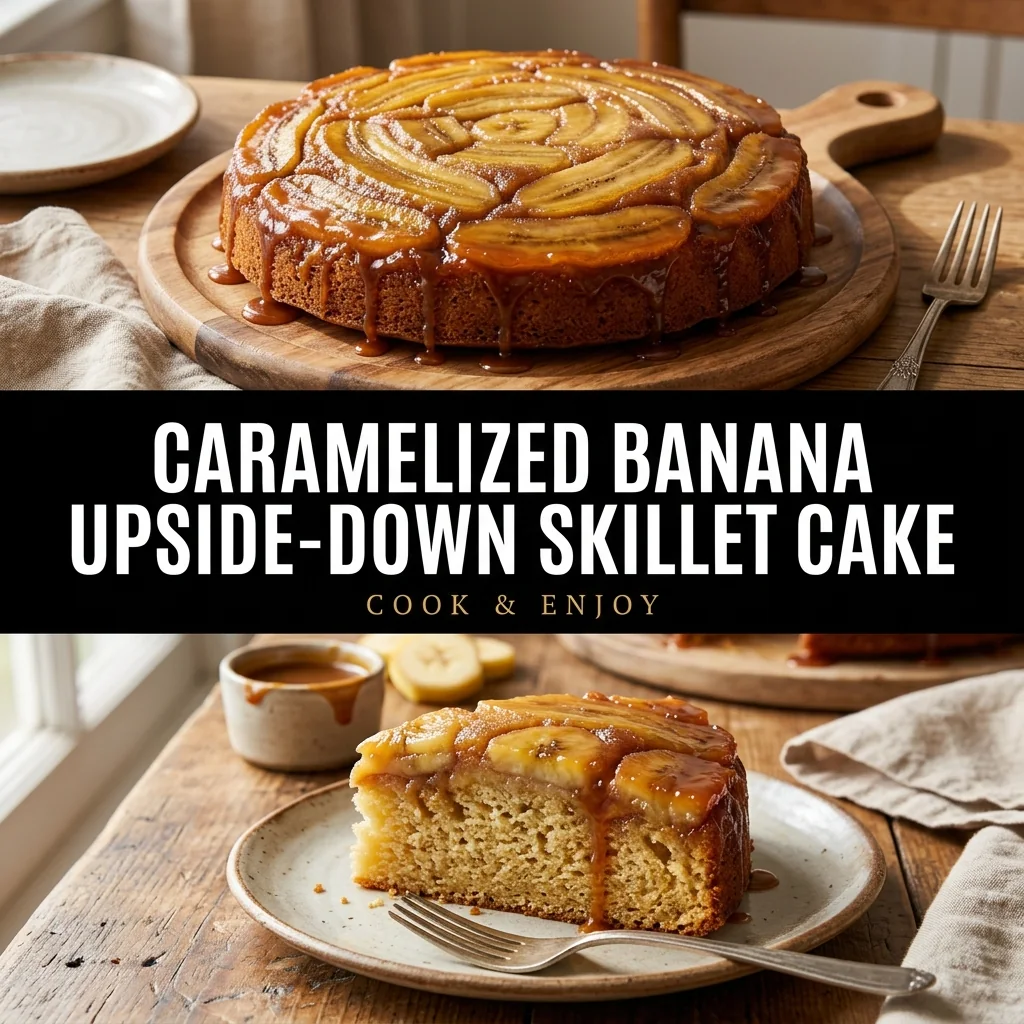
Baking an upside-down cake in a seasoned cast-iron skillet yields unparalleled textural contrast between rich, molten brown sugar and a soft, resilient crumb. The skillet serves as both the caramel cooking vessel and the baking pan, simplifying cleanup while ensuring the pan base remains intensely hot as the fruit begins to roast. As the cake bakes, the halved bananas absorb the bubbling toffee mixture while releasing their aromatic sweetness upward into the spiced buttermilk sponge. Buttermilk contributes essential lactic acidity, which balances the sweetness of the caramel topping while reacting with the baking soda to generate an exceptionally light, tender crumb. Finished with warm hints of cinnamon and nutmeg, this classic dessert delivers rustic elegance with reliable home-cooked satisfaction.
Selecting Fruit and Preparing Caramel
The success of an upside-down fruit cake depends on fruit firmness and syrup consistency. Firm-ripe bananas hold their clean geometric shape under heat without disintegrating into the glaze. Melting the butter and dark brown sugar directly in the cast-iron skillet creates a stable base that will not crystallize easily. Simmering for just two minutes dissolves the sugar granules thoroughly into the fat. Laying the bananas cut-side down ensures their widest surface absorbs the rich caramel, creating a glossy presentation once inverted.
Balancing the Buttermilk Sponge Batter
A sturdy batter is required to support the moisture released by fruit during baking. Creaming softened butter with granulated sugar establishes a steady scaffolding of microscopic air bubbles. Using cultured buttermilk provides two benefits: its natural acidity reacts with baking soda to produce an airy rise, and it tenderizes the gluten network without requiring excess moisture. Ground cinnamon and nutmeg add earthy complexity that bridges the rich sweetness of caramelized bananas with the buttery crumb beneath.
Executing the Critical Inversion
Inverting an upside-down cake requires precise timing to prevent disaster. If flipped immediately out of the oven, the boiling caramel may run uncontrollably and tear the hot, fragile cake. Conversely, waiting too long allows the sugar to cool and bond permanently to the iron surface. Allowing exactly fifteen minutes of resting lets the crumb set while keeping the caramel fluid. Place a rimmed serving platter over the skillet, wear heatproof oven mitts, and invert the assembly with one swift, decisive movement.
Before you start
Choose bananas that are bright yellow with minimal brown speckling. Fruit that is overly ripe or soft will release excess moisture during baking, turning mushy and diluting the brown sugar caramel layer beneath. Cast iron holds heat exceptionally well, so do not let the cake sit longer than 15 minutes before inverting, or the cooling caramel will stick firmly to the pan.
THE RECIPE
Caramelized Banana Upside-Down Skillet Cake
8 servings · 25 minutes preparation · 40 minutes cooking · 20 minutes cooling, chilling or resting
Ingredients
Step-by-step instructions
- Preheat the oven to 350 F / 175 C with a rack positioned in the center position.
- Place a 10-inch heavy cast-iron skillet over medium heat on the stovetop and melt 70 grams of butter.
- Add 100 grams of dark brown sugar to the melted butter, whisk continuously for 2 minutes until bubbling and combined into a smooth paste, then remove the skillet from the heat.
- Carefully arrange the 6 banana halves cut-side down in a radial pattern across the hot caramel base and set aside.
- In a medium bowl, whisk together 190 grams of all-purpose flour, 1 teaspoon cinnamon, 0.25 teaspoon nutmeg, 1 teaspoon baking powder, 0.5 teaspoon baking soda, and 0.5 teaspoon salt.
- In an electric mixer bowl, cream 85 grams of softened butter and 130 grams of granulated sugar on medium-high speed for 3 minutes until fluffy, then beat in the eggs one at a time and add 1 teaspoon alcohol-free vanilla extract.
- With the mixer on low speed, add the flour mixture in three additions alternating with the buttermilk in two additions, mixing just until no dry streaks remain.
- Gently spoon the batter over the arranged bananas in the skillet, smoothing the surface with an offset spatula to cover the fruit completely without disturbing the pattern.
- Bake at 350 F / 175 C for 35 to 38 minutes until a skewer inserted in the center cake crumb emerges clean, rest in the skillet for 15 minutes, invert onto a wide serving platter, and let settle for 5 minutes before slicing.
Kitchen notes
Choose bananas that are bright yellow with minimal brown speckling. Fruit that is overly ripe or soft will release excess moisture during baking, turning mushy and diluting the brown sugar caramel layer beneath. Cast iron holds heat exceptionally well, so do not let the cake sit longer than 15 minutes before inverting, or the cooling caramel will stick firmly to the pan.
Storage & make-ahead
Store leftover cake covered tightly in an airtight container in the refrigerator within 2 hours of baking. Keeps well for up to 3 days. To reheat, warm individual slices on a parchment-lined tray in an oven preheated to 325 F / 165 C for 8 to 10 minutes until heated through to 165 F / 74 C, or microwave individual portions gently for 20 seconds.
An original recipe guide inspired by themes in our Pinterest research. Recipe has not been independently kitchen-tested. AI-generated image is illustrative; your finished dish may look different.
Frequently asked questions
Can I use an enamel skillet or cake pan instead?
Yes, an enamel-coated cast iron skillet or a standard heavy metal 10-inch cake pan works well. If using a cake pan, prepare the caramel on the stove in a saucepan first, pour it into the cake pan, arrange the bananas, and add batter.
What if some banana pieces stick to the skillet after inverting?
Simply use a heatproof silicone spatula or butter knife to lift the stuck fruit and caramel out of the warm skillet, then place them back into their original pattern on top of the inverted cake while still warm.
Can I substitute milk for the buttermilk in this recipe?
For best results, keep the acidity balanced by whisking 120 milliliters of whole milk with one teaspoon of fresh lemon juice, letting it stand for five minutes to curdle slightly before incorporating it into the batter as directed.