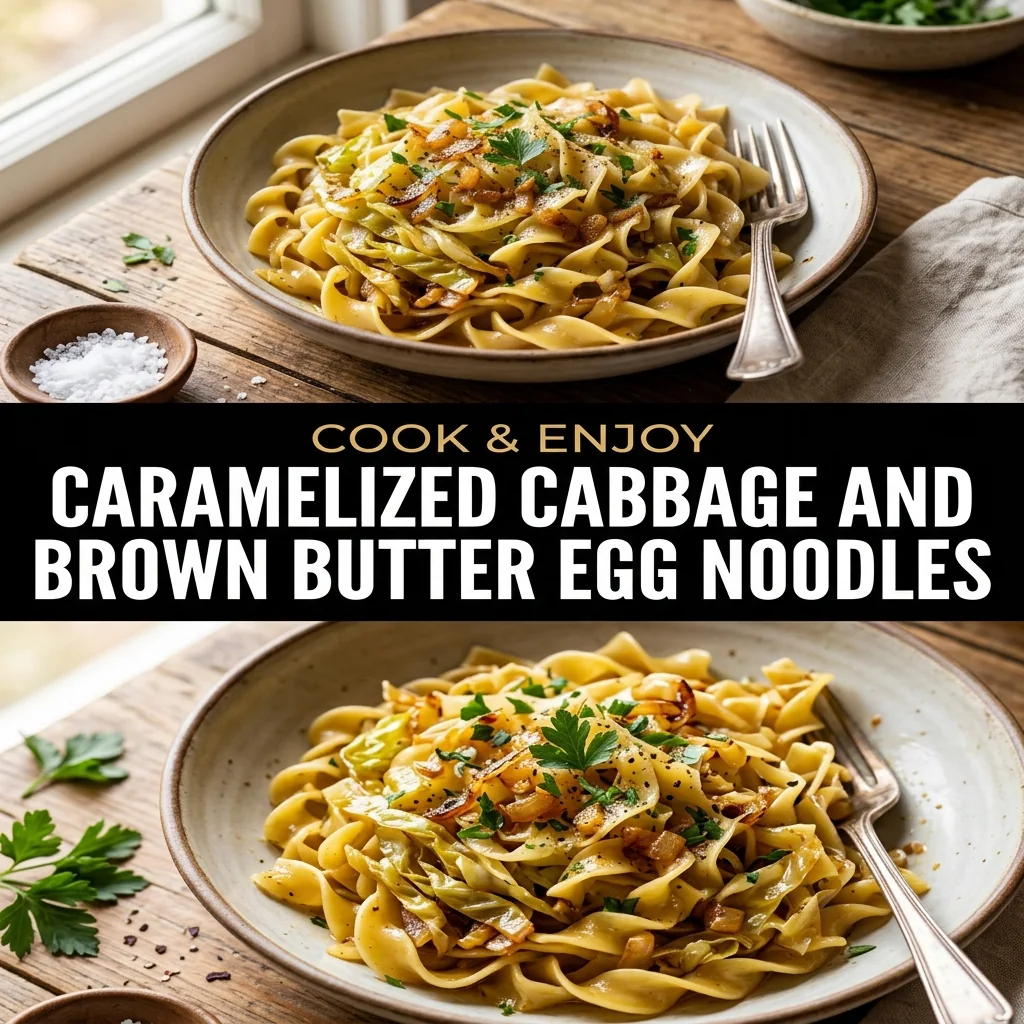
WHY MAKE IT
A little comfort, a lot of flavor.
Caramelized cabbage paired with wide egg noodles is a cherished culinary tradition across Central and Eastern Europe, celebrated for turning humble root-cellar staples into a deeply luxurious comfort dish. The secret lies in taking time to coax rich, savory sweetness from shredded green cabbage as moisture evaporates and edges turn deeply amber. Combining this tender brassica with nutty browned butter creates an irresistible aroma that instantly fills the kitchen. A touch of whole caraway adds subtle earthy anise notes, while fresh lemon juice balances the richness of the dairy. Finished with wide ribbons of egg pasta and a dusting of savory halal cheese, this satisfying skillet meal demonstrates how everyday pantry ingredients achieve remarkable flavor through slow, attentive stovetop browning.
Selecting and Preparing Cabbage
Choose a dense, heavy head of green cabbage with crisp outer leaves free of dark blemishes. Remove any tough or damaged exterior leaves and halve the cabbage through the core. Slice out the solid triangular root core completely before shredding. For ideal caramelization, shred the cabbage into uniform ribbons roughly one-quarter inch wide using a sharp chef's knife or mandoline. Uniform slicing ensures the ribbons brown at an even rate rather than leaving thick chunks crunchy while thinner strips turn overly dark in the skillet.
Mastering the Brown Butter Technique
Browning butter requires constant attention because milk solids transition quickly from fragrant amber to bitter burnt residue. In this recipe, melting the final measure of butter beside the sweet cabbage lets you monitor color changes accurately. Watch for the foaming phase to subside, exposing tiny milk solids settling to the pan bottom. Once those specks turn hazelnut brown and release a toasted aroma, immediately incorporate the cabbage to cool the pan down and preserve the delicate nutty sweetness throughout the glossy coating.
Flavor Accents and Textural Balance
Because slow-cooked cabbage and butter yield deep, round sweetness, textural contrast and bright finishing elements prevent the dish from feeling heavy. Caraway seeds provide a traditional herbal crunch that cuts through rich starch, while coarse cracked black pepper contributes gentle heat. A splash of fresh lemon juice added off the heat awakens the butter sauce. Use wide egg noodles with textured surfaces that grab onto the buttery emulsion and allow tender shreds of cabbage to wrap securely around every forkful.
Before you start
Patience is essential for properly caramelizing shredded cabbage without burning it. Do not crowd your skillet with excess moisture; keep the heat at a steady medium and let the natural sugars brown gradually against the pan bottom. If the shredded leaves start to scorch at the edges before softening thoroughly, stir in two tablespoons of water to loosen the sticky browned bits and drop the heat slightly.
THE RECIPE
Caramelized Cabbage and Brown Butter Egg Noodles
4 servings · 15 minutes preparation · 35 minutes cooking
Ingredients
Step-by-step instructions
- Bring a large pot of heavily salted water to a rolling boil over high heat.
- Heat 2 tablespoons of unsalted butter and 1 tablespoon of olive oil in a wide 12-inch heavy skillet or Dutch oven over medium heat.
- Add the sliced onion, shredded cabbage, caraway seeds, and 1/2 teaspoon of fine sea salt to the skillet.
- Cook uncovered for 25 to 30 minutes, stirring every 3 to 4 minutes to prevent scorching, until the cabbage shrinks drastically and turns a deep, sweet golden-brown.
- While the cabbage finishes cooking, drop the wide egg noodles into the boiling water and cook according to package directions until tender, about 7 to 8 minutes; drain, reserving 1/2 cup of starchy pasta cooking water.
- Push the caramelized cabbage to one side of the skillet and place the remaining 4 tablespoons of unsalted butter into the cleared space over medium-low heat.
- Swirl the butter for 2 to 3 minutes until foaming subsides and golden-brown flecks appear with a distinct nutty aroma.
- Stir the cabbage back through the browned butter, then add the drained noodles, lemon juice, cracked black pepper, remaining 1/2 teaspoon salt, and 2 to 4 tablespoons of reserved pasta water.
- Toss vigorously over low heat for 1 minute until glazed, then remove from the stove and toss with fresh parsley and grated halal-certified cheese before serving.
Kitchen notes
Patience is essential for properly caramelizing shredded cabbage without burning it. Do not crowd your skillet with excess moisture; keep the heat at a steady medium and let the natural sugars brown gradually against the pan bottom. If the shredded leaves start to scorch at the edges before softening thoroughly, stir in two tablespoons of water to loosen the sticky browned bits and drop the heat slightly.
Storage & make-ahead
Cool leftovers and refrigerate promptly in an airtight container within two hours. Consume within three to four days. Reheat gently in a lightly oiled nonstick skillet over medium-low heat with a splash of water, tossing constantly until steaming hot and reaching an internal temperature of at least 165 F (74 C). Freezing is not recommended as cabbage and egg noodles become mushy upon thawing.
An original recipe guide inspired by themes in our Pinterest research. Recipe has not been independently kitchen-tested. AI-generated image is illustrative; your finished dish may look different.
Frequently asked questions
Can I use savoy cabbage instead of green cabbage?
Yes, savoy cabbage cooks beautifully in this recipe. Because savoy leaves are more tender and contain slightly less moisture than green cabbage, check the skillet five minutes earlier during the browning process to prevent scorching.
Why did my cabbage become watery rather than browned?
Watery cabbage indicates that the skillet was overcrowded, covered with a lid, or heated too low, causing the vegetable to steam in its own juices. Cook uncovered in a wide pan and allow excess moisture to evaporate freely.
Which egg noodles work best for this preparation?
Broad ribbon egg noodles, German-style spaetzle, or broad flat egg pappardelle hold up best against the volume of cabbage. Avoid very thin egg vermicelli, which can break apart during final pan tossing.


