WHY MAKE IT
A little comfort, a lot of flavor.
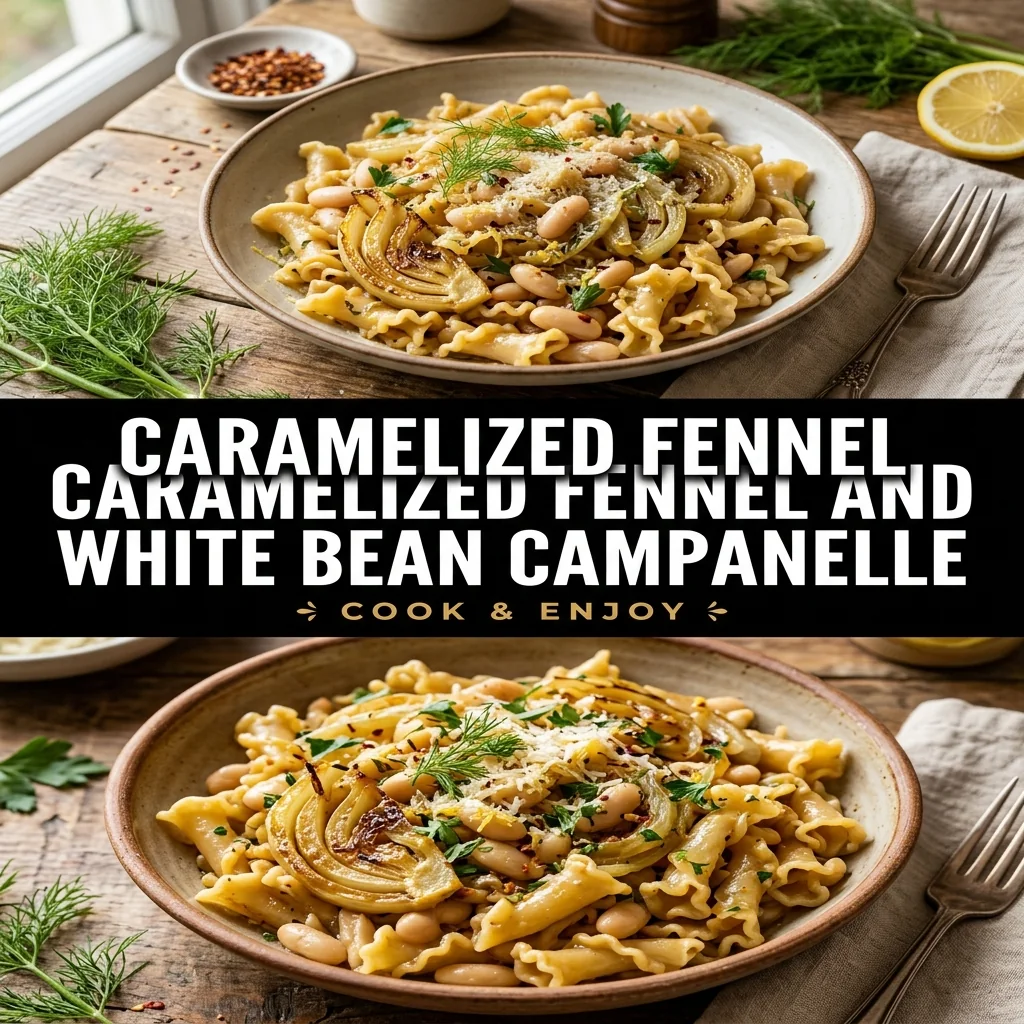
Caramelized fennel and white bean campanelle elevates humble pantry staples into a sophisticated, texturally vibrant pasta dinner. Thinly sliced fennel bulbs undergo a transformative stovetop caramelization, shedding their sharp licorice bite in favor of mellow, rich sweetness. Creamy cannellini beans introduce wholesome plant-based substance, creating a naturally luxurious sauce when paired with starchy pasta water and bright lemon juice. The ruffled, trumpet-like shape of campanelle is particularly suited for this dish, as its fluted edges and hollow center trap the tender beans and sweet vegetable slices. Finished with a crisp lemon-parsley breadcrumb topping, each forkful combines toothsome pasta, velvety legumes, and an irresistible crunch.
Understanding Fennel Caramelization
Raw fennel possesses an assertive, crisp texture with pronounced anise aromatics. Slicing the bulbs thinly across the grain exposes cellular structure, allowing moisture to evaporate steadily in warm olive oil. Over twelve to fifteen minutes of controlled heat, the vegetable softens into supple strands while natural sugars brown gently. This slow transformation yields a rounded, deeply savory-sweet foundation that counterbalances the earthy beans and sharp lemon zest. Trimming the fibrous outer layers and reserving the delicate green fronds ensures maximum flavor extraction from the entire bulb.
Emulsifying Without Heavy Cream
Achieving a silky pasta sauce without dairy cream relies entirely on starch emulsification. Rinsed cannellini beans contain soft starches that readily disperse when lightly mashed into warm vegetable stock. Combining this starchy legume base with reserved salted pasta cooking water and extra-virgin olive oil produces a stable, glossy suspension. Vigorous tossing over low heat coats every noodle petal evenly. Finishing off the heat with finely grated halal-suitable hard cheese creates body and savory depth without any graininess or greasy separation.
The Importance of Textural Contrast
Because braised fennel and cooked beans share a soft, velvety mouthfeel, textural variety is crucial for a compelling dish. The toasted panko breadcrumbs, seasoned with lemon zest, sea salt, and fresh flat-leaf parsley, deliver an essential crunchy counterpoint. Campanelle pasta also provides structural chew with its ruffled margins and thick center cone. Garnishing the completed bowls with both the fragrant breadcrumb mixture and tender, feathery fennel fronds immediately before serving preserves the crispness of the topping and introduces refreshing aromatic brightness.
Before you start
Patience during the initial fennel cookery is essential for building deep caramel sweetness. Allowing the fennel to sit motionless against the hot skillet allows its natural sugars to brown rather than steam. Crushing a small portion of the cannellini beans releases starch that binds the vegetable broth, olive oil, and pasta cooking water into a cohesive, velvety glaze that clings effortlessly into the fluted petals of campanelle pasta.
THE RECIPE
Caramelized Fennel and White Bean Campanelle
4 servings · 20 minutes preparation · 30 minutes cooking
Ingredients
Step-by-step instructions
- Heat 1 tablespoon of extra-virgin olive oil in a wide 12-inch stainless steel skillet over medium heat, add the coarse panko breadcrumbs, and toast for 3 to 4 minutes, stirring constantly until golden brown; transfer to a small bowl and mix with the chopped parsley, half the lemon zest, and a pinch of salt.
- Return the skillet to medium heat, add the remaining 3 tablespoons of extra-virgin olive oil, and spread the thinly sliced fennel bulbs evenly across the pan floor.
- Cook the fennel undisturbed for 5 minutes to develop golden color, then season with 1/2 teaspoon kosher salt and continue sautéing for 12 to 14 minutes, stirring occasionally, until the slices are tender and deeply caramelized around the edges.
- Add the sliced garlic and crushed red pepper flakes to the caramelized fennel, cooking for 1 to 2 minutes until fragrant while avoiding browning the garlic.
- Meanwhile, bring 4 quarts of generously salted water to a rapid boil in a large 6-quart stockpot over high heat, drop in the campanelle pasta, and cook for 9 to 10 minutes until al dente.
- Pour the rinsed cannellini beans and low-sodium vegetable broth into the skillet with the caramelized fennel, simmering over medium heat for 4 minutes while lightly crushing about one-third of the beans with a wooden spoon to thicken the pan sauce.
- Reserve 3/4 cup of starchy pasta cooking water using a heatproof measuring cup, then drain the campanelle thoroughly.
- Transfer the drained pasta directly into the skillet with the beans and fennel, adding 1/2 cup of the reserved pasta water, the lemon juice, remaining lemon zest, and black pepper, tossing vigorously over low heat for 2 minutes until the liquid emulsifies.
- Remove the skillet from the heat, fold in the grated halal-suitable cheese and reserved chopped fennel fronds, adding extra pasta water if needed to loosen, then divide into shallow bowls and top with the toasted parsley crumb.
Kitchen notes
Patience during the initial fennel cookery is essential for building deep caramel sweetness. Allowing the fennel to sit motionless against the hot skillet allows its natural sugars to brown rather than steam. Crushing a small portion of the cannellini beans releases starch that binds the vegetable broth, olive oil, and pasta cooking water into a cohesive, velvety glaze that clings effortlessly into the fluted petals of campanelle pasta.
Storage & make-ahead
Store leftover pasta in a glass airtight container in the refrigerator within 2 hours of preparation for up to 3 days. Keep extra toasted breadcrumbs in a separate small container at room temperature so they remain crisp. Reheat the pasta gently in a wide skillet over medium-low heat with 2 to 3 tablespoons of water or vegetable broth until steaming hot, reaching an internal temperature of at least 165 F (74 C).
An original recipe guide inspired by themes in our Pinterest research. Recipe has not been independently kitchen-tested. AI-generated image is illustrative; your finished dish may look different.
Frequently asked questions
Can I substitute another pasta shape for campanelle?
Yes, other short, textured shapes like orecchiette, cavatappi, or rigatoni work well. They provide ridges and cavities that capture the tender cannellini beans and caramelized fennel slices effectively.
How do I ensure the hard cheese is halal-suitable?
Look for Italian-style hard cheese or Italian-style hard cheeses explicitly labeled with halal certification or made with microbial or vegetarian rennet, avoiding traditional animal-derived rennet from unverified slaughter sources.
Can I use dry cannellini beans instead of canned?
Canned beans are simplest. For dried cannellini beans, soak at least 5 hours, drain, and boil vigorously in fresh water for at least 30 minutes, then continue cooking until fully tender. Measure 1 1/2 cups cooked beans for this recipe.


