WHY MAKE IT
A little comfort, a lot of flavor.
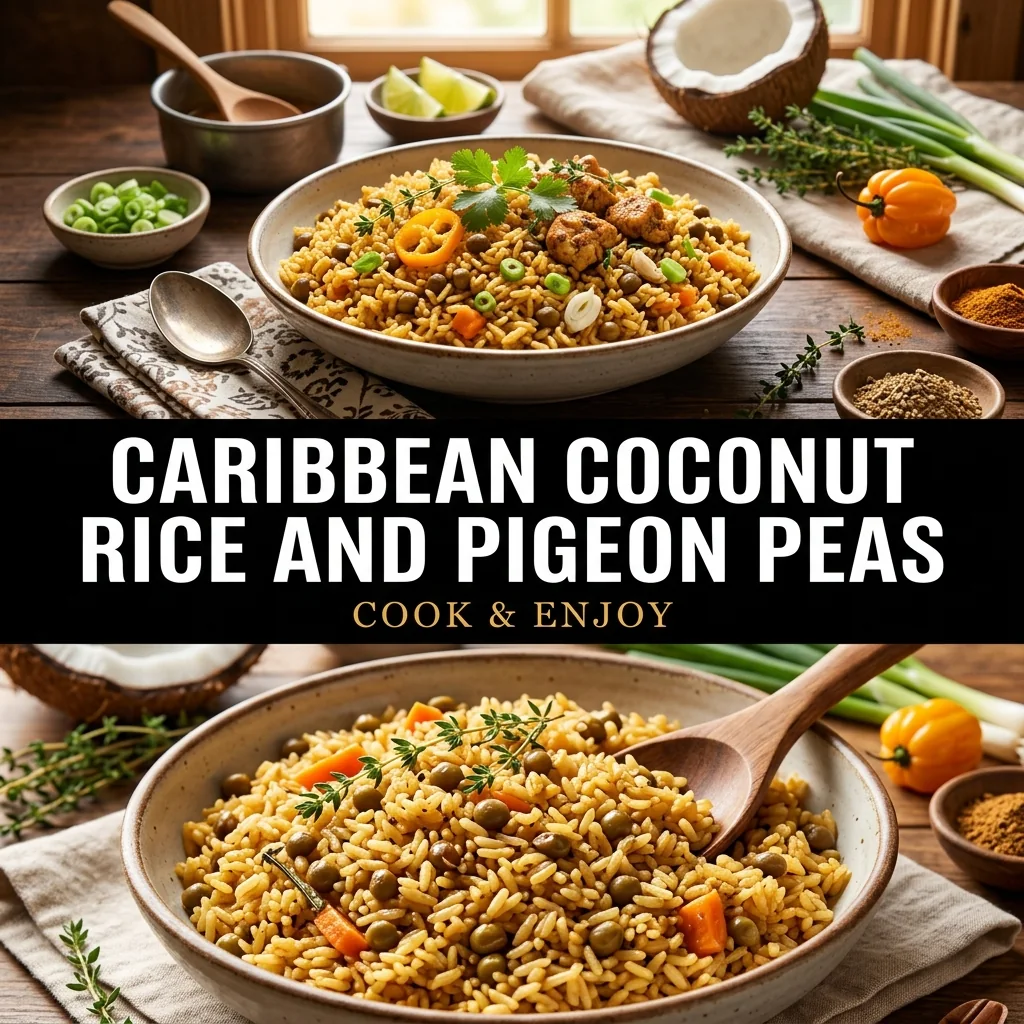
A staple across Jamaica, Trinidad, and Puerto Rico, coconut rice with pigeon peas showcases how everyday staples transform under the influence of island spices. The cooking medium combines rich coconut milk with savory broth, creating a luxurious bath in which plump pigeon peas and long grains of rice swell. Green pigeon peas, prized for their earthy, nutty profile, hold their shape beautifully against the creaminess of the coconut reduction. Fresh thyme sprigs and ground allspice build an aromatic base, while an unbroken habanero pepper rests on the surface, perfuming the steaming pot with citrusy, tropical notes. The resulting pilaf is versatile, rich, and fragrant.
Understanding Pigeon Peas and Rice Types
Pigeon peas, often labeled as gandules, are small legumes that provide a distinct earthiness far firmer than standard sweet green peas. Canned pigeon peas make preparation quick, though they must be thoroughly drained and rinsed to wash away canning starches. Parboiled long-grain white rice is the traditional grain of choice because the parboiling process hardens the starch surface, preventing the grains from collapsing or turning sticky when simmered alongside viscous, fat-dense coconut milk.
Managing Heat with Whole Hot Peppers
The addition of a habanero or Scotch bonnet pepper provides this dish with its signature island perfume without rendering it unbearable for mild palates. The outer skin contains aromatic oils that gently infuse into the simmering coconut steam. Keep the stem attached and check for cracks. If the chili bursts during the simmer, its fiery seeds will permeate the entire pot. When stirring, use light surface movements, and use tongs to remove the pepper intact before fluffing.
Balancing Liquid Ratios and Coconut Fat
Full-fat coconut milk introduces substantial solids and plant oils that behave differently from pure water. If too little liquid is supplied, the rice undercooks; if too much is added, the high fat content creates a heavy, greasy base. Combining one can of coconut milk with nearly equal parts water or light halal vegetable broth creates ideal hydration. Keeping the pot tightly sealed guarantees that minimal liquid escapes during the gentle 25-minute simmer.
Before you start
Inspect your whole habanero pepper carefully before placing it in the pot. It must remain completely intact throughout cooking. A punctured chili releases capsaicin directly into the coconut milk, making the rice overwhelmingly fiery, whereas an unbroken pod infuses the pilaf with warm, fruity, floral aromas without bitter heat. Use parboiled long-grain rice for guaranteed separation and sturdy texture against the rich coconut cream.
THE RECIPE
Caribbean Coconut Rice and Pigeon Peas
6 servings · 15 minutes preparation · 30 minutes cooking · 10 minutes cooling, chilling or resting
Ingredients
Step-by-step instructions
- Rinse 2 cups of parboiled rice in a fine-mesh strainer under cold water until the water runs clear, then shake off excess moisture.
- Heat 1 tablespoon of coconut oil in a large Dutch oven over medium heat, then sauté the diced yellow onion and the white parts of the scallions for 4 minutes until translucent.
- Add 3 minced garlic cloves, 1/2 teaspoon of ground allspice, and 4 fresh thyme sprigs, cooking for 1 minute until fragrant without letting the garlic brown.
- Fold in 1 can of drained pigeon peas and the rinsed rice, stirring for 2 minutes to coat the grains thoroughly with the spiced aromatic oil.
- Pour in 1 can of coconut milk and 1 3/4 cups of water or halal vegetable broth, then stir in 1 1/4 teaspoons of kosher salt, bringing the liquid to a rolling boil over medium-high heat.
- Gently place the whole habanero pepper on top of the liquid, taking care not to puncture or break the skin.
- Reduce the heat to low, cover the Dutch oven tightly with a heavy lid, and simmer gently for 22 to 25 minutes until all liquid is absorbed and rice is tender.
- Turn off the heat, discard the thyme stems, carefully lift out the whole pepper without bursting it, fold in the chopped green scallions, cover, and rest for 10 minutes before fluffing with a fork.
Kitchen notes
Inspect your whole habanero pepper carefully before placing it in the pot. It must remain completely intact throughout cooking. A punctured chili releases capsaicin directly into the coconut milk, making the rice overwhelmingly fiery, whereas an unbroken pod infuses the pilaf with warm, fruity, floral aromas without bitter heat. Use parboiled long-grain rice for guaranteed separation and sturdy texture against the rich coconut cream.
Storage & make-ahead
Store cooled leftover rice in an airtight container in the refrigerator within 2 hours. It stays fresh for up to 4 days. Reheat on the stovetop with 2 tablespoons of water per serving, covering tightly over low heat until the core temperature registers 165 F / 74 C. Alternatively, freeze for up to 2 months.
An original recipe guide inspired by themes in our Pinterest research. Recipe has not been independently kitchen-tested. AI-generated image is illustrative; your finished dish may look different.
Frequently asked questions
Can I use Scotch bonnet pepper instead of habanero?
Scotch bonnet peppers are the traditional Caribbean choice and substitute seamlessly for habanero peppers. Both varieties share similar heat levels and floral, fruity undertones. Make sure the skin has no punctures before cooking.
Why did my coconut rice turn mushy?
Using standard medium-grain rice or failing to rinse excess starch will lead to a softer texture. Stick with parboiled long-grain rice, adhere strictly to the liquid proportions, and avoid stirring the pot during simmering.
Can dried pigeon peas be used instead of canned?
Yes, but they must be soaked overnight and fully cooked in seasoned water until tender before being added to the rice pot, as they will not soften adequately during the short rice simmering window.


