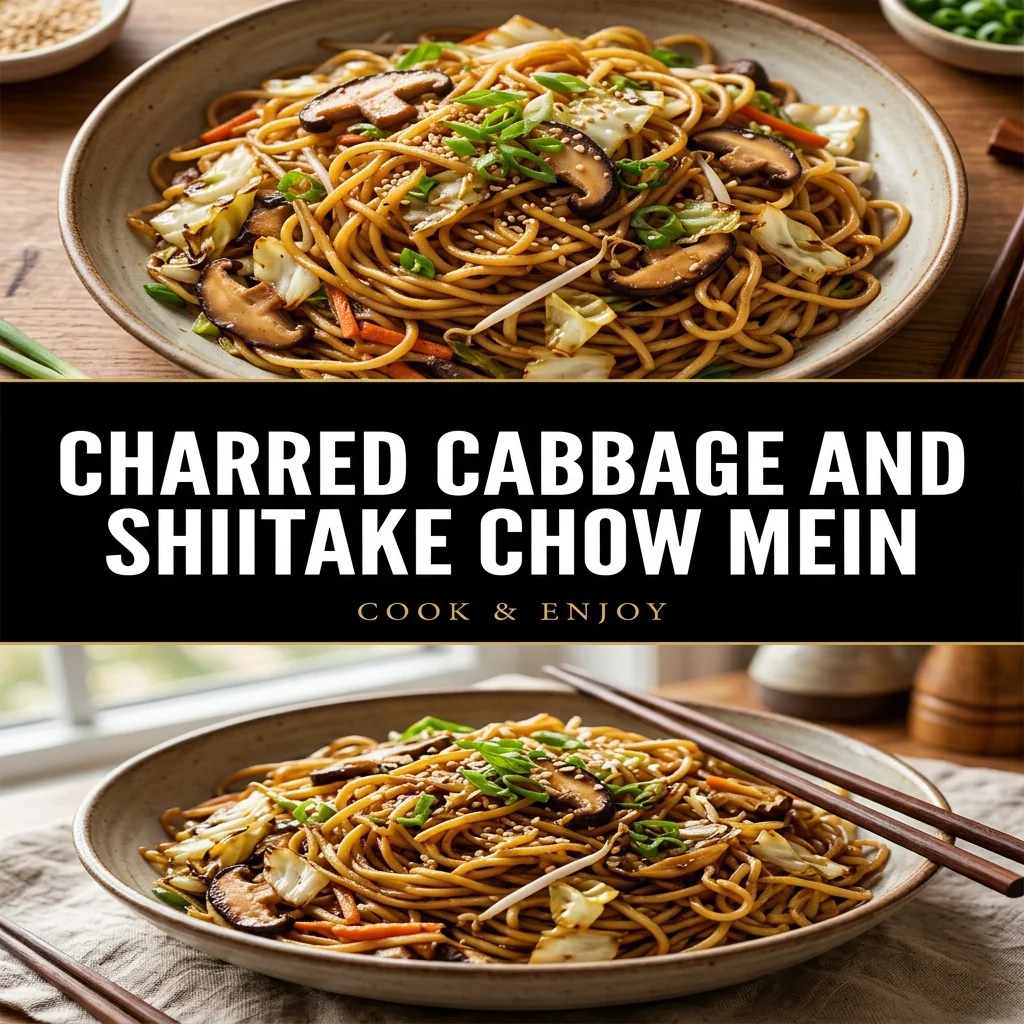
WHY MAKE IT
A little comfort, a lot of flavor.
Charred Cabbage and Shiitake Chow Mein relies on vigorous heat, dry noodle handling, and straightforward savory seasoning to achieve balanced textures. Thick leaves of green cabbage blister rapidly over a searing wok surface, acquiring sweet smoky notes that contrast with earthy shiitake mushrooms and fresh ginger. Thin egg noodles provide a springy bite that absorbs dark and light soy sauces without turning heavy or soggy. This classic street-style noodle preparation emphasizes technique over complicated grocery lists, moving from raw prep to the table in minutes. By keeping each vegetable component cut to uniform dimensions and managing skillet temperatures attentively, home cooks can replicate the satisfying sear and aromatic depth of traditional Cantonese-style dry-fried chow mein.
Mastering the High-Heat Sear
Wok cooking demands intense heat and rapid execution to prevent moisture accumulation. When sliced green cabbage meets smoking oil, surface sugars caramelize rapidly into dark, flavorful blisters while the interior retains a distinct crunch. Overcrowding the pan causes vegetable juices to pool, boiling the ingredients rather than frying them. For standard residential stoves, work in batches if your pan cannot maintain sizzling temperatures. Allowing the cabbage to sit motionless for the initial ninety seconds forces direct contact searing, building rich aromatics before the mushrooms, aromatics, and noodles are introduced to the wok.
Selecting and Preparing Noodles
Fresh thin egg noodles, frequently labeled as Hong Kong style or chow mein noodles, offer the best structural integrity for high-heat tossing. Unlike thicker lo mein strands, these delicate noodles develop crisp edges when exposed to hot oil. A brief parboil of barely one minute softens the starch without hydrating the core entirely. Once drained, spreading them flat allows residual steam to evaporate completely. Tossing with sesame oil shields the strands from sticking together, guaranteeing that individual noodles separate cleanly when distributed into the blistering hot wok.
Balancing the Seasoning Profile
The sauce composition balances salinity, color, and gentle sweetness without overwhelming the produce. Light soy sauce provides clear savory saltiness, while dark soy sauce contributes viscosity, molasses undertones, and a deep mahogany hue. A modest spoonful of halal-certified vegetarian mushroom sauce replaces traditional oyster sauce, delivering concentrated glutamates that amplify the fresh shiitake caps. Pouring the combined liquid down the fiery metal perimeter vaporizes excess water instantly, intensifying the seasoning blend into a fragrant glaze that clings cleanly to every strand of noodle without leaving liquid pooling.
Before you start
Moisture is the primary obstacle to achieving restaurant-style texture when stir-frying noodles. Spread the drained egg noodles across a broad baking sheet immediately after parboiling so steam escapes quickly. If damp noodles enter the wok, they steam instead of crisping against the hot metal. Ensure your wok is preheated until smoking before adding the cabbage, and resist the urge to stir constantly; letting the cabbage sit flat against the metal creates the deep, smoky blister essential to this dish.
THE RECIPE
Charred Cabbage and Shiitake Chow Mein
4 servings · 15 minutes preparation · 15 minutes cooking
Ingredients
Step-by-step instructions
- Bring 3 liters of water to a rolling boil in a large pot over high heat, drop in 350 g fresh egg noodles, and boil for 60 to 75 seconds until just pliable.
- Drain the noodles thoroughly in a colander, shake off excess moisture, spread across a wide baking sheet, and toss with 1 tablespoon toasted sesame oil to prevent clumping.
- Whisk together 2 tablespoons light soy sauce, 1 tablespoon dark soy sauce, 1 tablespoon vegetarian mushroom stir-fry sauce, 1 teaspoon sugar, and 1/4 teaspoon white pepper in a small bowl until dissolved.
- Heat 1 tablespoon sesame oil in a 14-inch flat-bottom carbon steel wok over high heat until wisps of smoke emerge, then add 300 g sliced cabbage in an even layer.
- Sear the cabbage undisturbed for 90 seconds to develop dark charred edges, toss once, transfer to a metal bowl, and return the wok to high heat.
- Add the remaining 1 tablespoon sesame oil, sliced shiitake caps, and scallion whites to the wok, stir-frying over high heat for 2 minutes until mushrooms brown and soften.
- Scatter the minced garlic and grated ginger across the mushrooms, stirring vigorously for 30 seconds until fragrant without allowing the aromatics to scorch.
- Tumble the parboiled noodles, charred cabbage, and scallion greens into the wok, pour the sauce mixture around the outer rim of the pan, and toss rapidly over maximum heat for 2 minutes until evenly coated and steaming.
Kitchen notes
Moisture is the primary obstacle to achieving restaurant-style texture when stir-frying noodles. Spread the drained egg noodles across a broad baking sheet immediately after parboiling so steam escapes quickly. If damp noodles enter the wok, they steam instead of crisping against the hot metal. Ensure your wok is preheated until smoking before adding the cabbage, and resist the urge to stir constantly; letting the cabbage sit flat against the metal creates the deep, smoky blister essential to this dish.
Storage & make-ahead
Transfer leftovers to an airtight container within 2 hours of cooking and refrigerate for up to 3 days. Reheat in a smoking hot wok or nonstick skillet over medium-high heat with a teaspoon of oil, tossing continuously until steaming hot and reaching an internal temperature of 165 F / 74 C throughout. Freezing is not recommended because thawed cabbage loses its crispness.
An original recipe guide inspired by themes in our Pinterest research. Recipe has not been independently kitchen-tested. AI-generated image is illustrative; your finished dish may look different.
Frequently asked questions
Can I use dried noodles instead of fresh egg noodles?
Yes, dried thin egg noodles work well. Boil them in unsalted water for 2 to 3 minutes until just pliable but firm to the bite. Drain thoroughly, spread flat to release steam, and coat with oil before stir-frying.
What type of cabbage delivers the best crunch?
Standard green drumhead cabbage or pointed sweetheart cabbage yields the crispest texture. Avoid softer varieties like Napa cabbage for this preparation, as their high water content releases too much moisture and softens the noodles.
Why did my noodles stick to the bottom of the wok?
Sticking occurs when the wok is insufficiently heated before adding oil, or if the noodles retain excessive surface water. Ensure the pan smokes lightly, use adequate oil, and air-dry the parboiled noodles thoroughly beforehand.


