WHY MAKE IT
A little comfort, a lot of flavor.
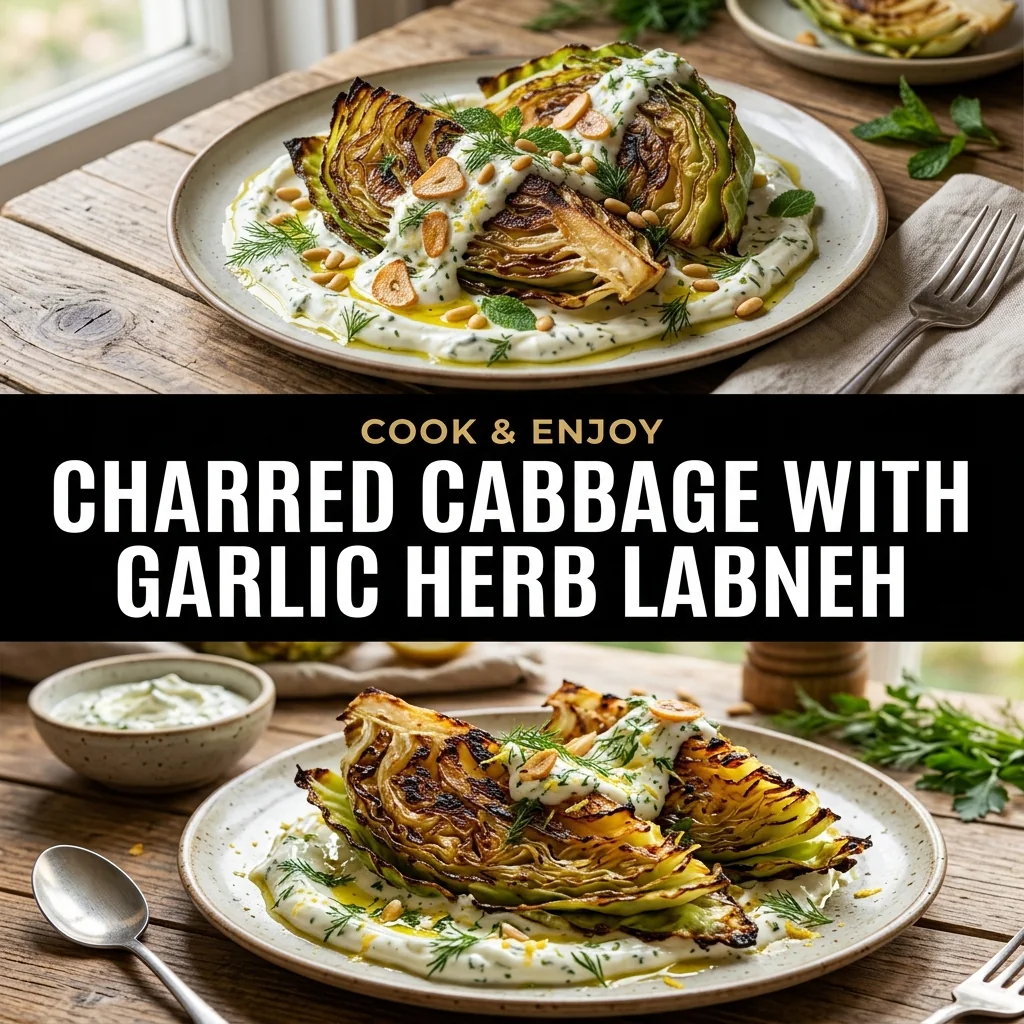
Charred cabbage elevates humble pantry produce into a sophisticated, visually striking vegetable centerpiece. Ordinary green cabbage contains substantial natural sugars that caramelize dramatically against searing cast iron, converting bitter vegetal notes into savory sweetness. Resting the warm, blistered wedges over a broad bed of chilled, garlic-infused labneh establishes an enticing thermal and textural contrast. The rich, velvety strained yogurt tempers the pungent char, while a rapid pour of warm herb-infused olive oil ties the components together with fragrance and brightness. Finished with toasted pine nuts and mild Aleppo pepper flakes, this composed side dish pairs effortlessly with roasted meats, grains, or lentil stews.
Mastering the Sear and Steam Method
Cooking dense cabbage wedges successfully requires a two-step technique: intense direct dry contact followed by gentle moisture braising. Dry pan searing produces rapid Maillard browning and bitter-sweet smokiness on the cut leaf layers without turning them soggy. Once adequate color is achieved, introducing a small measure of halal vegetable broth under a closed lid traps hot steam. This steam penetrates dense stem cores, softening fibrous membranes completely without washing away the deeply roasted exterior crust that gives the dish its rustic visual identity.
Understanding Labneh Consistency
Labneh is whole-milk yogurt strained until nearly all whey has drained, leaving a dense, spreadable consistency akin to soft cream cheese. Ensure the brand selected holds halal certification and contains no unverified gelatin or animal rennet additives. Bringing the garlic-spiced labneh to a temperate cool state before plating prevents the hot cabbage from immediately liquefying the dairy emulsion. The yogurt's inherent lactic acidity acts as an essential foil against caramelized fats, offering a clean, refreshing mouthfeel in every forkful.
Herb Oil Technique and Balance
Infusing olive oil over very low heat blooms fat-soluble aroma compounds in the dried Aleppo pepper and delicate fresh herbs without scorching them. Boiling or overheating fresh herbs causes rapid oxidation, resulting in muted color and grassy bitterness. A gentle sixty-second warming awakens the mint and dill, releasing their essential oils directly into the fat. Spooning this warm, tinted oil over both the warm cabbage and cool yogurt creates glossy visual appeal and ensures balanced flavor distribution across the plate.
Before you start
Leaving the core intact is non-negotiable; removing it causes the leaves to scatter into individual strips that steam rather than sear. If your skillet does not fit four wedges flatly against the metal surface, sear them in two separate batches before combining them with the broth for the covered braise. High cast-iron heat creates essential smoky caramelization.
THE RECIPE
Charred Cabbage with Garlic Herb Labneh
4 servings · 15 minutes preparation · 18 minutes cooking · 10 minutes cooling, chilling or resting
Ingredients
Step-by-step instructions
- Trim any dry tip from the cabbage stem, then cut the cabbage head through the core into four uniform wedges, ensuring a section of the core remains on each wedge to keep the leaves intact.
- In a medium bowl, whisk together 1 cup whole-milk halal labneh, 1 small grated garlic clove, 1 tablespoon fresh lemon juice, and 1/4 teaspoon kosher salt until creamy and smooth, then set aside at room temperature for 10 minutes to allow flavors to meld.
- Heat 1 1/2 tablespoons extra virgin olive oil in a heavy 12-inch cast-iron skillet over medium-high heat until shimmering.
- Season the cut sides of the cabbage wedges evenly with 1/2 teaspoon kosher salt and 1/2 teaspoon black pepper.
- Place the cabbage wedges cut-side down into the hot skillet in a single layer and sear undisturbed for 5 to 6 minutes, until the flat surface develops dark brown charred stripes.
- Turn each wedge carefully onto the opposite cut side using tongs and sear for an additional 5 minutes until equivalently browned.
- Pour 1/4 cup halal vegetable broth into the skillet, immediately cover with a tight-fitting lid, lower the heat to medium-low, and steam-braise for 6 to 7 minutes until the thickest part of the stem yields easily to a fork.
- Uncover, remove from heat, and let the cabbage rest in the warm pan for 3 minutes while you prepare the oil.
- Warm the remaining 1 1/2 tablespoons olive oil in a small saucepan over low heat for 1 minute with the chopped dill, mint, Aleppo pepper flakes, and the remaining 1/4 teaspoon kosher salt until fragrant, then spoon the garlic labneh across a platter, arrange the warm cabbage on top, and drizzle with the warm herb oil and toasted pine nuts.
Kitchen notes
Leaving the core intact is non-negotiable; removing it causes the leaves to scatter into individual strips that steam rather than sear. If your skillet does not fit four wedges flatly against the metal surface, sear them in two separate batches before combining them with the broth for the covered braise. High cast-iron heat creates essential smoky caramelization.
Storage & make-ahead
Transfer leftovers to separate sealed airtight containers—cabbage in one, labneh in another—and refrigerate promptly within 2 hours. The cabbage keeps for up to 3 days; the labneh keeps for up to 5 days. Reheat the cabbage in a hot dry skillet or 375°F (190°C) oven until it reaches an internal temperature of 165°F (74°C), then serve over cold labneh.
An original recipe guide inspired by themes in our Pinterest research. Recipe has not been independently kitchen-tested. AI-generated image is illustrative; your finished dish may look different.
Frequently asked questions
Can I use Savoy or red cabbage instead of green cabbage?
Savoy cabbage works wonderfully and cooks slightly faster due to its tender crinkled leaves. Red cabbage can be used, though its color bleeds slightly into the labneh base, creating a purple-tinted presentation.
Can Greek yogurt substitute for labneh?
Yes, whole-milk plain Greek yogurt can substitute. For best results, strain it through a cheesecloth-lined sieve for 30 minutes to remove excess whey, matching labneh's thick, rich texture.
What if I do not have Aleppo pepper flakes?
You can substitute equal parts sweet paprika and a tiny pinch of cayenne pepper, or use mild crushed red pepper flakes to achieve a gentle, fruity warmth without overpowering spice.