WHY MAKE IT
A little comfort, a lot of flavor.
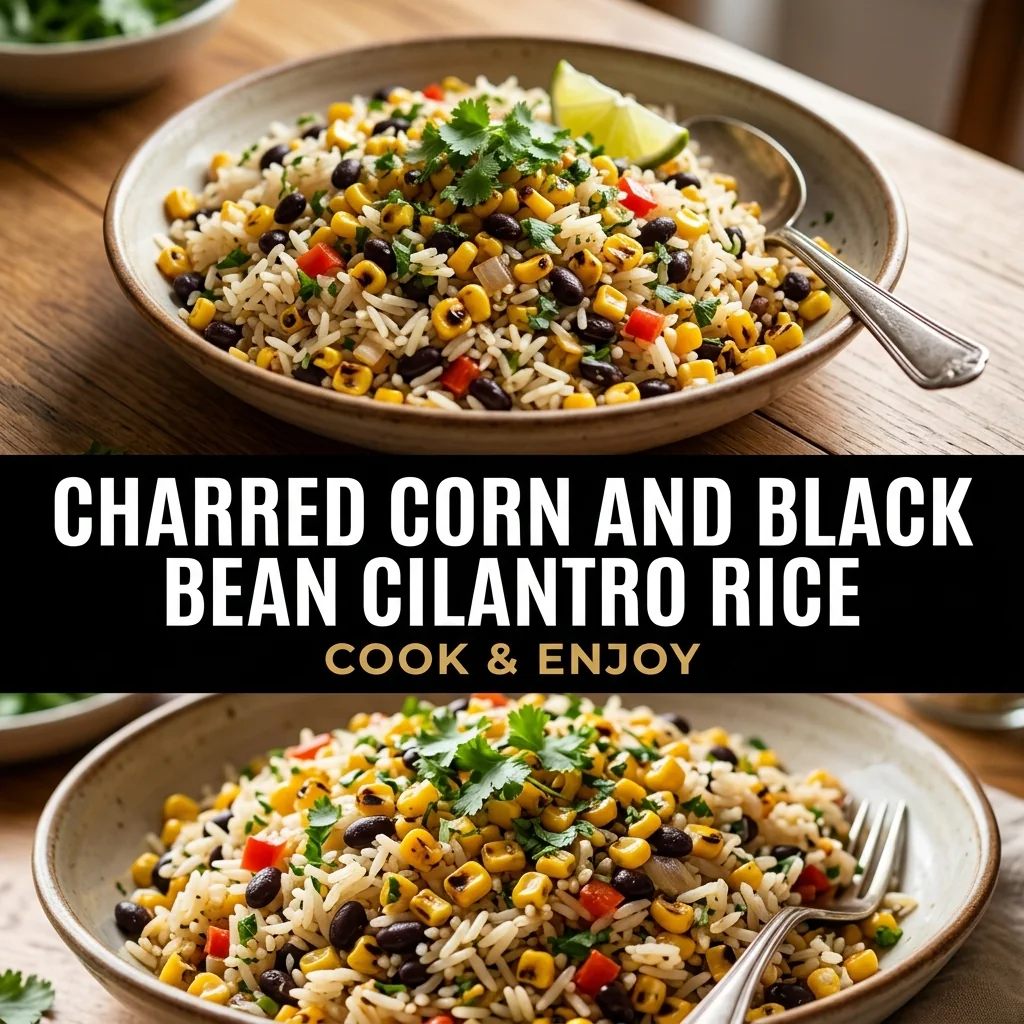
Charred Corn and Black Bean Cilantro Rice is a colorful, high-contrast side dish that brightens any dinner table. Fluffy long-grain rice absorbs the warmth of toasted cumin, smoked paprika, and aromatic garlic before meeting sweet corn that has been blistered in a dry cast-iron skillet. Dark, creamy black beans offer satisfying substance and earthy flavor, while freshly chopped cilantro and lively lime juice bring herbal freshness and acidity. This dish strikes an exceptional balance between smoky and bright, making it an ideal companion to grilled halal meats, warm tortillas, or crisp vegetable platters. Simple techniques create layers of restaurant-caliber depth.
Achieving True Pan Charring
The defining characteristic of this recipe is the dark blistering on the sweet corn. A heavy cast-iron skillet holds high heat efficiently, which is necessary to scorch the natural sugars on the corn surface quickly without turning the interior mushy. Avoid adding oil during the initial blistering stage; dry heat creates authentic char marks rather than shallow frying. Keep the kernels flat against the pan surface and resist stirring too early. Once browned, remove them immediately to halt further softening.
Balancing Starch and Moisture
Rinsing the long-grain rice before cooking eliminates loose surface starch that could otherwise cause the grains to stick together into a gummy mass. Toasting the rinsed grains in warm olive oil and spices coats each grain, encouraging individual separation upon steaming. The liquid-to-rice ratio of 2 cups vegetable broth to 1.5 cups rice yields firm, tender grains that can absorb the post-cook addition of lime juice and vegetable juices without becoming damp or heavy.
Flavor Adjustments and Pairings
This versatile grain base pairs effortlessly with marinated halal chicken skewers, braised beef brisket, or spiced roasted squash. If you prefer additional heat, fold in half a finely minced fresh jalapeño alongside the cilantro. The lime juice provides essential brightness, cutting through the starch and oil. If making the dish ahead of time, reserve half of the chopped cilantro and fold it into the warmed rice immediately before serving to keep the herb vibrant green.
Before you start
For an authentic smoky flavor, make sure the corn kernels are thoroughly dry before they enter the cast-iron skillet. Moisture causes corn to steam rather than blister. If using thawed frozen corn, pat the kernels dry between clean dish towels. When folding in the black beans, use gentle motions with a silicone spatula so you do not mash the beans or crush the tender cooked rice grains.
THE RECIPE
Charred Corn and Black Bean Cilantro Rice
6 servings · 15 minutes preparation · 25 minutes cooking · 10 minutes cooling, chilling or resting
Ingredients
Step-by-step instructions
- Heat a dry 12-inch cast-iron skillet over high heat for 3 minutes until smoking lightly, then add 2 cups of sweet corn kernels in a single flat layer.
- Char the corn undisturbed for 3 to 4 minutes until deeply blistered on the bottom, toss briefly with a metal spatula, and cook for another 2 minutes before transferring to a wide bowl.
- In a 3-quart saucepan, warm 1 tablespoon of olive oil over medium heat, add 3 minced garlic cloves, 1 teaspoon cumin, and 0.5 teaspoon smoked paprika, cooking for 1 minute until fragrant.
- Add 1.5 cups of rinsed long-grain white rice to the saucepan and stir constantly for 2 minutes to toast the grains lightly in the spiced oil.
- Pour in 2 cups of halal vegetable broth along with 1 teaspoon of sea salt, bring to a full rolling boil, then clamp on a tight lid and lower the flame to low.
- Cook the rice undisturbed on low heat for 15 minutes until all liquid is absorbed.
- Remove the saucepan from the heat source and let the rice rest covered for 10 minutes to allow the moisture inside the pot to redistribute evenly.
- Uncover the saucepan, fluff the grains with a fork, and pour the rice directly into the large bowl containing the charred corn.
- Add the drained black beans, remaining 1 tablespoon olive oil, lime zest, lime juice, remaining 0.25 teaspoon salt, black pepper, and chopped cilantro, folding gently with a spatula until combined.
Kitchen notes
For an authentic smoky flavor, make sure the corn kernels are thoroughly dry before they enter the cast-iron skillet. Moisture causes corn to steam rather than blister. If using thawed frozen corn, pat the kernels dry between clean dish towels. When folding in the black beans, use gentle motions with a silicone spatula so you do not mash the beans or crush the tender cooked rice grains.
Storage & make-ahead
Allow leftovers to cool to room temperature and transfer to airtight containers; refrigerate promptly within 2 hours. This rice keeps well in the refrigerator for up to 4 days. To reheat, transfer to a microwave-safe bowl with a tablespoon of water, cover loosely, and heat thoroughly until reaching an internal temperature of 165 F / 74 C. Add fresh chopped cilantro after reheating to revive color.
An original recipe guide inspired by themes in our Pinterest research. Recipe has not been independently kitchen-tested. AI-generated image is illustrative; your finished dish may look different.
Frequently asked questions
Can I use canned corn instead of frozen or fresh?
Yes, canned corn can be used if thoroughly drained and patted completely dry with paper towels. Any excess moisture will steam the corn rather than blister it, so taking time to dry the kernels is essential for good browning.
Can I use jasmine rice in place of regular long-grain rice?
Jasmine rice works well, though it has a softer texture and slight floral aroma. Reduce the vegetable broth slightly to 1.75 cups to prevent the jasmine rice from becoming too moist when tossed with the beans and lime juice.
Is this dish served warm or cold?
This recipe is versatile; it tastes delicious served warm as a dinner side, or chilled as a grain salad for lunch. If serving cold, check the seasoning before serving, as cold temperatures mute salt and citrus perception.


