WHY MAKE IT
A little comfort, a lot of flavor.
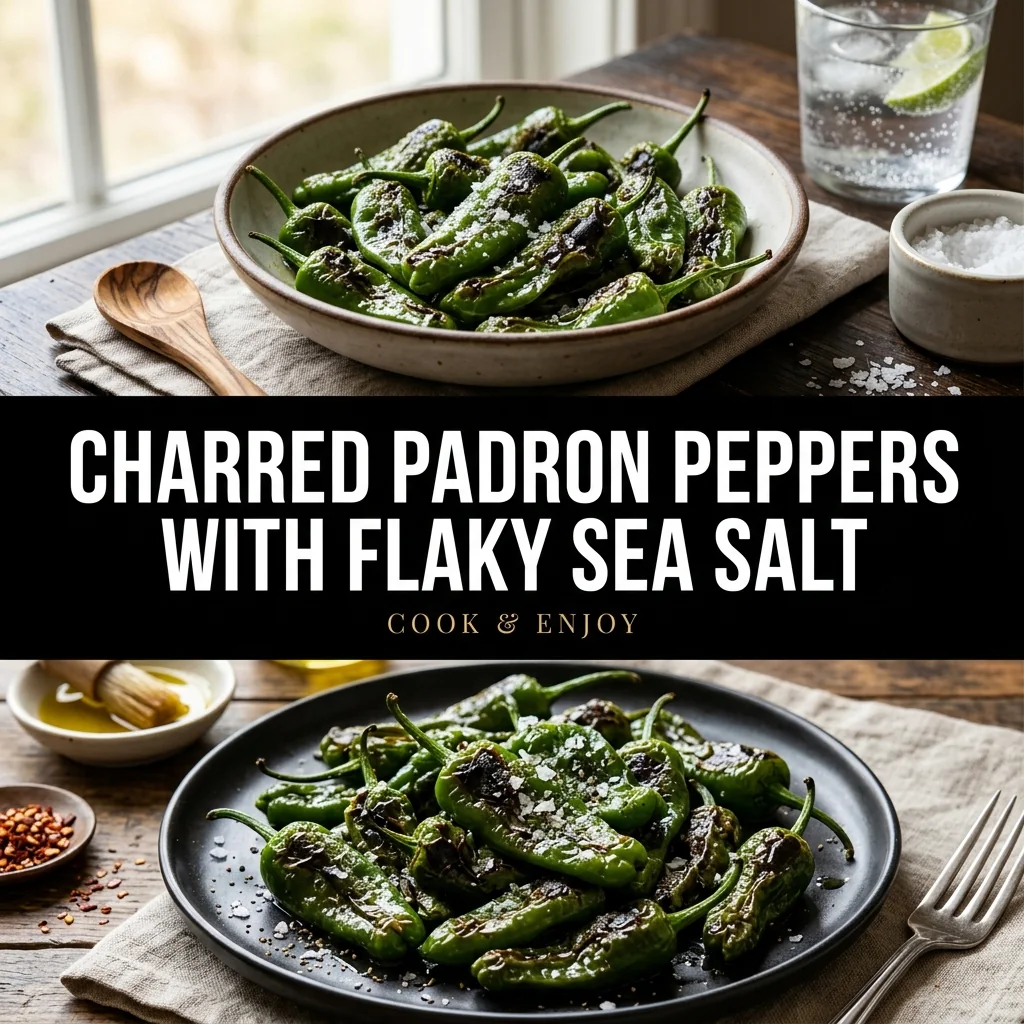
Charred Padron Peppers with Flaky Sea Salt offer an iconic, effortless vegetable side dish celebrated for its smoky flavor and tender texture. Native to northwestern Spain, Padrón peppers are predominantly mild, sweet, and vegetal, though an occasional pepper carries a surprising, lively kick of capsaicin heat. When flashed quickly in a smoking hot skillet with olive oil, their thin emerald skins puff, blister, and collapse, transforming the crisp pods into succulent, tender bites. Finishing with coarse flaky sea salt provides essential mineral crunch, while a touch of fresh lemon juice elevates the rich pan oils. Requiring less than fifteen minutes from start to finish, this dish delivers sophisticated simplicity to any halal-friendly table.
Understanding Padron Peppers and Heat Variation
Padrón peppers are small, slightly wrinkled green peppers harvested while immature. Most peppers on the plate deliver a sweet, mild, grassy flavor with no perceptible spiciness. However, due to natural agricultural variations in sunlight and water, approximately one in ten peppers develops noticeable heat. This element of surprise is part of their traditional appeal. When shopping, select bright green, firm peppers between two and three inches in length. Avoid any pods showing yellowing, wrinkling from age, or soft bruised spots, as fresh peppers blister with the most tender, pillowy texture.
Mastering the High-Heat Cast-Iron Sear
The key to proper blistering is extreme heat applied for a short duration. A heavy cast-iron skillet provides the necessary thermal mass to sear the peppers quickly without dropping temperature when the cool vegetables are introduced. Combining extra-virgin olive oil with a high-smoke-point oil like avocado oil prevents premature burning while retaining olive oil's fruity richness. Avoid stirring the peppers constantly; leaving them in contact with the hot iron for the initial two minutes produces the desirable charred spots that yield deep, smoky flavor.
Seasoning and Serving Style
Padrón peppers should be served immediately while the skins remain lightly crisp and the interior flesh is steaming. Flaky sea salt is mandatory here, as its broad crystals adhere to the oily skins and offer a distinct textural crunch that fine table salt cannot duplicate. Diners traditionally eat them by picking up each pepper by its green stem, biting off the blistered pod, and discarding the stem. They pair exceptionally well with grilled meats, seasoned rice dishes, or alongside crusty artisan breads and dips.
Before you start
Moisture is the primary enemy of achieving a crisp blister on Padrón peppers. Pat the peppers completely dry before they hit the skillet; water will drop the oil temperature and cause intense splattering. Use a heavy cast-iron skillet, which retains intense heat far better than thin stainless steel. If cooking for a larger crowd, blister the peppers in multiple batches rather than crowding the pan, as overcrowding traps steam and boils the peppers instead of blistering their skins.
THE RECIPE
Charred Padron Peppers with Flaky Sea Salt
4 servings · 5 minutes preparation · 8 minutes cooking · 2 minutes cooling, chilling or resting
Ingredients
Step-by-step instructions
- Rinse 1 pound of whole Padrón peppers under cool water, then pat every pepper thoroughly dry using absorbent kitchen towels.
- Heat a 12-inch heavy cast-iron skillet dry over high stovetop heat for 3 to 4 minutes until faintly smoking.
- Add 2 tablespoons extra-virgin olive oil and 1 tablespoon avocado oil to the hot skillet, swirling immediately to coat the entire cooking surface.
- Carefully drop the dry peppers into the pan in an uncrowded single layer; they should sizzle loudly on contact.
- Sear undisturbed over high heat for 2 minutes until dark blisters form on the underside of the skins.
- Use metal tongs or shake the skillet handle firmly to turn the peppers, blistering the remaining sides for another 4 to 5 minutes until tender and collapsed in spots.
- Remove the skillet from the heat, sprinkle with 1/4 teaspoon garlic powder and 1/4 teaspoon cracked black pepper, and toss once in the warm residual oil.
- Transfer the charred peppers onto a broad serving platter, drizzle with 1 tablespoon fresh lemon juice, scatter 1 teaspoon lemon zest, shower with 1 teaspoon flaky sea salt, and let rest 2 minutes before serving hot.
Kitchen notes
Moisture is the primary enemy of achieving a crisp blister on Padrón peppers. Pat the peppers completely dry before they hit the skillet; water will drop the oil temperature and cause intense splattering. Use a heavy cast-iron skillet, which retains intense heat far better than thin stainless steel. If cooking for a larger crowd, blister the peppers in multiple batches rather than crowding the pan, as overcrowding traps steam and boils the peppers instead of blistering their skins.
Storage & make-ahead
Blistered peppers are best consumed immediately after cooking for optimal skin texture. If necessary, cool and refrigerate leftovers in an airtight container within 2 hours for up to 2 days. Reheat briefly in a smoking hot dry skillet for 1 to 2 minutes or in a 400°F (200°C) oven until hot and reaching an internal temperature of 165°F (74°C).
An original recipe guide inspired by themes in our Pinterest research. Recipe has not been independently kitchen-tested. AI-generated image is illustrative; your finished dish may look different.
Frequently asked questions
Can I substitute Shishito peppers for Padrón peppers?
Yes, Japanese Shishito peppers make an excellent substitute. They have similarly thin walls, blister quickly in hot oil, and share a mostly mild flavor profile with occasional spicy pods. Cook them using the exact same skillet method and timing.
Should I remove the seeds and stems before cooking?
No, leave both the stems and seeds intact. The seeds soften during the quick blistering process and are fully edible, while the sturdy stems serve as convenient natural handles for eating the hot peppers by hand at the table.
How do I prevent the oil from popping excessively?
Excess spattering occurs when surface moisture meets hot oil. Ensure peppers are bone-dry using clean paper towels before adding them to the skillet. You may also use a splatter screen over your skillet during the first few minutes of cooking.