WHY MAKE IT
A little comfort, a lot of flavor.
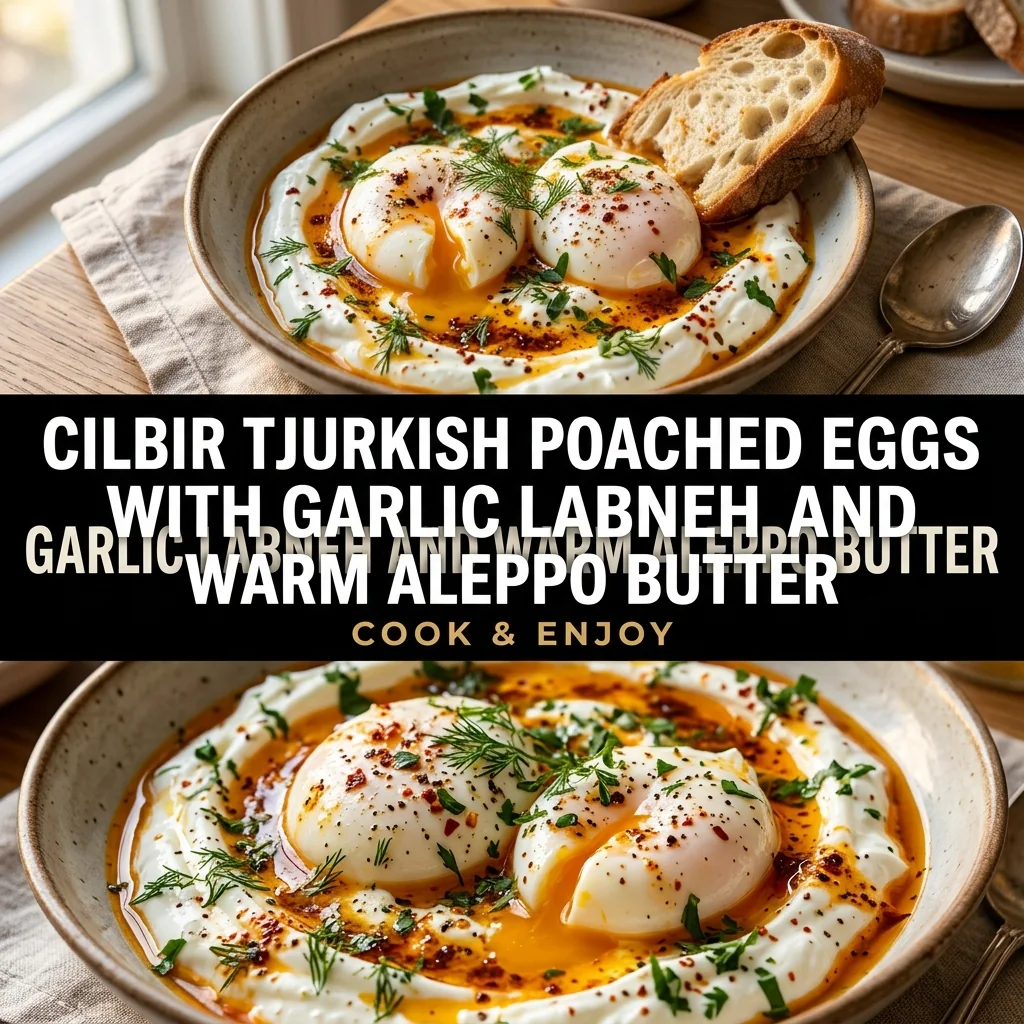
Cilbir is a time-honored Turkish breakfast preparation that balances contrasting temperatures, rich dairy, and gentle heat. At its base lies thick, strained halal labneh infused with finely grated garlic and sea salt. Resting upon this velvety foundation are soft-poached eggs with fluid yolks that break to form a rich sauce. The dish is finished with a sizzling pour of unsalted butter and olive oil infused with coarse Aleppo pepper flakes and cumin. Mildly fruity and earthy rather than aggressively spicy, the bubbling chili butter creates a striking visual against the pale yogurt. Scattered fresh dill fronds provide an aromatic finish, making this dish an extraordinary savory breakfast when served with crusty bread.
The Role of Labneh and Temperature
Strained yogurt, or labneh, forms the substantial foundation of cilbir. Its thick consistency and natural lactic acidity cut cleanly through the rich poached egg yolk and melted butter. Using room-temperature labneh prevents the hot poached eggs from turning cold upon contact, maintaining a warm, cohesive temperature throughout the meal. Grating fresh garlic directly into the labneh ensures that its pungency distributes evenly without leaving harsh raw chunks. Whisking the dairy thoroughly before plating creates a silky bed capable of holding pockets of runny yolk and spiced butter.
Mastering the Poached Egg
Successful poaching demands fresh eggs with firm, tight whites that hold together in water. Adding a small measure of white vinegar to the poaching bath helps set the outer albumen proteins rapidly without altering the egg's delicate flavor. Gently stirring the water creates a slow vortex that wraps the white around the yolk as it enters the pan. Maintaining a low simmer prevents vigorous bubbling from tearing the egg apart. Blotting each poached egg on paper towels prevents excess cooking liquid from thinning the garlicky labneh base.
Blooming the Aleppo Chili Butter
Aleppo pepper provides vibrant ruby color, moderate heat, and sweet raisin-like undertones essential to authentic cilbir. Melt the butter and olive oil gently; the butter solids can still burn, so maintain medium-low heat. The ground cumin and Aleppo flakes bloom over medium-low heat for roughly one minute, allowing the fat to absorb the chili's essential oils and deep red pigment. Pouring this hot infused butter directly onto the plated eggs releases a burst of aroma that ties together the cooling yogurt and warm egg.
Before you start
Bringing the labneh to room temperature prior to plating is critical for maintaining thermal balance in the dish. Cold labneh from the refrigerator will chill the poached eggs instantly, causing the yolks to seize rather than flow. Simmer poaching water gently without rolling boils to keep the egg whites intact. Using fresh eggs with firm albumen prevents wispy edges in the poaching liquid. Use pasteurized shell eggs for soft yolks; otherwise cook until both whites and yolks are firm. Do not hold labneh at room temperature longer than 2 hours.
THE RECIPE
Cilbir Turkish Poached Eggs with Garlic Labneh and Warm Aleppo Butter
2 servings · 15 minutes preparation · 16 minutes cooking
Ingredients
Step-by-step instructions
- In a medium bowl, combine the room-temperature halal labneh, grated garlic, and fine sea salt, whisking until smooth and creamy.
- Divide the garlic labneh evenly between two shallow serving bowls, using the back of a spoon to spread it into a smooth bed with shallow indentations.
- Bring 3 inches of water to a gentle simmer in a wide saucepan over medium heat, then stir in the distilled white vinegar and maintain a gentle bubble.
- Crack one egg into a small ramekin, swirl the simmering water with a spoon to create a gentle vortex, slide the egg into the center, and poach for 3 minutes until the white is completely set and the yolk remains soft.
- Remove the poached egg with a slotted spoon, blot the bottom quickly on a clean paper towel, place it gently over the labneh, and repeat the poaching step with the remaining three eggs.
- In a small skillet, melt the unsalted butter and olive oil together over medium-low heat until bubbling, stir in the Aleppo pepper flakes and ground cumin, and cook for 1 minute until the butter turns bright red and fragrant.
- Pour the warm spiced butter immediately over the poached eggs and labneh, scatter the fresh dill fronds over top, and serve instantly.
Kitchen notes
Bringing the labneh to room temperature prior to plating is critical for maintaining thermal balance in the dish. Cold labneh from the refrigerator will chill the poached eggs instantly, causing the yolks to seize rather than flow. Simmer poaching water gently without rolling boils to keep the egg whites intact. Using fresh eggs with firm albumen prevents wispy edges in the poaching liquid. Use pasteurized shell eggs for soft yolks; otherwise cook until both whites and yolks are firm. Do not hold labneh at room temperature longer than 2 hours.
Storage & make-ahead
Cilbir should be consumed immediately after assembly for optimal texture and food safety. Do not store assembled portions. Any leftover garlic-seasoned labneh can be refrigerated in a sealed container within 2 hours and kept for up to 3 days. Prepared Aleppo butter can be stored chilled for 3 days and gently remelted over low heat.
An original recipe guide inspired by themes in our Pinterest research. Recipe has not been independently kitchen-tested. AI-generated image is illustrative; your finished dish may look different.
Frequently asked questions
What can I substitute for halal labneh if it is unavailable?
You can substitute labneh with thick plain whole-milk halal Greek yogurt. Alternatively, strain regular whole-milk yogurt in a cheesecloth-lined sieve set over a bowl in the refrigerator for 4 to 6 hours until dense and spreadable.
Why did my poached eggs fall apart in the water?
Eggs that are older possess thinner whites that scatter easily in water. Use the freshest eggs possible, ensure your water stays at a gentle simmer rather than a rapid boil, and use a small ramekin to slide them in smoothly.
Is Aleppo pepper excessively spicy?
No, authentic Aleppo pepper possesses a mild, fruit-forward heat level roughly half that of standard crushed red pepper flakes. It emphasizes complex warmth, subtle tang, and deep color rather than sharp, burning spiciness.