WHY MAKE IT
A little comfort, a lot of flavor.
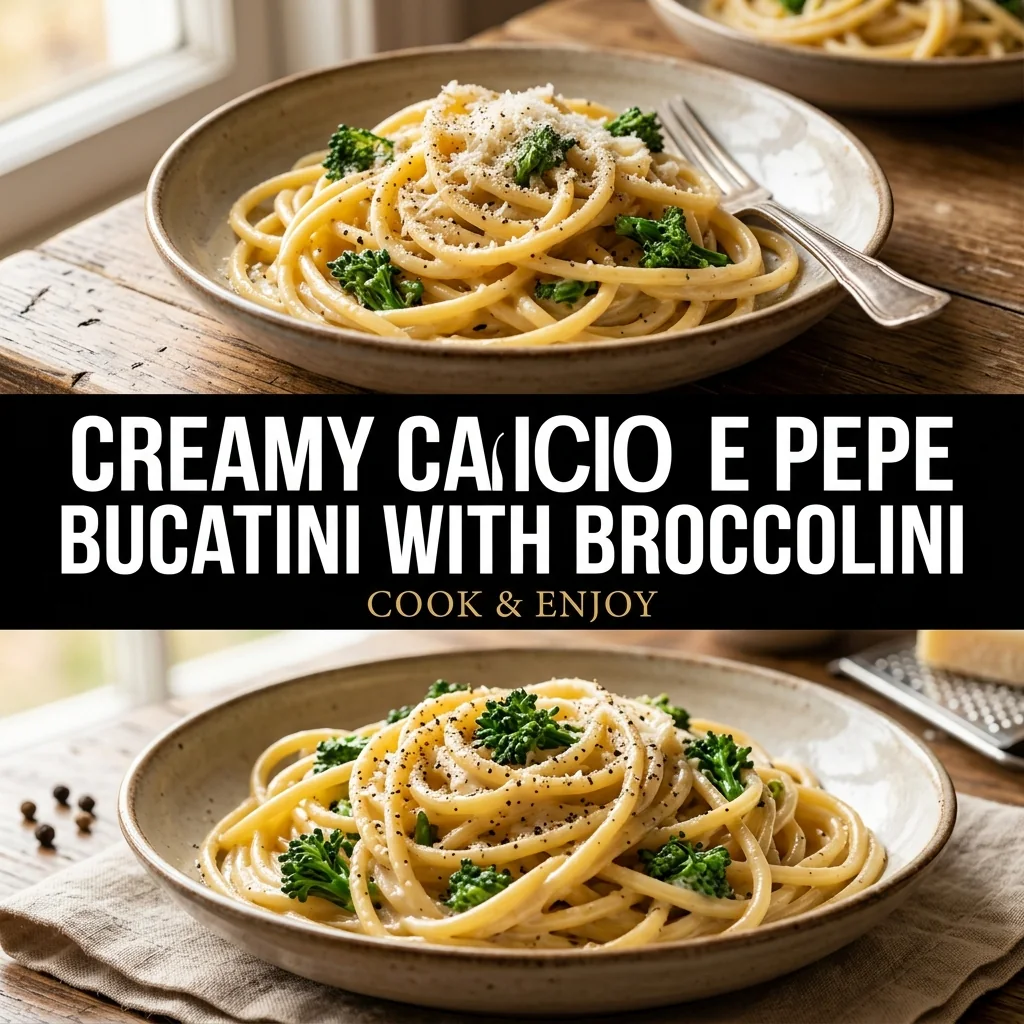
Creamy Cacio e Pepe Bucatini with Broccolini celebrates Roman culinary minimalism through meticulous heat control and ingredient quality. Built from little more than cheese, toasted black pepper, and pasta cooking water, this classic emulsion achieves remarkable silkiness without butter or heavy cream. Bucatini, with its distinctive central hollow channel, provides an ideal vessel for holding the peppery sauce inside and out. In this wholesome preparation, crisp-charred broccolini is introduced to provide earthy freshness, pleasant bitterness, and vibrant color that balances the sharp salinity of halal-suitable Pecorino Romano. Freshly cracked Tellicherry peppercorns toasted in a dry skillet bloom with floral woodiness, creating an unforgettable dinner that relies strictly on pure culinary technique.
Sourcing Halal-Suitable Pecorino
Authentic Italian Pecorino Romano is traditionally crafted using animal rennet extracted from lamb stomachs, which does not comply with standard halal guidelines unless explicitly slaughtered according to Islamic law. Fortunately, several artisan and certified cheese producers produce Pecorino Romano-style aged sheep's milk cheese using microbial or vegetarian rennet that carries reliable halal certification. Always examine the packaging label to confirm the coagulant source is non-animal or halal-certified, ensuring this intensely savory, sharp cheese brings its signature aged punch safely to your dining table.
The Chemistry of the Cheese Paste
The greatest pitfall when executing Cacio e Pepe is the cheese seizing into an unyielding clump of protein strands surrounded by clear oil. This happens when hot pasta hits cold cheese or when the cheese encounters temperatures above the protein coagulation threshold. Creating a slurry by whisking microplane-grated cheese with warm, starchy pasta water pre-hydrates the proteins. When this paste is stirred into warm noodles off the heat, the suspended cooking starches stabilize the fat droplets, resulting in a glossy, restaurant-quality emulsion.
Incorporating Charred Broccolini
While traditional Cacio e Pepe contains no produce, broccolini provides welcome nutritional balance and contrasting texture to the rich sheep's milk cheese. Searing the florets in hot olive oil before briefly steaming them preserves their bright green chlorophyll and yields tender stems with delightfully crisp, smoky florets. Folding the warm charred broccolini into the emulsified pasta at the final stage maintains its crisp-tender bite without diluting the delicate cheese sauce or introducing unwanted excess moisture into the pan.
Before you start
Grating the Pecorino Romano on the smallest holes of a microplane or box grater is vital for success; coarse shreds will clump into rubbery masses instead of melting. Pre-mixing the cheese with warm pasta water into a smooth paste before introducing it to the skillet prevents thermal shock. Never add the cheese paste over active boiling heat, as excessive temperatures above 150 F (65 C) cause dairy proteins to separate and curdle.
THE RECIPE
Creamy Cacio e Pepe Bucatini with Broccolini
4 servings · 15 minutes preparation · 20 minutes cooking
Ingredients
Step-by-step instructions
- Place a large 12-inch stainless steel or cast-iron skillet over medium-high heat, add the extra-virgin olive oil, and arrange the trimmed broccolini florets in a single layer.
- Sear the broccolini undisturbed for 3 minutes until lightly charred on the bottom, then toss with 1/2 teaspoon kosher salt and 2 tablespoons of water, cover immediately with a lid, and steam for 3 minutes until crisp-tender; transfer to a plate and keep warm.
- Wipe out the skillet, add the coarsely cracked Tellicherry peppercorns, and toast over medium heat for 2 to 3 minutes, shaking the pan continuously until deeply fragrant and smoking slightly, then turn off the heat.
- Bring 4 quarts of water and 1 tablespoon of kosher salt to a rolling boil in a 6-quart stockpot over high heat, drop in the bucatini pasta, and boil for 8 to 9 minutes, cooking 2 minutes shy of package al dente directions.
- While the pasta boils, place the finely grated halal-suitable Pecorino Romano into a medium heatproof ceramic bowl.
- Ladle 1/2 cup of hot starchy pasta water from the boiling pot into the bowl of grated cheese, whisking vigorously with a fork or small silicone whisk until a thick, perfectly smooth cheese paste forms without clumps.
- Transfer the undercooked bucatini directly into the skillet with the toasted pepper using pasta tongs, reserving at least 1.5 cups of the starchy pasta cooking water in the pot.
- Pour 1/2 cup of hot pasta water into the skillet over low heat, stirring the noodles vigorously for 1 minute so the starch coats the bucatini and mingles with the toasted pepper oils.
- Remove the skillet completely from the heat source, wait 30 seconds for the pan to cool slightly below boiling, then scrape in the pecorino cheese paste, tossing continuously and adding an extra splash of pasta water until a creamy, glossy emulsion forms; fold in the charred broccolini and serve immediately.
Kitchen notes
Grating the Pecorino Romano on the smallest holes of a microplane or box grater is vital for success; coarse shreds will clump into rubbery masses instead of melting. Pre-mixing the cheese with warm pasta water into a smooth paste before introducing it to the skillet prevents thermal shock. Never add the cheese paste over active boiling heat, as excessive temperatures above 150 F (65 C) cause dairy proteins to separate and curdle.
Storage & make-ahead
Cacio e pepe is best enjoyed immediately upon emulsification, as cooling solidifies the cheese matrix. However, leftovers can be stored in an airtight container in the refrigerator within 2 hours for up to 2 days. To reheat, warm very gently in a nonstick pan over low heat with 3 to 4 tablespoons of water, stirring constantly until warm and reaching 165 F (74 C); do not microwave on high heat or the sauce will separate.
An original recipe guide inspired by themes in our Pinterest research. Recipe has not been independently kitchen-tested. AI-generated image is illustrative; your finished dish may look different.
Frequently asked questions
Why did my cheese sauce turn clumpy instead of smooth?
Clumping occurs when the skillet is too hot or the cheese was grated too coarsely. Always remove the pan from heat before adding the cheese paste, ensure the cheese is grated to a fine powder, and whisk with warm pasta water before combining.
Can I use pre-ground black pepper from a shaker?
No. Pre-ground pepper has lost its volatile essential oils and lacks the fragrant, floral heat essential to Cacio e Pepe. Coarsely crack whole Tellicherry or black peppercorns in a mortar or pepper mill and toast them immediately before cooking.
Can I substitute regular spaghetti for bucatini?
Yes, thick spaghetti, tonnarelli, or linguine make wonderful substitutes. Ensure the pasta is cooked in slightly less water than usual to maximize the concentration of starch in the cooking water, which helps bind the cheese sauce.


