WHY MAKE IT
A little comfort, a lot of flavor.
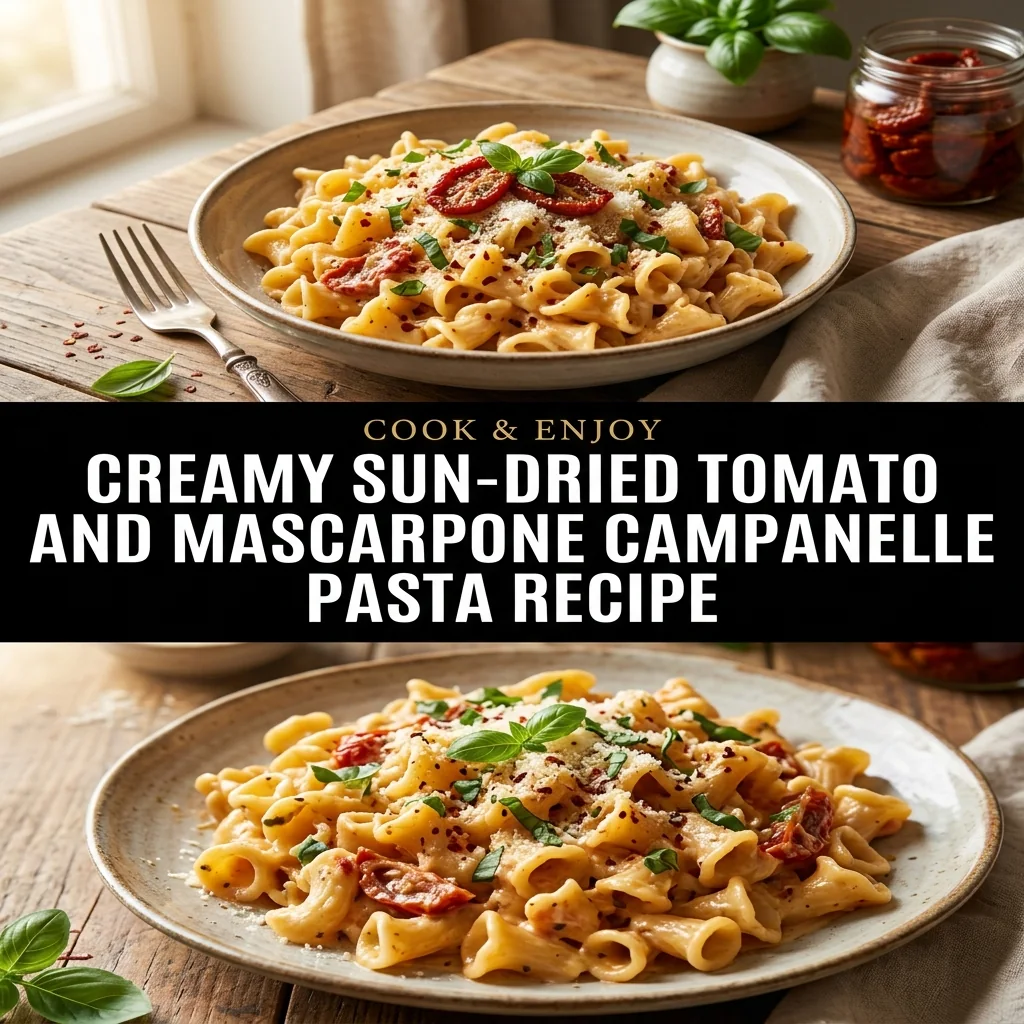
Campanelle pasta, also referred to as gigli, resembles small fluted blossoms with ruffled outer borders that capture viscous sauces with remarkable efficiency. This preparation unites sweet, concentrated sun-dried tomatoes with mellow, caramelized roasted garlic in a delicate foundation. Rather than relying on heavy liquid dairy cream, the sauce draws its body from rich Italian mascarpone cheese, whose mild lactic sweetness complements the sharp, tangy brightness of tomato paste and dried fruit. The cooking liquid from boiling the fluted pasta provides essential dissolved starches that emulsify the melted fats into a clingy, glossy coating across every curved ridge. It is an approachable, comforting weeknight dinner that delivers layered, restaurant-level flavor profiles through simple pan techniques.
Mastering the Garlic Roasting Method
Roasting a whole head of garlic transforms sharp, pungent alliums into mild, spreadable cloves with caramel undertones. Slicing off the top quarter reveals each clove's interior, allowing olive oil and heat to penetrate deeply during the thirty-five-minute bake at 400 degrees Fahrenheit (204 degrees Celsius). Wrapping the head securely in foil traps moisture so the garlic steams tender before caramelizing rather than drying into brittle husks. Once cool enough to handle, squeezing the base expels the velvety paste directly into the skillet, where it dissolves cleanly into the warm cooking oil without burning or creating bitter flavors.
Working with Mascarpone Emulsions
Mascarpone differs fundamentally from heavy cream because of its dense curd structure and lower moisture content, making it prone to curdling if exposed to intense, boiling heat. To preserve its smooth consistency, introduce the mascarpone only after the tomato base has simmered and the heat has been dialed down to low. Stirring continuously allows the cheese to melt gently into the acidic tomato paste and vegetable broth without separating into oil and solids. Adding reserved starchy cooking water provides natural emulsifiers, yielding a stable, velvety sauce that adheres snugly to the intricate floral edges of campanelle.
Selecting and Prepping Campanelle Pasta
Campanelle, which translates to little bells in Italian, features cone-shaped centers and ruffled petals that trap chunky sauces better than straight extruded shapes like penne. When boiling this pasta shape, use plenty of well-salted water and cook strictly until al dente, which usually takes between nine and eleven minutes. Because the ruffled margins are thinner than the dense conical base, overcooking will cause the edges to fray and become mushy while tossing. Cooking the pasta until it retains a firm bite ensures the bells retain structural integrity against the dense, spoon-coating mascarpone sauce.
Before you start
Reserve ample starchy pasta cooking water just before draining the campanelle noodles, as the starch is vital for transforming thick mascarpone into a fluid, clinging emulsion. If the pan sauce begins to separate or looks too dense when the pasta is added, pour in two tablespoons of the warm pasta liquid at a time while shaking the skillet over medium-low heat. The rapid agitation binds the dairy fats with tomato solids, preventing greasiness and creating a glossy, silky surface finish.
THE RECIPE
Creamy Sun-Dried Tomato and Mascarpone Campanelle
4 servings · 15 minutes preparation · 44 minutes cooking · 5 minutes cooling, chilling or resting
Ingredients
Step-by-step instructions
- Preheat your oven to 400 degrees Fahrenheit (204 degrees Celsius). Slice 0.5 inch off the top of the whole garlic head to expose the cloves, drizzle with 1 tablespoon olive oil, wrap tightly in heavy aluminum foil, and bake on a small baking sheet for 35 minutes until completely soft and golden.
- Remove the roasted garlic from the oven and let rest on the counter for 5 minutes until cool enough to handle, then squeeze the soft garlic cloves out of their papery skins into a small bowl and mash into a smooth paste with a fork.
- Bring a large stockpot filled with 4 quarts of generously salted water to a rolling boil over high heat, add the 12 ounces of campanelle pasta, and cook for 9 to 10 minutes until just al dente, reserving 1 cup of starchy pasta water before draining.
- Heat the 2 tablespoons of reserved sun-dried tomato oil in a 12-inch deep skillet over medium heat, then add the minced shallot and cook for 3 minutes until translucent and soft.
- Add the sliced sun-dried tomatoes, mashed roasted garlic paste, 2 tablespoons tomato paste, and 0.5 teaspoon red pepper flakes to the skillet, stirring constantly over medium heat for 2 minutes until fragrant and deepened in color.
- Pour in 0.75 cup halal-certified vegetable broth to deglaze the skillet, scraping up any browned bits stuck to the bottom, and simmer gently for 2 minutes to reduce slightly.
- Lower the skillet heat to medium-low, gently stir in 0.75 cup mascarpone cheese until completely melted and smooth, then season with 0.5 teaspoon fine sea salt and 0.25 teaspoon black pepper.
- Transfer the drained campanelle pasta directly into the skillet, pour in 0.5 cup of the reserved pasta cooking water, and toss vigorously over low heat for 2 minutes, adding more pasta water by tablespoons if needed to create a glossy, clinging sauce.
- Remove the skillet from the heat, fold in 0.5 cup grated parmesan-style cheese and 0.25 cup chopped fresh flat-leaf parsley, and serve immediately in warm pasta bowls.
Kitchen notes
Reserve ample starchy pasta cooking water just before draining the campanelle noodles, as the starch is vital for transforming thick mascarpone into a fluid, clinging emulsion. If the pan sauce begins to separate or looks too dense when the pasta is added, pour in two tablespoons of the warm pasta liquid at a time while shaking the skillet over medium-low heat. The rapid agitation binds the dairy fats with tomato solids, preventing greasiness and creating a glossy, silky surface finish.
Storage & make-ahead
Cool leftover pasta promptly and place in an airtight glass container within 2 hours of cooking; store in the refrigerator for up to 3 days. Reheat gently in a skillet over low heat, splashing in 2 tablespoons of water or halal broth to reconstitute the mascarpone sauce, heating thoroughly until steaming and reaching an internal temperature of 165 degrees Fahrenheit (74 degrees Celsius). Freezing is not recommended because mascarpone sauce separates when thawed.
An original recipe guide inspired by themes in our Pinterest research. Recipe has not been independently kitchen-tested. AI-generated image is illustrative; your finished dish may look different.
Frequently asked questions
Can I substitute another pasta shape for campanelle?
Yes, ribbed or convoluted shapes like rigatoni, fusilli col buco, or cavatappi work exceptionally well. These shapes provide grooves, curves, and hollow pockets that trap the thick, velvety mascarpone and sun-dried tomato sauce just as effectively as the ruffled edges of campanelle.
Why did my mascarpone sauce turn oily?
Mascarpone breaks down if overheated or boiled aggressively. To fix broken sauce, remove the skillet from the heat source immediately, add two to three tablespoons of warm, starchy pasta water, and whisk vigorously until the emulsion rebinds into a cohesive, velvety glaze.
Can I use dry-packed sun-dried tomatoes instead of oil-packed?
Yes, but they must be rehydrated first. Soak dried tomatoes in boiling water for fifteen minutes until plump and pliable, then drain and slice. Substitute extra virgin olive oil for the jarred tomato oil called for in the initial sauté step.


