WHY MAKE IT
A little comfort, a lot of flavor.
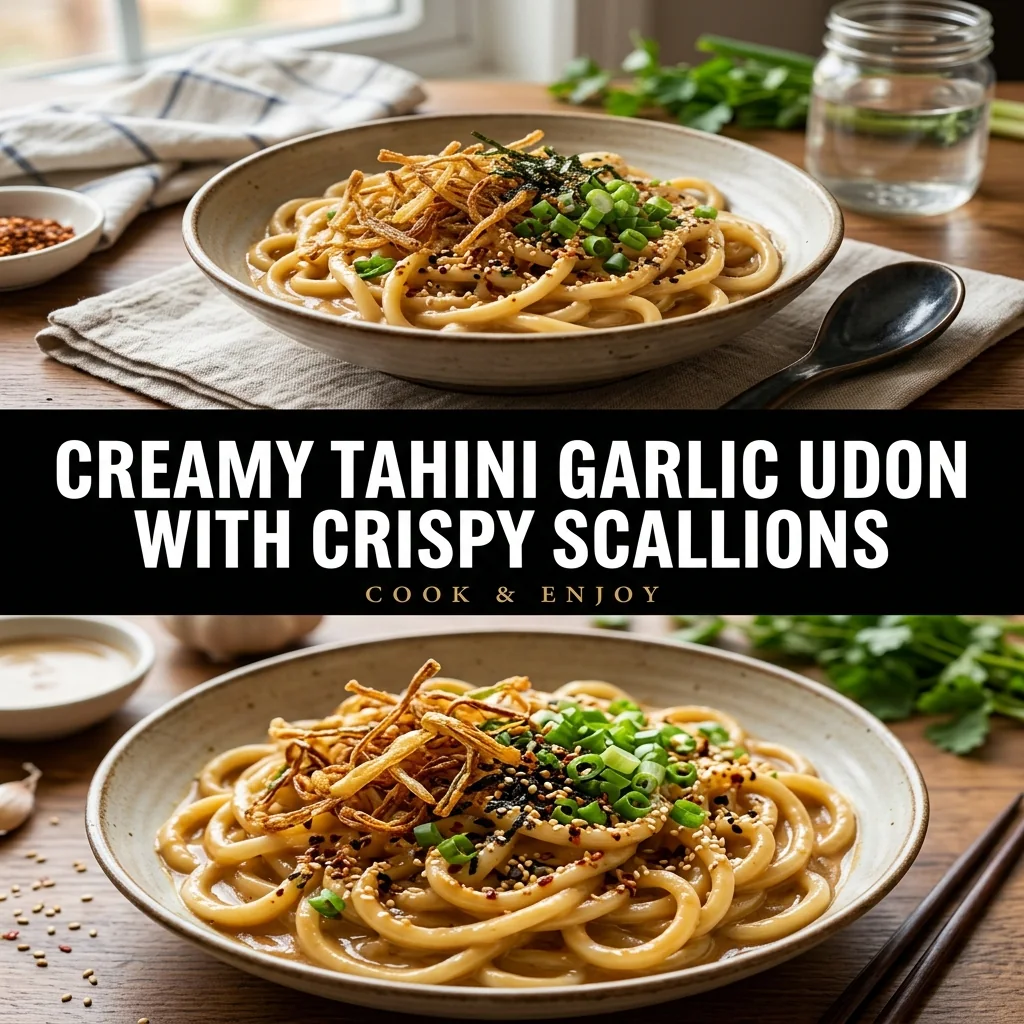
Thick, springy udon noodles provide the ultimate canvas for robust, savory sauces, and this velvety tahini-garlic preparation highlights that texture with minimal fuss. Ground roasted sesame paste lends a deeply nutty, earthy backbone that is enlivened by savory soy sauce, tangy rice vinegar, and a touch of sweetness. The magic of this dish culminates in the topping: fresh scallions and minced garlic flash-fried in neutral oil until crispy, golden, and bursting with aromatic sweetness. When spooned over noodles swathed in a smooth sesame emulsion, the warm infused oil mingles with the sauce, creating layers of crunch and rich flavor in a comforting, plant-forward meal ready in under thirty minutes.
The Art of Emulsifying Tahini
Pure tahini consists of stone-ground sesame seeds containing natural oils and solid proteins. When exposed to small quantities of moisture, tahini often seizes into a dense paste. Adding hot, starchy udon water in steady increments loosens these bonds, creating a stable, silky emulsion. The starch suspended in noodle water prevents the sauce from breaking into slick grease. Choose a runny, light-roast tahini without bitter overtones for the smoothest coating.
Why Frozen Sanuki Udon Reigns Supreme
Frozen Sanuki-style udon cakes are vastly superior in texture to shelf-stable dried or vacuum-packed alternatives. Flash-frozen immediately after par-cooking, these noodles preserve the distinctive bouncy chewiness known as 'koshi.' Because they are already cooked, they require mere minutes in boiling water simply to thaw and reheat. Overcooking them degrades this pleasant chew, so pull them promptly the moment the strands separate freely in the pot.
Crisping Aromatics Safely
Frying garlic and scallions in hot oil extracts their fat-soluble flavors and converts sharp pungency into mellow sweetness. Because garlic burns rapidly, watch the pan closely over medium heat. Keep the aromatics moving constantly with a heatproof spatula. Remove the pan from heat when the garlic shows pale honey colors, as residual skillet heat will continue crisping the garlic slices off the flame without turning them bitter.
Before you start
Tahini can seize up and become thick and pasty when first mixed with liquids like soy sauce and vinegar. Do not panic; slowly whisking in hot, starchy udon cooking water relaxes the sesame seed paste proteins and emulsifies the oil, transforming the mixture into a glossy, restaurant-style coating that clings smoothly to thick noodles.
THE RECIPE
Creamy Tahini Garlic Udon with Crispy Scallions
4 servings · 15 minutes preparation · 15 minutes cooking
Ingredients
Step-by-step instructions
- Bring a 4-quart pot of water to a vigorous boil over high heat to prepare for cooking the udon noodles.
- In a medium heatproof mixing bowl, whisk together the 0.33 cup of tahini, 2 tablespoons of light soy sauce, 1 tablespoon of dark soy sauce, 1.5 tablespoons of maple syrup, 1 tablespoon of rice vinegar, and 1 tablespoon of chili oil until smooth and uniform.
- Drop the 4 portions of frozen udon noodles into the boiling water and cook for 1 to 2 minutes, separating the strands gently with chopsticks, until tender and chewy.
- Before draining, carefully measure out 0.5 cup of the hot, starchy noodle cooking water and gradually whisk it into the bowl of tahini sauce until the emulsion becomes silky, pourable, and pale cream in color.
- Drain the udon noodles thoroughly in a colander, shaking off excess moisture, and return the warm noodles directly to the warm pot. Pour the creamy tahini sauce over the noodles and toss thoroughly with tongs until evenly coated.
- Heat 3 tablespoons of neutral cooking oil in a small 8-inch skillet over medium heat until shimmering. Add the sliced white and light green parts of the scallions along with the grated garlic, sizzling for 2 to 3 minutes until golden brown, fragrant, and slightly crisp, taking care not to scorch the garlic.
- Remove the skillet from the heat immediately to stop cooking.
- Divide the warm, sauce-coated udon noodles evenly into four shallow bowls.
- Spoon the sizzling garlic-scallion oil over each serving, then garnish evenly with the reserved raw green scallion tops and toasted sesame seeds before serving.
Kitchen notes
Tahini can seize up and become thick and pasty when first mixed with liquids like soy sauce and vinegar. Do not panic; slowly whisking in hot, starchy udon cooking water relaxes the sesame seed paste proteins and emulsifies the oil, transforming the mixture into a glossy, restaurant-style coating that clings smoothly to thick noodles.
Storage & make-ahead
Store leftover dressed noodles in an airtight container in the refrigerator within 2 hours of preparation for up to 2 days. Reheat gently in a nonstick pan over medium-low heat with a tablespoon of water, stirring frequently until steaming hot and reaching 165 F / 74 C.
An original recipe guide inspired by themes in our Pinterest research. Recipe has not been independently kitchen-tested. AI-generated image is illustrative; your finished dish may look different.
Frequently asked questions
Can I use Chinese sesame paste instead of Middle Eastern tahini?
Yes, Chinese sesame paste works wonderfully. Because it is made from deeply roasted sesame seeds, it yields a darker color and stronger, toastier flavor profile that complements garlic udon beautifully.
Can I add protein to this dish?
Crispy pan-fried halal chicken strips, seared tofu cubes, or steamed edamame pair seamlessly with the nutty sesame sauce and can be folded directly into the noodles before garnishing.
Is chili crisp necessary for this recipe?
No, chili crisp is optional. If you prefer a completely mild dish, replace the chili crisp with an additional teaspoon of toasted sesame oil to maintain depth without adding heat.


