WHY MAKE IT
A little comfort, a lot of flavor.
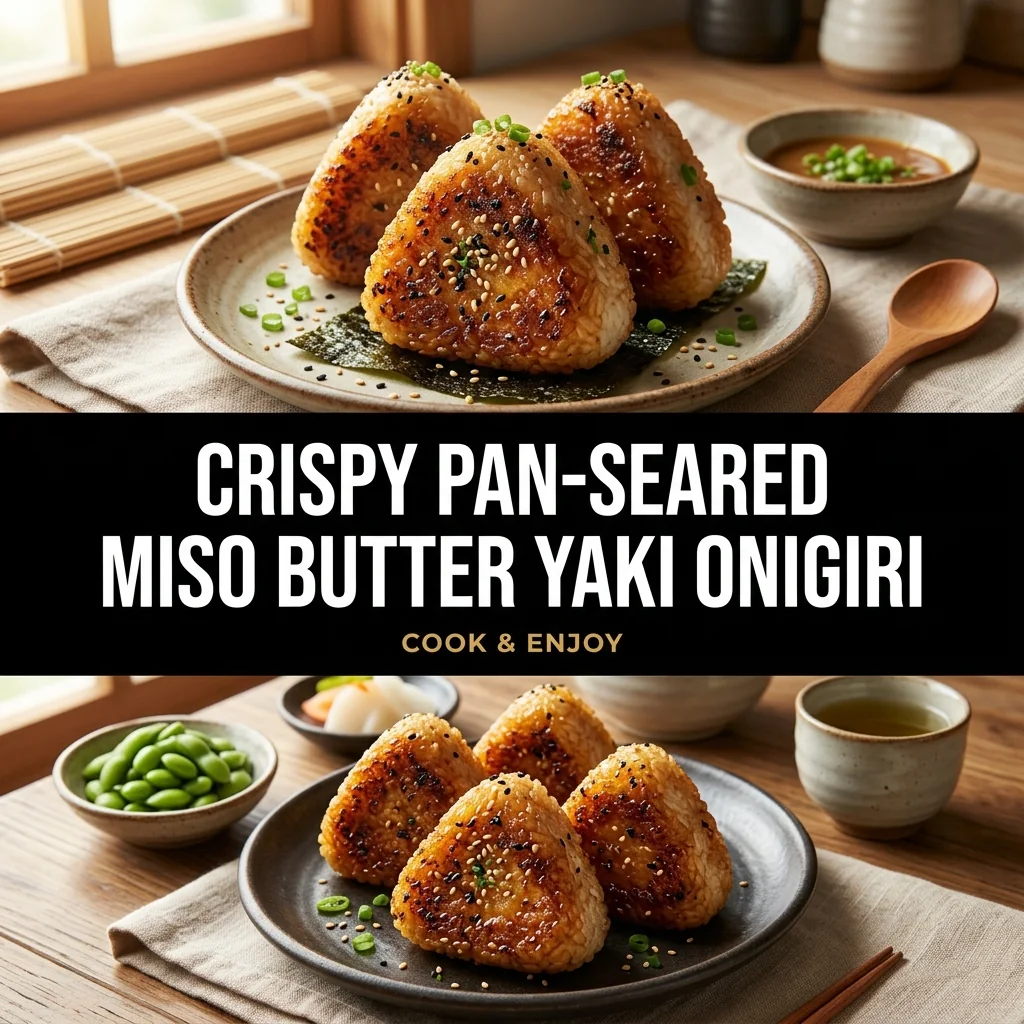
Crispy pan-seared miso butter yaki onigiri elevates traditional Japanese rice balls into a comfort food defined by textural contrast. Made with plump, starchy Japanese short-grain rice, these hand-molded triangles are seared in a skillet until an exterior crust forms. Only after the initial crust develops is the glaze applied; brushing on a mixture of sweet white miso, savory halal soy sauce, and melted butter creates a caramelized exterior without burning. The result is a crackling, golden shell that yields to tender, moist rice within. Wrapped with a crisp band of nori, each piece delivers savory depth and buttery aroma in every satisfying bite.
Choosing Rice and Shaping Technique
Japanese short-grain rice is vital for yaki onigiri because its high amylopectin content provides the necessary stickiness to hold geometric shapes without falling apart in a hot skillet. Medium or long-grain varieties lack sufficient cohesion and crumble during flipping. When forming the onigiri, shape the rice while it is warm, wetting your hands with salted water to prevent sticking. Press firmly with steady palm pressure to compact the grains tightly into a triangle. Any loose air pockets will cause the rice balls to fracture when heated or when brushed with the wet miso butter glaze.
Two-Stage Pan-Searing Method
A crucial error in making yaki onigiri is applying the glaze too early. Miso and soy sauce contain sugars and proteins that burn rapidly over direct heat, creating acrid bitterness before the rice crisps. The correct method relies on a dry-sear phase where the plain rice patties cook in sesame oil and butter until an initial protective crust forms. Once the surface grains turn pale gold and firm to the touch, brush the miso butter mixture over each side and sear briefly. This caramelizes the glaze quickly while preserving the crackling exterior.
Selecting Halal Condiments
Traditional Japanese pantry staples often contain trace alcohol from natural fermentation or added preservation spirits like mirin and sake. For a strictly halal preparation, ensure the white miso paste is certified alcohol-free and free of spirit additives. Pair it with naturally brewed halal soy sauce made strictly from soybeans, wheat, water, and salt. Sweet white miso provides a mellow, buttery saltiness that balances the savory depth of soy sauce, while a touch of pure maple syrup or cane sugar delivers delicate sweetness without requiring nonhalal cooking wines.
Before you start
Always let the rice patties sear completely undisturbed during the first few minutes in the skillet. Moving them prematurely disrupts the nascent starch crust and causes hot grains to stick to the pan surface. Use a thin, flexible metal or heatproof silicone spatula to slide under each onigiri. If you feel resistance, wait an additional thirty seconds until the rice releases naturally from the skillet before flipping to sear the opposite side.
THE RECIPE
Crispy Pan-Seared Miso Butter Yaki Onigiri
4 servings · 20 minutes preparation · 25 minutes cooking · 10 minutes cooling, chilling or resting
Ingredients
Step-by-step instructions
- Rinse 2 cups Japanese short-grain rice in a fine-mesh strainer under cold running water until the runoff is clear, drain well, combine with 2 1/4 cups water in a medium saucepan, and bring to a boil over medium-high heat.
- Reduce heat to low, cover with a tight-fitting lid, and simmer for 15 minutes without lifting the lid; remove from heat and let sit covered to rest for 10 minutes.
- Turn warm rice out into a wide bowl, sprinkle with 1/2 teaspoon fine sea salt, and gently fold with a rice paddle to disperse steam and distribute salt evenly.
- Moisten hands with cold salted water, divide the warm rice into 8 equal portions, and press each firmly into a compact, flat triangular patty about 1 inch thick.
- In a small bowl, whisk together 2 tablespoons halal white miso, 1 1/2 tablespoons halal soy sauce, 1 tablespoon maple syrup, 1 tablespoon warm water, and 1 tablespoon melted unsalted butter until smooth.
- Heat 1 tablespoon toasted sesame oil and 1 tablespoon melted unsalted butter in a 12-inch nonstick or well-seasoned cast-iron skillet over medium heat.
- Place onigiri into skillet and sear dry for 4 to 5 minutes per side until the outer grains turn pale gold and form a crisp, sturdy crust.
- Brush the top surface generously with the prepared miso glaze, flip carefully, and sear for 1 to 2 minutes until caramelized; immediately brush the reverse side, flip again, and sear for 1 minute until both sides are deeply golden and aromatic.
- Transfer to a serving platter, wrap a 1-inch strip of nori around the bottom edge of each rice ball, and garnish with 1 tablespoon toasted sesame seeds before serving.
Kitchen notes
Always let the rice patties sear completely undisturbed during the first few minutes in the skillet. Moving them prematurely disrupts the nascent starch crust and causes hot grains to stick to the pan surface. Use a thin, flexible metal or heatproof silicone spatula to slide under each onigiri. If you feel resistance, wait an additional thirty seconds until the rice releases naturally from the skillet before flipping to sear the opposite side.
Storage & make-ahead
Transfer leftover yaki onigiri into an airtight container and refrigerate within 2 hours of preparation. Consume within 2 days for optimal texture, as cold rice inevitably hardens. To restore the crisp exterior, reheat chilled onigiri in a lightly oiled nonstick skillet over medium-low heat with a loose lid until heated through to 165 F (74 C), or toast gently in a toaster oven.
An original recipe guide inspired by themes in our Pinterest research. Recipe has not been independently kitchen-tested. AI-generated image is illustrative; your finished dish may look different.
Frequently asked questions
Can I shape the onigiri ahead of time?
Shape the rice triangles while freshly cooked rice is still warm, then refrigerate promptly in a covered shallow container within 2 hours. Keep chilled for up to 24 hours and pan-fry until the center reaches 165 F (74 C). Do not hold cooked rice at room temperature for 4 hours.
Why did my onigiri crumble in the skillet?
Crumbling occurs if the rice was not compressed firmly during shaping, if cold leftover rice was used without reheating, or if the skillet lacked sufficient oil. Always pack warm rice tightly and allow the bottom crust to set completely before attempting to flip each rice ball.
Can I bake these in the oven instead of pan-searing?
Yes, bake the shaped rice balls on a parchment-lined baking sheet at 400 F (200 C) for 15 minutes until firm. Brush both sides with the miso butter glaze and broil for 2 to 3 minutes until bubbling and caramelized, watching closely to prevent burning.


