WHY MAKE IT
A little comfort, a lot of flavor.
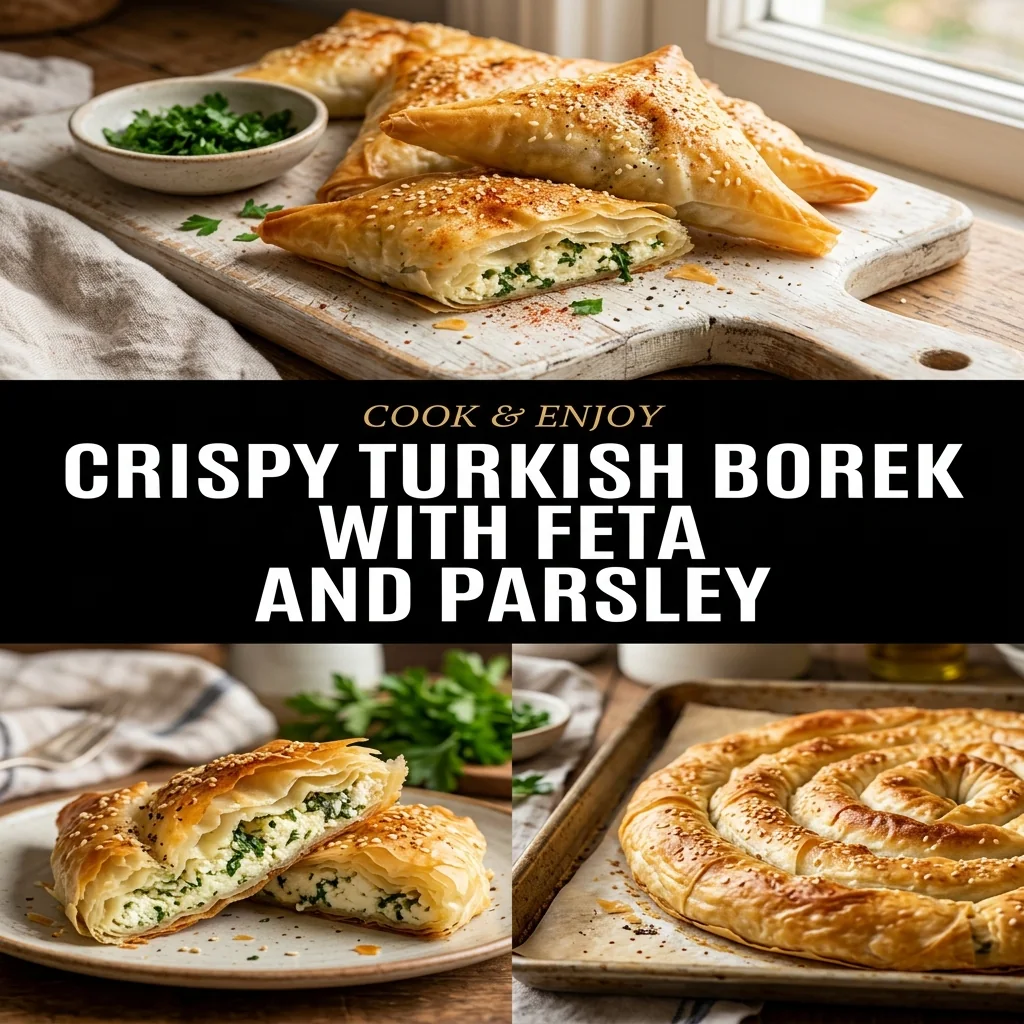
Börek stands as one of the culinary cornerstones of Turkish home cooking and bakery culture, showcasing the versatility of paper-thin yufka dough. This spiral preparation, known as gül böreği when shaped individually or tepsi böreği when spiraled into a large pan, balances crisp outer edges with a custardy, tender center. The filling features salty Turkish white cheese tempered by mild ricotta and an abundance of fresh flat-leaf parsley, which adds herbal brightness and moisture. A rich wash of whole milk, eggs, olive oil, and melted butter hydrates the pastry from within while helping it brown. Speckled with aromatic nigella and sesame seeds, this savory bake delivers texture and savory richness in every bite.
Understanding Yufka versus Standard Phyllo
Authentic Turkish yufka sheets are slightly thicker, more pliable, and less fragile than Greek phyllo pastry, making them ideal for rolling long savory spirals without tearing. If authentic yufka is unavailable, layering three to four standard commercial phyllo sheets with melted butter between each layer serves as an effective substitute. The thicker profile of yufka absorbs the egg and milk wash readily, producing the signature contrast between the crunchy top crust and the tender, succulent interior strata.
Balancing Saltiness in the Cheese Filling
Traditional Turkish white cheese (beyaz peynir) is preserved in brine and delivers a pronounced salinity and tang. Combining it with mild whole-milk ricotta or Turkish lor cheese balances the salt levels without dulling the cheese's character. Checking that cheeses are certified halal or made with microbial enzymes ensures religious compliance. Beating an egg into the cheese matrix binds the filling during baking, preventing cheese oils from leaking out into the bottom of the pan and ensuring clean, distinct slices.
The Soaking Wash Technique
The magic of authentic börek lies in the generous application of the liquid wash. Whisking together milk, olive oil, melted butter, and egg produces an emulsion that hydrates the yufka sheets thoroughly. Brushing the inside before rolling ensures interior lamination, while pouring the remaining liquid over the finished coil allows it to absorb into the pastry seams. As the börek bakes, the liquid transforms into a savory custard that puffs the pastry and creates irresistible textural complexity.
Before you start
Keep unused yufka or phyllo sheets covered under a damp, clean kitchen cloth while assembling each section to prevent the dough from drying out and cracking. Roll the pastry ropes loosely rather than tightly. A loose roll allows the internal milk custard wash to steam the interior pastry layers into tender, pillowy folds while the outer surface develops an exceptionally crisp, crackling shell under the dry heat of the oven.
THE RECIPE
Crispy Turkish Borek with Feta and Parsley
6 servings · 30 minutes preparation · 35 minutes cooking · 15 minutes cooling, chilling or resting
Ingredients
Step-by-step instructions
- Preheat the oven to 375°F (190°C) and grease a 10-inch round metal cake pan or cast-iron skillet with 1 teaspoon olive oil.
- Mash 250 grams crumbled white cheese, 150 grams whole-milk ricotta, finely chopped parsley, 1 egg, and 1/4 teaspoon black pepper together in a medium bowl until thoroughly combined into a cohesive filling.
- Whisk the remaining 1 egg, 120 milliliters whole milk, 60 milliliters olive oil, and 40 grams melted butter together in a separate bowl to create the soaking wash.
- Lay 1 triangular sheet of yufka on a clean counter (or 4 sheets of phyllo layered together, each brushed with melted butter) and brush its surface generously with 3 to 4 tablespoons of the milk-egg wash.
- Spoon one-third of the cheese mixture along the wide base of the yufka sheet in a narrow, even cylinder roughly 1/2-inch thick.
- Roll the pastry loosely from the wide edge toward the pointed tip into a long, slender rope, keeping the tension gentle so steam can expand inside without rupturing the delicate dough.
- Coil the rolled rope into a spiral in the center of the prepared baking pan; repeat the process with the remaining yufka sheets and filling, attaching each newly rolled rope to the end of the previous one to enlarge the continuous spiral.
- Pour any remaining milk-egg wash evenly over the top of the entire coiled pastry, letting it seep into the crevices for 5 minutes, then sprinkle with 1 tablespoon nigella seeds and 1 tablespoon sesame seeds.
- Bake at 375°F (190°C) for 35 minutes until the pastry is puffed, deeply golden brown, and crisp; rest for 15 minutes in the pan before slicing into warm wedges.
Kitchen notes
Keep unused yufka or phyllo sheets covered under a damp, clean kitchen cloth while assembling each section to prevent the dough from drying out and cracking. Roll the pastry ropes loosely rather than tightly. A loose roll allows the internal milk custard wash to steam the interior pastry layers into tender, pillowy folds while the outer surface develops an exceptionally crisp, crackling shell under the dry heat of the oven.
Storage & make-ahead
Cool completely and store leftover börek in an airtight glass container in the refrigerator within 2 hours. Keep chilled for up to 3 days. To restore the signature crackling exterior, reheat wedges uncovered on a baking rack over a sheet pan in a 350°F (175°C) oven for 12 to 15 minutes until heated through to an internal temperature of at least 165°F (74°C). Avoid microwaving, which makes the delicate pastry sheets soggy.
An original recipe guide inspired by themes in our Pinterest research. Recipe has not been independently kitchen-tested. AI-generated image is illustrative; your finished dish may look different.
Frequently asked questions
Can I assemble this börek the night before baking?
Yes. Assemble the spiral in the pan, cover it tightly with plastic wrap without pouring the final wash over the top, and refrigerate overnight. Pour the soaking wash over the pastry just before baking, adding 5 minutes to the total baking time.
What is the flavor profile of nigella seeds?
Nigella seeds, often called black cumin or çörek otu, have a complex, savory flavor reminiscent of toasted onion, oregano, and black pepper. They provide earthy depth that complements the creamy, salty cheese filling.
Why did my börek come out greasy on the bottom?
Greasy börek occurs if the baking pan is cool or if low-fat cheese with excess moisture was used without an egg binder. Baking in a dark metal pan or cast-iron skillet on the lower-middle rack ensures the base cooks crisp.