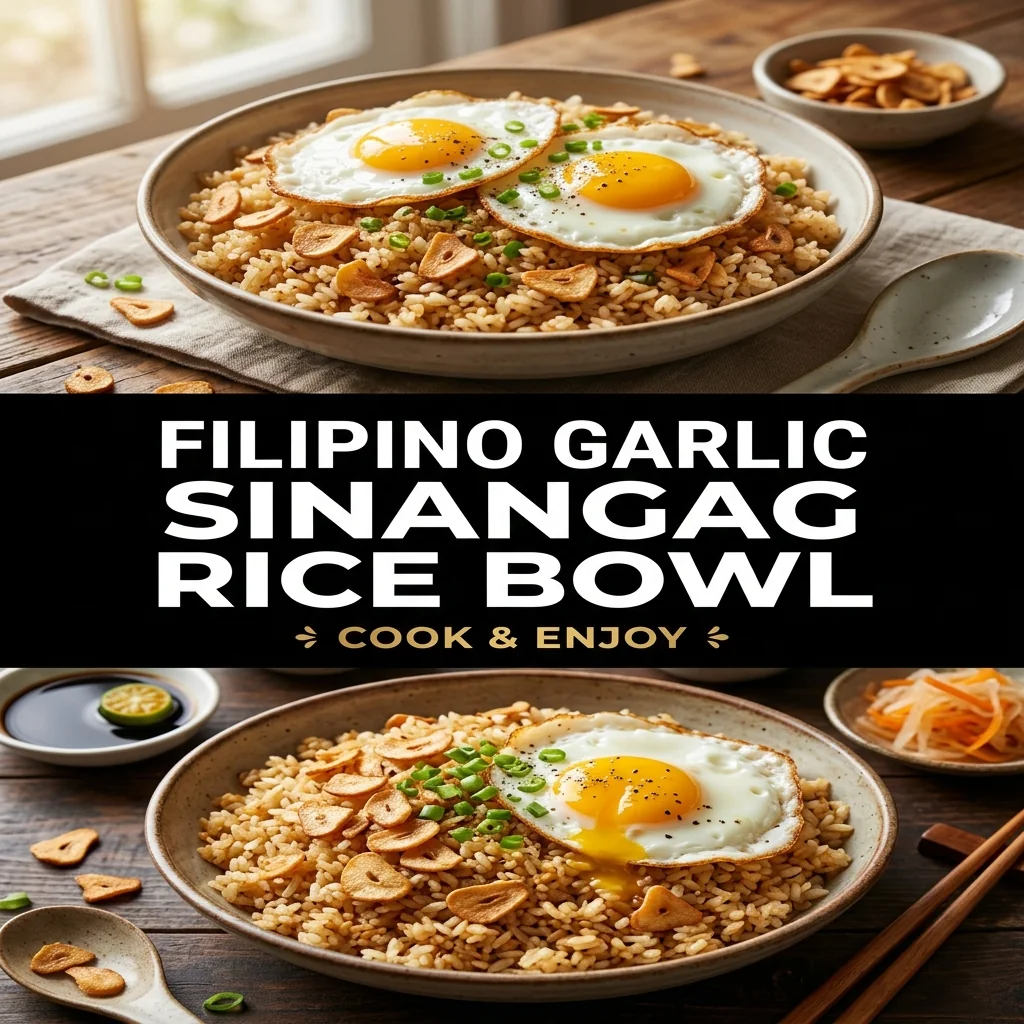
WHY MAKE IT
A little comfort, a lot of flavor.
Sinangag is the undisputed cornerstone of the Filipino morning meal, serving as the fragrant canvas for the beloved silog breakfast tradition. Built upon simplicity and culinary thrift, this iconic dish transforms leftover day-old steamed jasmine rice into an aromatic masterpiece using little more than oil, salt, and generous amounts of fresh garlic. What makes sinangag extraordinary is the dual expression of garlic: half infuses the cooking fat to coat every single rice grain, while the remainder crisps into delicate, golden chips that crown the finished bowl. Paired with a crispy-edged fried egg whose runny yolk coats the seasoned grains, along with tart fresh tomato slices, this comforting rice bowl delivers robust satisfaction suitable for any hour of the day.
The Art of Cold Oil Garlic Infusion
The defining flavor of authentic sinangag relies on slow garlic extraction. Introducing finely minced garlic to cold oil allows the aromatics to warm gradually alongside the cooking medium. This measured approach prevents the delicate sugars within the garlic from scorching into bitterness. As the moisture evaporates, the minced pieces turn fragrant and amber-hued. Reserving half of these crispy bits creates a delightful contrast in texture, while leaving the remaining garlic and infused fat in the pan guarantees that every forkful of rice carries deep savory warmth.
Selecting and Prepping the Rice
Freshly cooked jasmine rice holds high surface starch and internal moisture, causing it to clump and steam when fried. To achieve the light, separate texture characteristic of sinangag, utilize rice that has spent at least twelve hours uncovered or loosely covered in the refrigerator. The dry cold air dehydrates the starch, creating distinct grains. Before cooking, lightly oil your fingers and gently crumble the cold clumps apart. This step ensures rapid, even contact between the rice grains and the infused garlic oil.
Completing the Silog Experience
In the Philippines, pairing sinangag with fried eggs creates the foundation of the silog plate. The rich, runny yolk acts as a luxurious natural sauce that tempers the potent garlic punch. Fresh produce provides essential textural balance to the rich starch; crisp cucumber rounds offer clean hydration, while ripe, slightly acidic tomato slices slice through the savory fat. For an expanded meal, accompany the bowl with halal-certified grilled beef tapa or pan-seared spiced fish fillets cooked safely to 145°F (63°C).
Before you start
Starting the minced garlic in cold oil over gentle, medium-low heat is the secret to perfect sinangag. If dropped into screaming hot oil, garlic burns quickly, becoming acrid and bitter. Gradual heating gently coaxes out the allicin, infusing the entire volume of oil with sweet, toasted aroma while yielding evenly crisp, golden chips. Day-old jasmine rice is crucial; its firm, dry surface absorbs the fragrant oil without softening into a dense mass.
THE RECIPE
Filipino Garlic Sinangag Rice Bowl
4 servings · 15 minutes preparation · 15 minutes cooking
Ingredients
Step-by-step instructions
- Using clean hands, gently rub and break apart the cold day-old jasmine rice in a large bowl to ensure there are no dense clumps.
- Add 2 tablespoons of the neutral oil and all of the finely minced garlic to a cold 12-inch nonstick skillet or carbon-steel wok.
- Place the skillet over medium-low heat and cook the garlic slowly for 5 to 7 minutes, stirring continuously, until it turns pale straw-gold and crisp; immediately spoon out half of the toasted garlic chips and set aside on a small plate.
- Increase the heat to medium-high, add the separated rice into the skillet with the remaining garlic and infused oil, and stir rapidly to coat every grain.
- Spread the rice across the bottom of the pan and let it cook undisturbed for 2 minutes to develop light toasted crusts, then toss and repeat for 4 to 5 minutes total.
- Season the rice evenly with the fine sea salt and black pepper, tossing until thoroughly hot throughout, then transfer onto four serving plates.
- Wipe out the skillet, heat the remaining 1 tablespoon of oil over medium heat, crack in the 4 eggs, and fry for 2 to 3 minutes until both whites and yolks are firm, about 4 to 5 minutes.
- Top each warm portion of garlic rice with a fried egg, sprinkle with the reserved crispy garlic chips and sliced scallions, and arrange fresh tomato and cucumber slices alongside. Verify reheated rice reaches 165 F (74 C) throughout before serving.
Kitchen notes
Starting the minced garlic in cold oil over gentle, medium-low heat is the secret to perfect sinangag. If dropped into screaming hot oil, garlic burns quickly, becoming acrid and bitter. Gradual heating gently coaxes out the allicin, infusing the entire volume of oil with sweet, toasted aroma while yielding evenly crisp, golden chips. Day-old jasmine rice is crucial; its firm, dry surface absorbs the fragrant oil without softening into a dense mass.
Storage & make-ahead
Transfer leftover garlic rice to an airtight container and store in the refrigerator within 2 hours of cooking. Keep chilled at or below 40°F (4°C) for up to 3 days. Reheat leftovers thoroughly in a lightly greased skillet or covered microwave dish until steaming, reaching an internal food temperature of at least 165°F (74°C). Prepare fresh fried eggs upon serving leftovers to preserve optimal texture.
An original recipe guide inspired by themes in our Pinterest research. Recipe has not been independently kitchen-tested. AI-generated image is illustrative; your finished dish may look different.
Frequently asked questions
Can I use garlic powder instead of fresh garlic?
Fresh garlic is essential for authentic sinangag. Garlic powder lacks the aromatic oils required to season the cooking fat and cannot produce the crispy golden chips that provide the dish's signature texture and visual appeal.
What type of rice works best if jasmine is unavailable?
Any dry, medium-grain or long-grain white rice functions as a good alternative. Avoid short-grain glutinous rice, as its sticky starch content will clump together rather than separating into distinct, oil-kissed grains during frying.
Why did my garlic turn bitter during cooking?
Garlic turns bitter when cooked over excessive heat or left unattended. Maintain medium-low heat during the initial sauté, and remove the pan from heat the moment the minced pieces shift to a light golden hue.


