WHY MAKE IT
A little comfort, a lot of flavor.
Ful medames stands as one of the oldest recorded prepared breakfasts in the world, tracing its roots through centuries of Middle Eastern and North African culinary history. Centered on simmered fava beans, this hearty dish delivers sustained energy through fiber and plant-based protein. The beans are traditionally cooked until buttery soft, then crushed with garlic, pungent cumin, bright lemon juice, and rich olive oil. The interplay between the earthy legume base and the crisp, fresh toppings of tomato, parsley, and raw onion creates a harmonious morning profile. Scooped up using pieces of warm, freshly toasted pita bread, ful medames provides an authentic, deeply nourishing breakfast that is naturally wholesome.
Selecting and Preparing Fava Beans
While dried fava beans simmered overnight represent the historical method, quality canned fava beans provide exceptional flavor and creamy consistency in fraction of the time. Look for cans labeled as plain fava beans or foul mudammas without added animal fats or artificial flavorings. Rinsing them thoroughly removes brine residues. Simmering the beans briefly in fresh water hydrates the starches before crushing. Leaving a portion of the beans whole offers pleasant structural variation, preventing the dish from resembling a homogenous dip while keeping the mouthfeel rich and satisfying.
Balancing Cumin, Garlic, and Lemon
Ground cumin is the essential aromatic spine of ful medames, providing warm, earthy bitterness that cuts through the dense starch of the fava beans. Minced raw garlic introduced during the warm simmer mellows slightly while imparting savory pungency. Freshly squeezed lemon juice should be stirred in toward the end of cooking; adding acid too early can toughen bean skins and blunt the citrus brightness. Taste the mash prior to serving, as fava beans absorb substantial salt and acid; adjusting with an extra squeeze of lemon balances the richness of the olive oil.
Traditional Garnish and Presentation
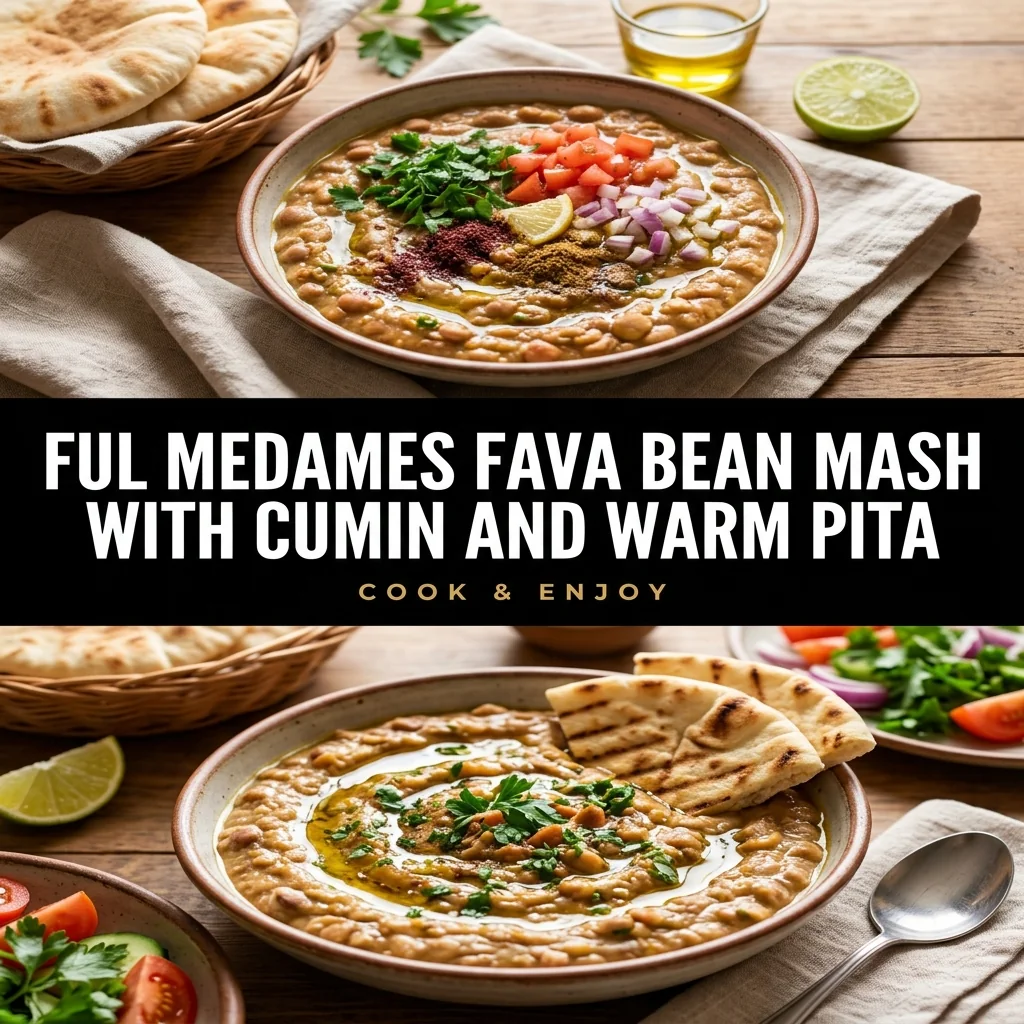
Presentation is integral to enjoying ful medames. Spreading the warm bean mash across a wide earthenware bowl allows ample surface area for colorful garnishes. Fresh diced Roma tomatoes contribute moisture and gentle acidity, flat-leaf parsley lends grassy freshness, and finely minced red onion delivers a sharp bite. The final ribbon of unheated, cold-pressed extra virgin olive oil pools into the crevices, lending richness. Halal-certified warm pita bread or flatbread is the primary utensil, torn into small pieces to scoop the bean mash directly from the bowl.
Before you start
Rinsing canned fava beans removes excess sodium and metallic canning liquids, allowing the true earthy flavor of the legume to shine. For the best consistency, avoid pureeing the beans in a food processor; hand mashing preserves essential body and creates the traditional rustic texture. Use a robust, peppery extra virgin olive oil for the finishing drizzle, as unheated olive oil delivers superior fruitiness and aroma against the warm cumin and garlic.
THE RECIPE
Ful Medames Fava Bean Mash with Cumin and Warm Pita
4 servings · 15 minutes preparation · 20 minutes cooking
Ingredients
Step-by-step instructions
- Combine the 2 cans rinsed fava beans and 0.75 cup water in a medium saucepan over medium heat.
- Bring the liquid to a gentle boil, then lower the heat to medium-low and simmer uncovered for 10 minutes until the beans are completely tender.
- Add the 3 cloves minced garlic, 1.5 teaspoons ground cumin, 0.75 teaspoon kosher salt, and 0.25 teaspoon black pepper to the saucepan, stirring well.
- Using a potato masher or the back of a large wooden spoon, mash roughly two-thirds of the beans directly in the pan, leaving the remaining third whole for textural contrast.
- Stir in 3 tablespoons lemon juice and 2 tablespoons extra virgin olive oil, then simmer over low heat for 5 minutes until thickened to a saucy consistency, adding an extra splash of water if too dry.
- While the beans finish simmering, warm the 4 pita bread rounds in a dry skillet over medium heat for 1 to 2 minutes per side until soft and pliable.
- Transfer the warm bean mash to a wide, shallow serving bowl, spreading it slightly toward the edges with a shallow well in the center.
- Garnish the top with 0.5 cup diced tomatoes, 0.25 cup chopped parsley, and 2 tablespoons diced red onion, then drizzle the remaining 2 tablespoons extra virgin olive oil over the surface and serve immediately with the warm pita.
Kitchen notes
Rinsing canned fava beans removes excess sodium and metallic canning liquids, allowing the true earthy flavor of the legume to shine. For the best consistency, avoid pureeing the beans in a food processor; hand mashing preserves essential body and creates the traditional rustic texture. Use a robust, peppery extra virgin olive oil for the finishing drizzle, as unheated olive oil delivers superior fruitiness and aroma against the warm cumin and garlic.
Storage & make-ahead
Refrigerate leftover bean mash in an airtight container within 2 hours of cooking for up to 4 days. Reheat on the stovetop over low heat with a splash of water, stirring frequently until steaming hot and reaching an internal temperature of at least 165 degrees Fahrenheit (74 degrees Celsius). Warm pita separately just before serving. Leftovers can be frozen for up to 1 month.
An original recipe guide inspired by themes in our Pinterest research. Recipe has not been independently kitchen-tested. AI-generated image is illustrative; your finished dish may look different.
Frequently asked questions
Can I make ful medames using dried fava beans?
Yes. Soak 1 cup of dried small fava beans overnight in plenty of water, drain, and simmer in fresh water over low heat for 2 to 3 hours until completely tender before seasoning and mashing as directed.
What can I substitute if I cannot find fava beans?
Canned brown lentils, pinto beans, or chickpeas can serve as emergency alternatives. However, small fava beans possess a distinct earthy nuttiness and creamy interior that defines the authenticity of traditional ful.
Is ful medames served warm or at room temperature?
Ful medames is best served warm directly after simmering, which maximizes the aromatic qualities of the cumin and olive oil. However, it can also be enjoyed at room temperature during warmer months.