WHY MAKE IT
A little comfort, a lot of flavor.
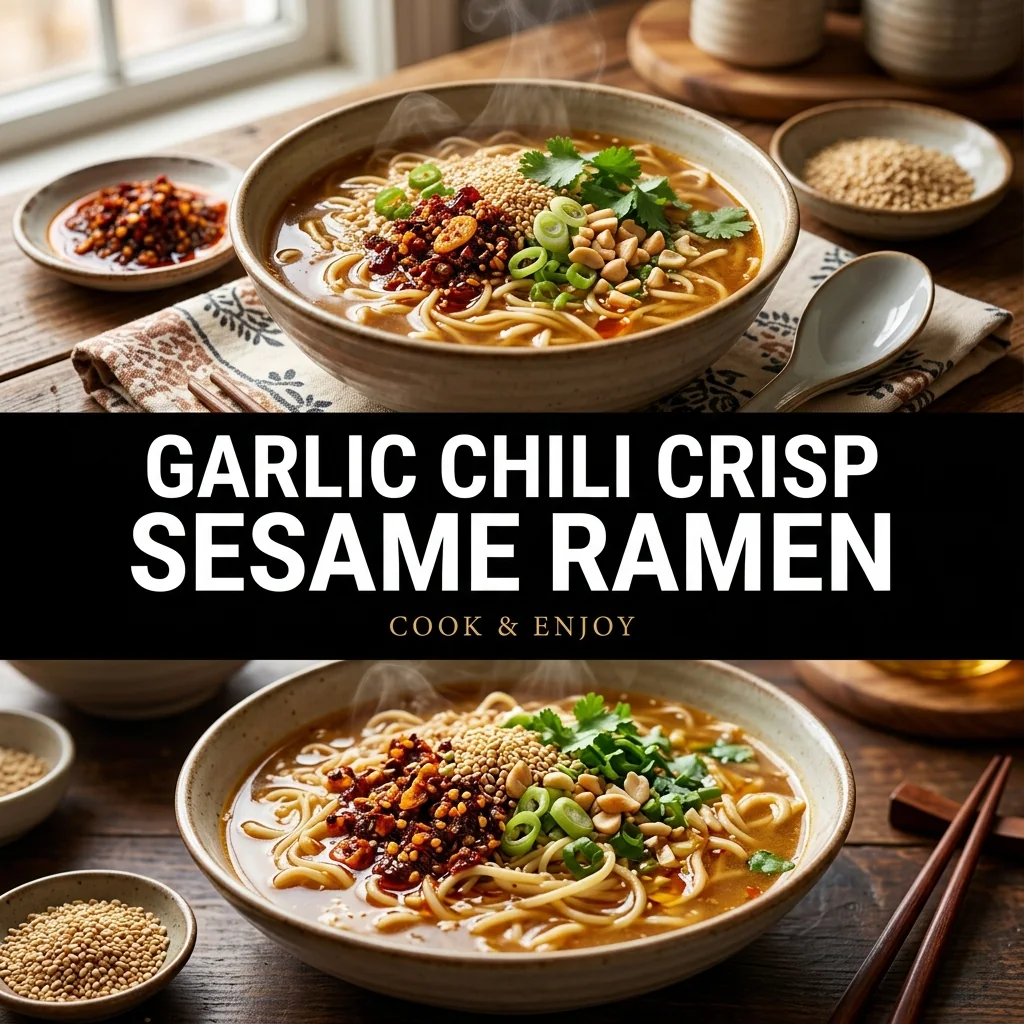
Bold, nutty, and tingling with fiery aromatics, this garlic chili crisp sesame ramen offers an irresistible dry-style noodle experience. Unlike classic ramen served submerged in broth, this preparation mimics the lively street-food traditions of Dan Dan noodles and Japanese mazesoba. Springy alkaline noodles are tossed in an intensely flavorful sauce crafted from pure sesame tahini, halal soy sauce, and a dash of rice vinegar. Drizzled over the top is a rapid scallion-and-garlic-infused chili crisp that sizzles right into the bowl. Topped with a custard-like soft-boiled egg, this dish delivers an intoxicating textural balance of bouncy wheat strands, crackling garlic chips, and silky sesame emulsion.
Alkaline Noodles and Texture
The signature spring and yellow hue of authentic ramen noodles stems from kansui, an alkaline mineral water solution used during dough production. The alkalinity alters wheat gluten proteins, creating a resilient, chewy texture that refuses to turn soggy when tossed in warm sauces. Look for halal-certified fresh or dried ramen without alcohol-based preservatives. Boil the noodles vigorously in ample water, stirring occasionally, and avoid overcooking by even thirty seconds to preserve that quintessential toothsome bite required for sauce-coated styles.
Constructing the Sesame Emulsion
The sauce relies on the natural emulsifying properties of ground sesame paste. While traditional Chinese roasted sesame paste delivers deep nuttiness, pure Middle Eastern tahini provides a delightfully creamy, slightly brighter alternative that blends seamlessly. Whisking the paste first with soy sauce and sweetener causes it to seize slightly into a thick paste. Adding warm broth in gradual stages loosens the emulsion into a glossy, pourable ribbon that clings tenaciously to the curly noodles without feeling heavy or oily.
Perfect Soft-Boiled Egg Technique
A jammy egg adds both visual beauty and rich creaminess to cut through the fiery chili oil. Using pasteurized eggs provides safety when serving soft yolks. Timing must be precise: exactly six and a half minutes in boiling water produces a set white with a warm, custard-like yolk. Plunging the hot eggs straight into an ice bath shocks the membrane, stopping residual cooking instantly and creating steam pockets between the shell and the egg white, ensuring effortless, tear-free peeling.
Before you start
Controlling oil temperature is everything when blooming the aromatics for homemade chili crisp. If the oil is below 325 F (163 C), the garlic will soak up grease and become soggy rather than crispy. If it exceeds 375 F (190 C), the fine chili flakes and minced garlic will burn instantly, producing a harsh, acrid bitterness that ruins the batch. Look for faint wavy ripples on the oil surface before pouring, or verify with an instant-read thermometer.
THE RECIPE
Garlic Chili Crisp Sesame Ramen
4 servings · 15 minutes preparation · 15 minutes cooking · 5 minutes cooling, chilling or resting
Ingredients
Step-by-step instructions
- Bring 3 quarts of water to a gentle rolling boil in a 4-quart saucepan. Carefully lower in the 4 pasteurized eggs using a slotted spoon and boil for exactly 6 minutes and 30 seconds for jammy yolks.
- Transfer the boiled eggs immediately into a bowl filled with ice water and allow them to rest undisturbed for 5 minutes before gently cracking and peeling the shells under cold running water.
- To prepare the fresh chili crisp, place the grated garlic, grated ginger, sliced scallion whites, red chili flakes, toasted sesame seeds, and salt into a heatproof ceramic bowl.
- Heat the 1/4 cup of neutral oil in a small 6-inch skillet over medium-high heat until shimmering and registering approximately 350 F (175 C). Carefully pour the hot oil over the aromatics in the ceramic bowl, letting it sizzle vigorously for 30 seconds, then set aside.
- In a medium mixing bowl, whisk together the sesame tahini, halal soy sauce, alcohol-free rice vinegar, and pure maple syrup until thick, then gradually whisk in the 1 cup of warm vegetable broth until smooth and pourable.
- Cook the alkaline ramen noodles in a large pot of boiling water according to package instructions (about 2 minutes for fresh noodles, 4 minutes for dried) until springy and chewy, then drain thoroughly.
- Divide the warm tahini-sesame sauce evenly among four serving bowls, drop the hot cooked noodles directly into the sauce, and fold gently with chopsticks to thoroughly coat every noodle strand.
- Slice the peeled eggs in half lengthwise and place one egg over each bowl of noodles. Spoon the aromatic scallion-garlic chili crisp generously over top and finish with the reserved sliced scallion greens.
Kitchen notes
Controlling oil temperature is everything when blooming the aromatics for homemade chili crisp. If the oil is below 325 F (163 C), the garlic will soak up grease and become soggy rather than crispy. If it exceeds 375 F (190 C), the fine chili flakes and minced garlic will burn instantly, producing a harsh, acrid bitterness that ruins the batch. Look for faint wavy ripples on the oil surface before pouring, or verify with an instant-read thermometer.
Storage & make-ahead
Store leftover assembled noodles and sauce in an airtight container in the refrigerator within 2 hours of preparation for up to 2 days. Store leftover chili crisp in an airtight container in the refrigerator for up to 4 days. Reheat leftover noodles gently in a microwave or saucepan with a splash of broth until steaming hot, reaching at least 165 F (74 C) throughout. Soft-boiled eggs are best eaten within 24 hours.
An original recipe guide inspired by themes in our Pinterest research. Recipe has not been independently kitchen-tested. AI-generated image is illustrative; your finished dish may look different.
Frequently asked questions
Is all rice vinegar halal-certified?
Not all vinegars are suitable. You must select natural grain rice vinegar that contains zero alcohol residues or cooking wine additives. Always verify the ingredient panel to confirm no alcohol, mirin, or unfermented sake derivatives are present.
Can I substitute tahini with peanut butter?
Yes. Natural creamy unsweetened peanut butter can replace sesame tahini in equal quantities, creating an equally delicious satay-inspired flavor profile that emulsifies smoothly with the warm broth.
Can I prepare this dish without the soft-boiled egg?
Certainly. You can omit the egg completely or substitute it with pan-seared halal-certified firm tofu cubes, steamed edamame, or tender bok choy to keep the noodles rich and satisfying.


