WHY MAKE IT
A little comfort, a lot of flavor.
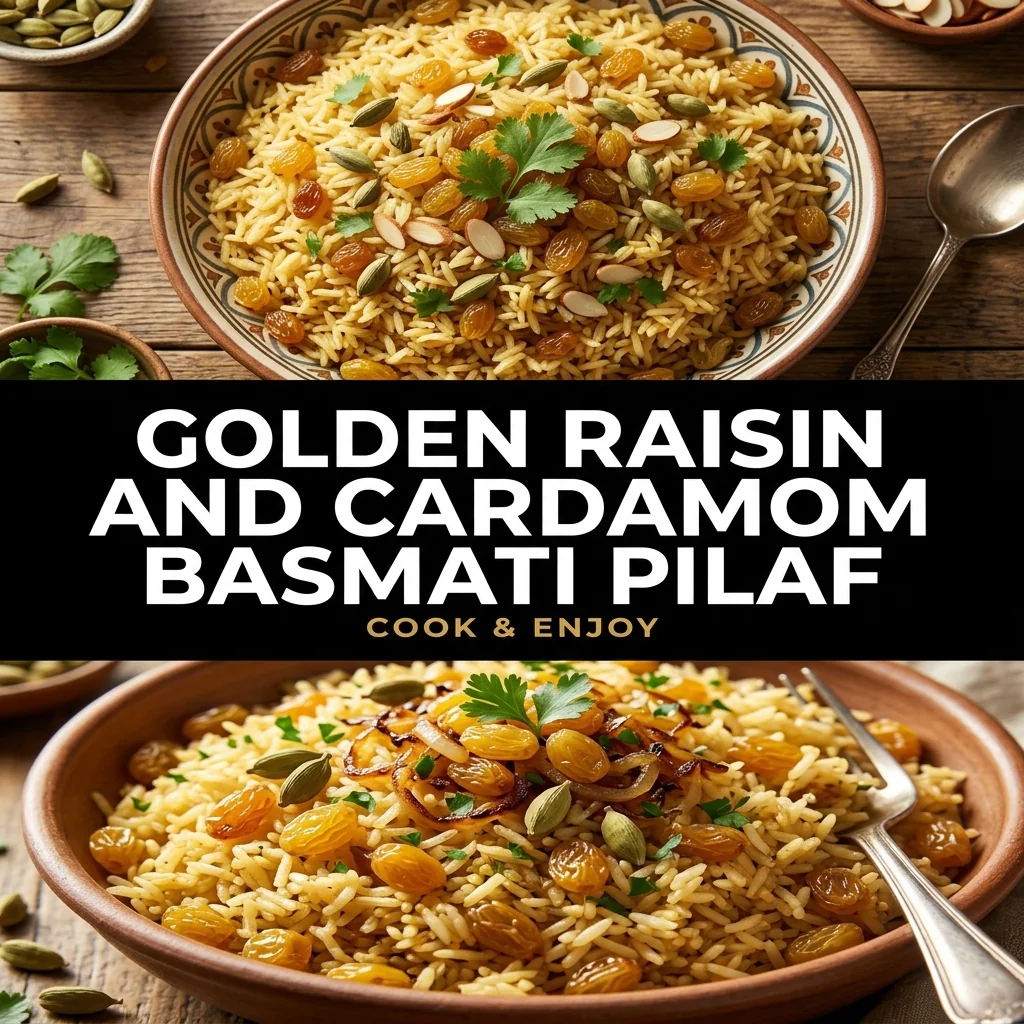
Golden Raisin and Cardamom Basmati Pilaf brings together the delicate perfumed fragrance of cracked green cardamom and the natural sweetness of plump golden raisins. Basmati rice has long been prized across Central and South Asian kitchens for its exceptional elongation and nutty aroma, making it the premier choice for celebratory pilafs. In this balanced preparation, whole whole spices gently infuse the cooking liquid, imparting warmth without overwhelming the palate. Golden raisins, also known as sultanas, hydrate directly within the gentle steam of the pot, becoming juicy morsels that contrast against the rich crunch of golden-toasted pine nuts. This pilaf makes an impressive companion to roasted poultry or braised meats, delivering elegant aromatics and refined textures.
Selecting and Preparing Basmati
The success of this pilaf relies on using aged, extra-long grain basmati rice. Aged grains hold their structural integrity during simmering, yielding separate grains rather than a sticky mass. Rinsing the rice through several changes of cold water removes excess surface amylose starch, which is the primary cause of clumping. Soaking the rinsed grains for twenty minutes softens the dry core, allowing the rice to swell linearly without bursting during cooking. Drain thoroughly before adding to the butter.
Building Spiced Aromatics
Whole spices are essential to an aromatic pilaf base. Cracking the green cardamom pods exposes the intensely fragrant inner black seeds while keeping the outer husks intact for easy distribution. Cooking the cracked pods, cinnamon stick, and bay leaves in melted butter allows the essential oils to dissolve directly into the cooking fat. Sweating the onions slowly alongside these spices builds a sweet, savory foundation that coats each grain before the broth is added.
Resting and Serving Harmony
Allowing the rice to rest undisturbed off the heat for ten full minutes is a crucial step that must not be skipped. During this rest period, residual surface moisture redistributes evenly to the center of each grain, firming up the exterior and preventing mushiness when fluffed. Fold the toasted pine nuts in right before serving to maintain their brittle crunch against the tender, plumped fruit and delicate rice.
Before you start
For distinct, elongated rice grains, handling the soaked basmati with care is paramount. Soaking allows the starch matrix to absorb water evenly, preventing fractured kernels during the cooking phase. When sautéing the soaked rice in the spiced butter, use a flexible silicone spatula rather than a rigid metal spoon, folding from the bottom upward. If your Dutch oven lid does not seal tightly, place a clean kitchen towel between the pot and lid to trap steam effectively.
THE RECIPE
Golden Raisin and Cardamom Basmati Pilaf
6 servings · 15 minutes preparation · 25 minutes cooking · 10 minutes cooling, chilling or resting
Ingredients
Step-by-step instructions
- Place 2 cups of rinsed basmati rice into a medium bowl, cover with cool water by 1 inch, and let soak for 20 minutes before draining completely in a fine-mesh colander.
- Heat 1 tablespoon of neutral vegetable oil in a small skillet over medium-low heat, add 1/3 cup of pine nuts, and stir constantly for 3 to 4 minutes until golden brown, then transfer immediately to a paper towel-lined plate.
- In a heavy-bottomed 4-quart Dutch oven or lidded saucepan, melt 3 tablespoons of unsalted butter over medium heat until foaming.
- Add 1 finely minced yellow onion, 8 cracked cardamom pods, 2 bay leaves, and 1 cinnamon stick, sautéing for 6 to 8 minutes until the onion is soft and translucent.
- Add the drained basmati rice to the pot and gently stir for 2 minutes over medium heat, coating every grain with the spiced butter without breaking the long grains.
- Pour in 3 1/4 cups of halal-certified vegetable broth and 1 teaspoon of fine sea salt, bringing the liquid to a rolling boil over medium-high heat.
- Scatter 1/2 cup of golden raisins evenly over the top of the boiling liquid, immediately reduce the heat to the lowest setting, cover tightly with a well-fitting lid, and simmer undisturbed for 15 minutes.
- Remove the pot from the heat without removing the lid and let the pilaf rest for 10 minutes to allow the steam to finish settling through the grains.
- Uncover the pot, discard the cinnamon stick and bay leaves, scatter the toasted pine nuts and 2 tablespoons of chopped fresh parsley across the surface, and gently fluff the rice with a wide fork before dishing up.
Kitchen notes
For distinct, elongated rice grains, handling the soaked basmati with care is paramount. Soaking allows the starch matrix to absorb water evenly, preventing fractured kernels during the cooking phase. When sautéing the soaked rice in the spiced butter, use a flexible silicone spatula rather than a rigid metal spoon, folding from the bottom upward. If your Dutch oven lid does not seal tightly, place a clean kitchen towel between the pot and lid to trap steam effectively.
Storage & make-ahead
Transfer leftover pilaf into an airtight food storage container within 2 hours of cooking. Store in the refrigerator for up to 4 days. When reheating, sprinkle 1 to 2 tablespoons of water or broth over the rice, cover loosely, and heat in the microwave or on the stovetop until the internal temperature reaches at least 165 F / 74 C throughout.
An original recipe guide inspired by themes in our Pinterest research. Recipe has not been independently kitchen-tested. AI-generated image is illustrative; your finished dish may look different.
Frequently asked questions
Can I substitute white raisins with regular dark raisins?
Yes, standard dark raisins work well, though golden raisins provide a milder, fruitier sweetness and a bright visual contrast against the pale basmati rice grains. Dark raisins will impart a slightly deeper molasses-like tone to the dish.
Should the cardamom pods be removed before serving?
While the cinnamon stick and bay leaves are easily discarded, you can either pluck out the cardamom pods while fluffing the rice or leave them in as a traditional aromatic garnish, cautioning guests not to bite directly into them.
Can I make this pilaf with brown basmati rice instead?
Brown basmati requires significantly more liquid and a longer cooking time of approximately 40 to 45 minutes. If using brown rice, increase the vegetable broth to 4 cups and add the golden raisins during the final 15 minutes.


