WHY MAKE IT
A little comfort, a lot of flavor.
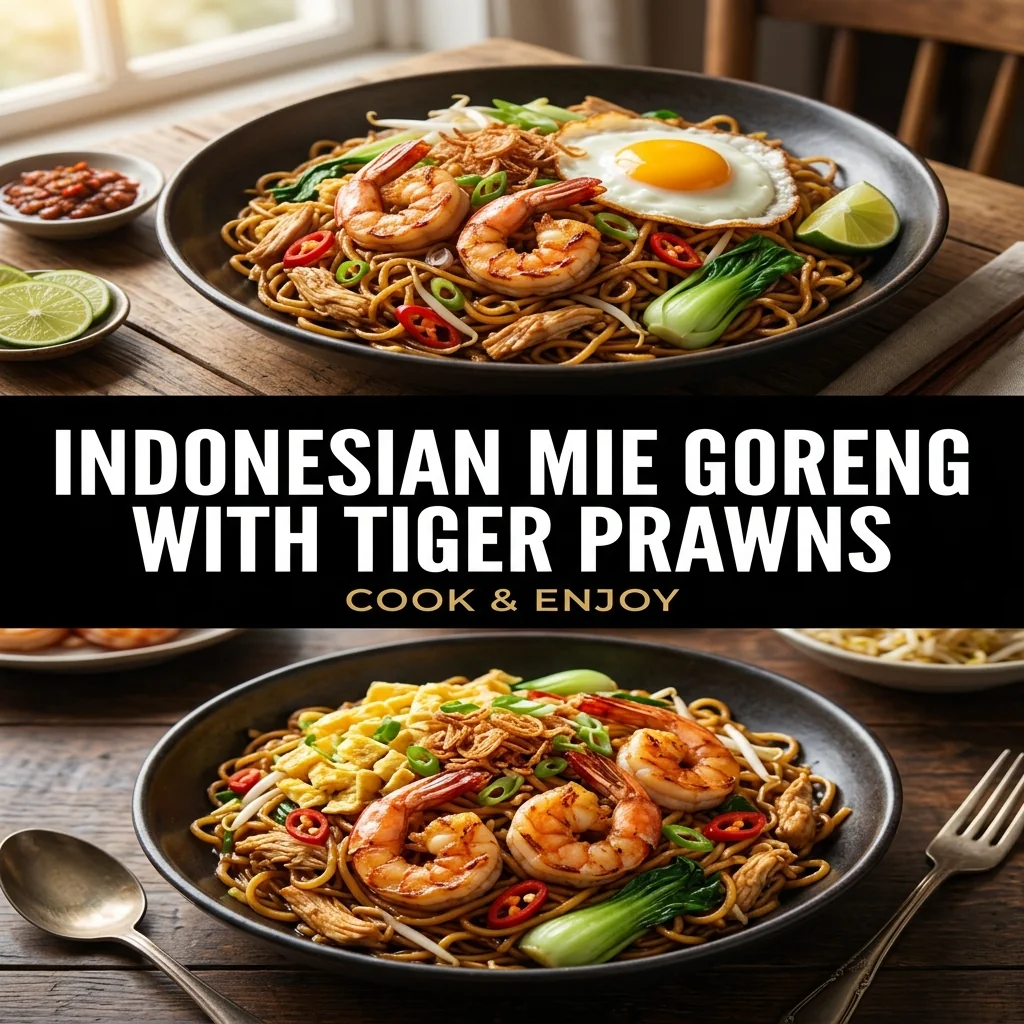
Mie Goreng stands as one of Southeast Asia's most beloved noodle preparations, found across the Indonesian archipelago from humble street-side warungs to refined celebratory gatherings. This iteration elevates the classic street dish by pairing chewy yellow noodles with plump, sweet tiger prawns. What sets genuine Mie Goreng apart from ordinary stir-fries is the precise interplay between savory alliums, fiery bird's eye chilies, and the molasses-like depth of authentic kecap manis. Cooked rapidly over intense heat, the sweet soy sauce caramelizes around the springy noodles, infusing them with rich umami while preserving the fresh, crunchy texture of shredded garden cabbage and fragrant scallions.
Understanding Kecap Manis in Halal Cooking
Kecap manis is the undisputed soul of Indonesian noodle cookery. This dense, syrupy dark condiment is brewed from fermented soybeans, palm sugar, star anise, and galangal. When selecting kecap manis for a halal kitchen, inspect commercial labels for certified halal verification to ensure no non-compliant brewing agents, gelatin clarifying agents, or alcohol-derived flavorings were introduced during industrial production. Its high natural sugar content means it behaves differently than standard soy sauce, caramelizing almost instantly when exposed to the searing surface of a wok to form a glistening, aromatic coating.
Mastering the Carbon Steel Wok
The key to non-soggy stir-fried noodles lies in thermal momentum. Carbon steel heats rapidly and responds immediately to flame adjustments. Always preheat the dry wok until a drop of water evaporates instantly before adding cooking oil. By searing the prawns separately first and returning them at the end, you prevent overcooking the delicate shellfish protein while keeping excess liquid out of the wok pan. Frying the aromatics and scrambled eggs in rapid succession creates textural contrast, allowing cabbage ribbons to char blistered edges while maintaining an enjoyable crispness.
Noodle Selection and Preparation
Traditional Mie Goreng requires alkaline wheat noodles, commonly sold fresh as yellow egg noodles or Hokkien noodles. The addition of alkaline salts (kansui) gives these noodles their characteristic yellow tint, firm bite, and resistance to softening during high-temperature wok tossing. If fresh varieties are coated with starch or excess oil, a lightning-fast 60-second blanch in boiling unsalted water frees the strands without waterlogging them. Rinsing promptly with cold tap water stops carryover cooking, ensuring every noodle remains resilient, springy, and receptive to the dark sauce.
Before you start
Preparation speed is the deciding factor in authentic stir-fried noodles. Measure every sauce ingredient, chop all vegetables, and peel the prawns before heating the wok, as the high-heat cooking phase proceeds in under ten minutes. Keep the wok heat intensely high so the sugars in the kecap manis caramelize slightly against the steel surface without burning, imparting the signature smoky wok aroma characteristic of Indonesian street carts.
THE RECIPE
Indonesian Mie Goreng with Tiger Prawns
4 servings · 20 minutes preparation · 15 minutes cooking
Ingredients
Step-by-step instructions
- Bring 3 quarts of water to a boil in a medium pot, add the fresh yellow egg noodles for 60 seconds to loosen and soften, then drain thoroughly in a colander, rinse briefly with cold water, and toss with 1 teaspoon of oil to prevent sticking.
- In a small mixing bowl, whisk together the halal kecap manis, light soy sauce, halal oyster sauce, and ground white pepper to form the seasoning sauce; set aside.
- Heat a large 14-inch carbon steel wok or heavy skillet over high heat until wisps of smoke appear, then add 1 tablespoon of oil, swirling around the sides.
- Add the raw tiger prawns in a single layer and sear for 90 seconds per side until they turn pink, completely opaque, and reach an internal food safety temperature of 145°F (63°C); transfer the cooked prawns immediately to a clean plate.
- Add the remaining oil to the smoking wok, drop in the minced shallots, minced garlic, and sliced red chilies, and stir-fry vigorously for 30 to 45 seconds until fragrant and lightly golden.
- Push the aromatics to one side of the wok, pour the beaten eggs into the cleared space, scramble quickly with a spatula for 45 seconds until soft curds form, then fold the curds into the aromatics.
- Toss in the shredded cabbage and cook for 1 minute until slightly wilted, then add the drained noodles, seared tiger prawns, cut scallions, and the prepared seasoning sauce.
- Toss everything continuously over maximum heat for 2 to 3 minutes using two wooden spatulas, coating every strand in the caramelized sweet-savory glaze, then transfer immediately to serving platters and garnish generously with crispy fried shallots.
Kitchen notes
Preparation speed is the deciding factor in authentic stir-fried noodles. Measure every sauce ingredient, chop all vegetables, and peel the prawns before heating the wok, as the high-heat cooking phase proceeds in under ten minutes. Keep the wok heat intensely high so the sugars in the kecap manis caramelize slightly against the steel surface without burning, imparting the signature smoky wok aroma characteristic of Indonesian street carts.
Storage & make-ahead
Store leftovers in a tightly sealed container and refrigerate within 2 hours of cooking. Keep refrigerated for up to 2 days. Because prawns can turn rubbery if overcooked, reheat gently in a preheated wok or nonstick pan over medium heat with a teaspoon of water, tossing until the noodles and seafood are completely steaming and reach a minimum internal temperature of 165°F (74°C).
An original recipe guide inspired by themes in our Pinterest research. Recipe has not been independently kitchen-tested. AI-generated image is illustrative; your finished dish may look different.
Frequently asked questions
Can I substitute dried ramen or spaghetti for yellow egg noodles?
Dried ramen noodles or standard chow mein noodles can substitute well if boiled 1 minute shy of package instructions, drained, and cooled. Italian spaghetti lacks the springy alkaline chew of Asian wheat noodles, but if used, cook it al dente before stir-frying.
How can I tone down the spice level for sensitive palates?
Omit the fresh red bird's eye chilies entirely, or remove their inner white ribs and seeds before mincing. You can substitute mild red bell pepper strips or a sweet long red chili, which preserves the vibrant crimson visual appeal without imparting sharp, fiery heat.
What if I cannot locate store-bought crispy fried shallots?
You can make them easily by slicing three fresh shallots paper-thin, frying them in a shallow layer of neutral vegetable oil over medium heat until pale golden, then draining on paper towels. They crisp remarkably upon cooling and provide essential crunchy contrast.


