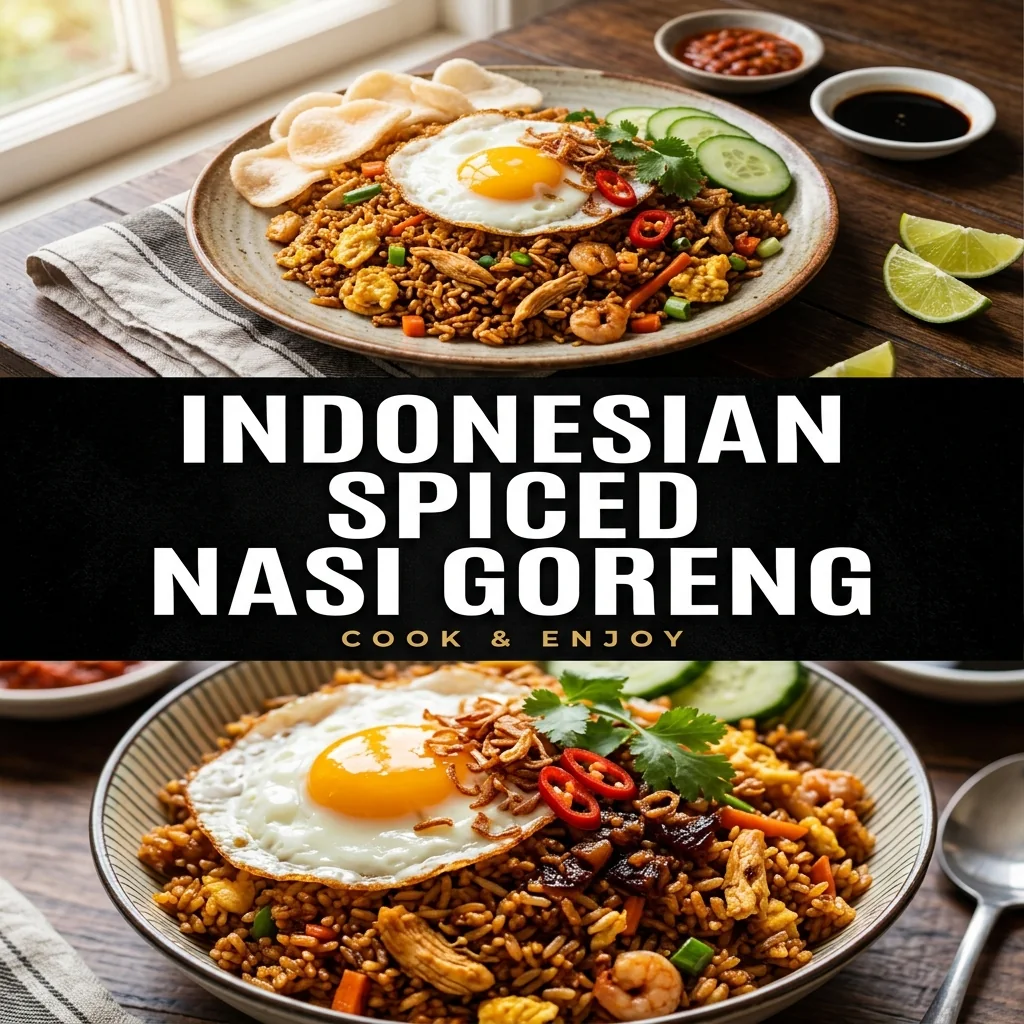
WHY MAKE IT
A little comfort, a lot of flavor.
Nasi goreng stands as Indonesia's national comfort food, celebrated for its complex layers of caramelized sweet soy sauce, pungent aromatics, and gently smoked wok aroma. Unlike many stir-fried rice dishes that rely primarily on clear soy sauce and garlic, nasi goreng begins with a pulverized spice paste known as bumbu. This foundational paste melds shallots, garlic, and fresh red chilies into an earthy, fragrant seasoning base. Sweetened with thick, molasses-like kecap manis, the rice caramelizes against the blazing metal of the wok, developing a rich bronze color and an irresistible balance of sweet and savory notes. Topped traditionally with a lacy-edged fried egg and cooling slices of cucumber, it represents home-style Southeast Asian cooking at its most vibrant.
Crafting the Fresh Bumbu Paste
The soul of authentic Indonesian fried rice lies within the freshly ground spice paste. Pulsing fresh shallots, garlic, and red chilies ruptures their cellular walls, releasing essential oils that cannot be matched by dried powders. Red Holland chilies provide vibrant color and fruity aroma without aggressive heat, while a small bird's eye chili adds customary piquancy. Sautéing this wet paste in hot oil cooks out the sulfurous raw edge, melding the ingredients into a rich, fragrant paste that clings smoothly to individual grains of rice during rapid wok tossing.
The Role of Kecap Manis
Kecap manis is an Indonesian thick, sweetened soy sauce infused with palm sugar and spices like star anise. It possesses a viscosity similar to maple syrup and caramelizes instantly upon meeting the intense heat of a seasoned wok. Ensure your sauce carries verified halal certification, confirming proper processing without unverified fermentation derivatives. When drizzled over the stir-frying rice, the palm sugars bubble and darken, blanketing the white grains in a glossy bronze sheen while contributing essential sweetness that balances the fiery chilies and savory bumbu paste.
Mastering the Crispy-Laced Egg
A classic nasi goreng is incomplete without its signature fried egg topping, known locally as telur ceplok. Frying the egg in hot oil allows the edges to bubble, blister, and turn exquisitely crisp while preserving a rich, warm, liquid yolk. When pierced at the table, the luscious yolk flows over the seasoned rice grains, tempering the heat of the chilies and lending luxurious richness to every mouthful. Crisp cucumber rounds and juicy tomato wedges offer essential cooling freshness alongside the hot, rich grains.
Before you start
The quintessential flavor of authentic nasi goreng comes from frying the freshly ground bumbu spice paste until it is thoroughly cooked and fragrant before the rice enters the pan. If the paste remains raw, the finished rice will taste sharp and pungent rather than deeply savory. For halal cooking, verify that your kecap manis is certified halal, as some traditional regional thick soy sauces may incorporate unverified alcohol during fermentation. Maintain high heat during the final tossing step.
THE RECIPE
Indonesian Spiced Nasi Goreng
4 servings · 20 minutes preparation · 15 minutes cooking
Ingredients
Step-by-step instructions
- Place the chopped shallots, peeled garlic cloves, red Holland chilies, bird's eye chili, and fermented shrimp paste into a small mortar or mini food processor, pulsing until a finely textured spice paste (bumbu) forms.
- Heat 1 tablespoon of the neutral oil in a 14-inch wok or wide skillet over medium-high heat until shimmering.
- Crack the eggs into the wok one at a time and fry undisturbed for 2 to 3 minutes until the whites are set and lacy-crisp around the edges and both yolks and whites are firm, about 4 to 5 minutes; transfer to a warm platter.
- Add the remaining 2 tablespoons of oil to the wok over medium heat, introduce the processed bumbu paste, and fry for 3 to 4 minutes until the raw aroma dissipates and the oil separates slightly from the paste.
- Increase heat to high, add the cold cooked rice, and break apart any remaining clumps using a wok spatula.
- Drizzle the halal-certified kecap manis and soy sauce evenly over the rice, stirring vigorously for 3 to 4 minutes until every grain is uniformly coated in a deep mahogany hue.
- Season with the fine sea salt, fold in the sliced scallions, and stir-fry for an additional 1 minute until fragrant and steaming hot.
- Divide the fried rice among four wide plates, crown each portion with a crispy fried egg, and garnish with fresh cucumber slices and ripe tomato wedges. Verify reheated rice reaches 165 F (74 C) throughout before serving.
Kitchen notes
The quintessential flavor of authentic nasi goreng comes from frying the freshly ground bumbu spice paste until it is thoroughly cooked and fragrant before the rice enters the pan. If the paste remains raw, the finished rice will taste sharp and pungent rather than deeply savory. For halal cooking, verify that your kecap manis is certified halal, as some traditional regional thick soy sauces may incorporate unverified alcohol during fermentation. Maintain high heat during the final tossing step.
Storage & make-ahead
Promptly cool leftover rice and store in an airtight container in the refrigerator within 2 hours. Keep chilled at or below 40°F (4°C) for up to 3 days. Reheat portions in a hot, lightly oiled wok or nonstick pan over medium-high heat until steaming hot throughout, reaching an internal food temperature of at least 165°F (74°C). Fry fresh eggs for serving with leftovers, as cooked eggs do not reheat pleasantly.
An original recipe guide inspired by themes in our Pinterest research. Recipe has not been independently kitchen-tested. AI-generated image is illustrative; your finished dish may look different.
Frequently asked questions
Can I make this dish without shrimp paste?
Yes. If halal-certified terasi is unavailable or you prefer a vegetarian profile, substitute 1 teaspoon of halal mushroom seasoning powder or a dash of sea salt. This delivers robust umami without altering the aromatic profile.
Why did my rice turn out mushy?
Mushy nasi goreng results from using warm, freshly cooked rice or crowding the pan. Use thoroughly chilled, day-old jasmine rice with low surface moisture, and ensure your pan is piping hot before adding the grains.
Can I add protein like chicken or shrimp?
Certainly. Sauté thin strips of halal-certified chicken breast until cooked to an internal temperature of 165°F (74°C), or peeled shrimp to 145°F (63°C), directly after frying the bumbu paste, before adding the cold rice.


