WHY MAKE IT
A little comfort, a lot of flavor.
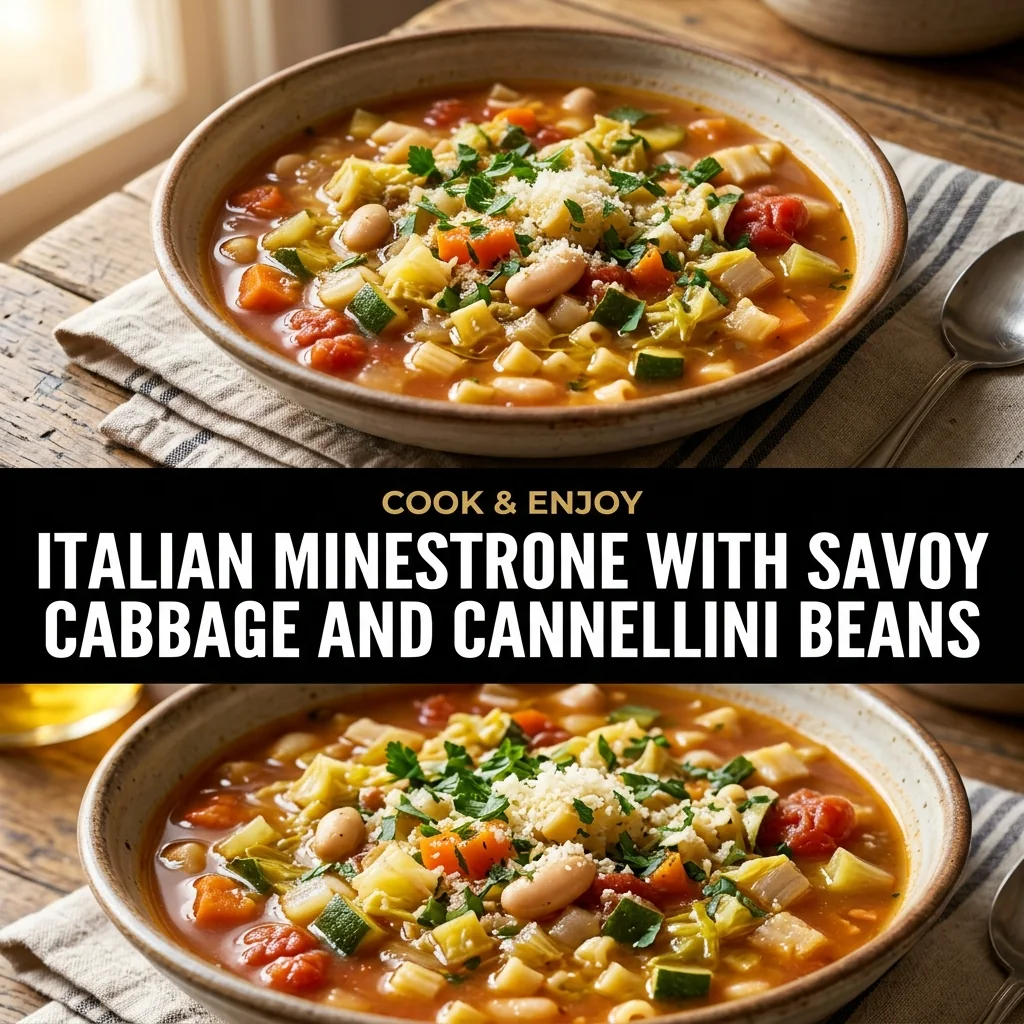
Italian minestrone is a vibrant celebration of seasonal market gardening, uniting hearty root vegetables, leafy greens, and pantry legumes in one restorative kettle. This wholesome rendition highlights tender Savoy cabbage, whose delicate, rippled texture melds seamlessly into a light tomato-herb broth. Creamy cannellini beans provide satisfying plant-based protein and body, while ditalini pasta imparts classic Tuscan heartiness. Carefully building a soffritto of sweet carrots, celery, and onions guarantees foundational depth without requiring meat trimmings or animal broths. Finished with fragrant olive oil and sharp, halal-suitable aged hard cheese crafted with microbial enzymes, this balanced minestrone offers comforting nourishment suitable for everyday family tables.
The Importance of the Soffritto
Every authentic minestrone starts with an aromatic soffritto: onions, carrots, and celery slowly sweated in quality olive oil. Rushing this stage limits the soup's complexity. Allowing the vegetables to soften gently without developing heavy brown caramelization preserves their garden-fresh sweetness, which supports the acidity of canned tomatoes. Adding minced garlic and dried Mediterranean herbs during the final minute of sweating blooms essential oils in the fat, infusing the entire foundation before the liquids are introduced.
Selecting Cabbage and Legumes
Savoy cabbage provides textural elegance unmatched by standard white or red cabbage. Its corrugated leaves cook into silky ribbons while maintaining structural integrity in hot broth. Cannellini beans, also known as white kidney beans, offer a buttery interior and sturdy skin that withstands prolonged simmering without disintegrating into paste. Rinsing canned beans removes excess packing sodium and starchy canning liquid, keeping the soup's tomato base clean, clear, and vibrant rather than muddy or heavy.
Managing Starch and Serving
Pasta starch naturally thickens minestrone broth over time. Simmering ditalini directly in the pot yields a classic, velvety consistency as starches disperse into the simmering liquid. However, when planning for multi-day dining, boiling the ditalini separately preserves the crystal-clear consistency of the broth. Serve the minestrone steaming hot with a final drizzle of unheated extra-virgin olive oil and generous dusting of halal-suitable hard Italian-style cheese crafted with microbial rennet.
Before you start
Savoy cabbage is superior to standard green cabbage for minestrone because its delicate, crinkled leaves soften quickly while imparting a mellow, sweet earthiness rather than a sulfurous bite. If you anticipate having leftovers, cook the ditalini pasta separately in salted water and ladle the hot vegetable soup over individual bowls; storing pasta inside the broth causes it to absorb liquid and expand excessively overnight.
THE RECIPE
Italian Minestrone with Savoy Cabbage and Cannellini Beans
6 servings · 20 minutes preparation · 40 minutes cooking · 5 minutes cooling, chilling or resting
Ingredients
Step-by-step instructions
- Heat 3 tablespoons extra-virgin olive oil in a wide 6-quart Dutch oven over medium heat until shimmering.
- Add 1 diced yellow onion, 2 sliced carrots, and 2 sliced celery stalks; cook for 8 minutes, stirring frequently until vegetables soften without browning.
- Stir in 4 minced garlic cloves and 1 teaspoon dried oregano, cooking for 1 minute until highly fragrant.
- Add 1 sliced zucchini and 4 cups shredded Savoy cabbage, stirring gently for 3 minutes until cabbage begins to wilt slightly.
- Pour in 1 can diced tomatoes with juices, 6 cups halal vegetable broth, 1 dried bay leaf, 1.25 teaspoons sea salt, and 0.5 teaspoon black pepper; raise heat to high and bring to a rolling boil.
- Reduce heat to medium-low, cover partially with a lid, and simmer gently for 15 minutes until vegetables are tender.
- Add 1 can rinsed cannellini beans and 0.75 cup dried ditalini pasta directly into the simmering soup, stirring well to prevent pasta from settling at the base.
- Cook uncovered for 10 to 12 minutes, stirring occasionally, until ditalini pasta reaches an al dente texture and beans are thoroughly heated through.
- Remove pot from heat, discard the bay leaf, let the soup rest for 5 minutes, and ladle into bowls, garnishing each portion with grated halal parmesan-style cheese.
Kitchen notes
Savoy cabbage is superior to standard green cabbage for minestrone because its delicate, crinkled leaves soften quickly while imparting a mellow, sweet earthiness rather than a sulfurous bite. If you anticipate having leftovers, cook the ditalini pasta separately in salted water and ladle the hot vegetable soup over individual bowls; storing pasta inside the broth causes it to absorb liquid and expand excessively overnight.
Storage & make-ahead
Allow leftover soup to cool to room temperature and transfer to sealed containers within 2 hours. Refrigerate for up to 4 days. If reheating, warm over medium heat on the stove until bubbly and reaching a minimum temperature of 165 F (74 C). Thin with extra vegetable broth or water if the pasta has thickened the broth during chilling.
An original recipe guide inspired by themes in our Pinterest research. Recipe has not been independently kitchen-tested. AI-generated image is illustrative; your finished dish may look different.
Frequently asked questions
Can I use dried cannellini beans instead of canned?
Use canned beans as directed for the simplest method. If using dried white kidney or cannellini beans, soak at least 5 hours, discard soaking water, then boil vigorously in fresh water for at least 30 minutes. Continue cooking until completely tender before adding to the recipe; never substitute raw dried beans directly into a slow cooker.
What cheese can I use for a halal diet?
Traditional Italian-style hard cheese uses calf rennet. For this recipe, choose an Italian-style hard grating cheese clearly labeled with microbial, vegetarian, or certified halal enzymes to ensure complete adherence to halal standards.
Can I freeze this minestrone soup?
Yes, but freeze the soup without the ditalini pasta. Pasta becomes mushy when frozen and thawed. Simply cook fresh pasta and add it when reheating the defrosted vegetable broth to 165 F (74 C).