WHY MAKE IT
A little comfort, a lot of flavor.
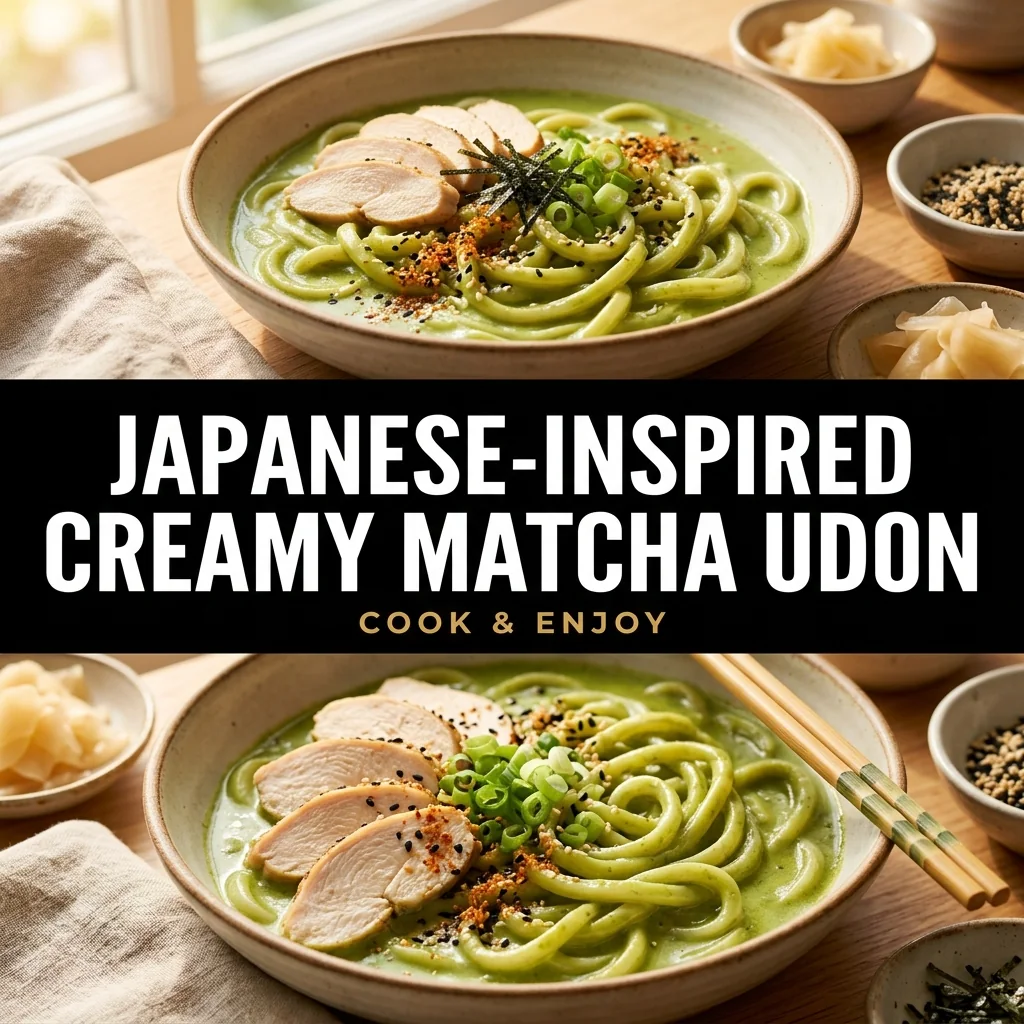
Rich, comforting, and visually striking, this Japanese-inspired creamy matcha udon transforms simple pantry staples into a restaurant-caliber dinner. The foundation relies on frozen Sanuki udon, prized for their bouncy chew and substantial girth, which cling effortlessly to full-bodied sauces. Balancing earthy culinary green tea against sweet dairy cream and savory kelp dashi creates a complex savory profile known as kokumi, offering profound depth without animal fats. Pan-searing firm tofu until brittle on the edges gives the dish essential textural contrast, breaking through the velvety richness of the jade-toned emulsion. It is an innovative, comforting noodle preparation that satisfies both umami cravings and the desire for soothing, restorative comfort food.
Selecting and Preparing the Matcha
Culinary-grade matcha provides the assertive backbone needed to cut through heavy dairy and savory kombu broth. Ceremonial matcha is far too subtle and delicate for a cooked sauce, while low-grade baking tea can introduce harsh astringency. When whisking the powder, ensure the water temperature sits around 160 F (71 C) rather than boiling, which scorches the tea leaves. Vigorous whisking in a small bowl breaks surface tension, ensuring a smooth suspension. Incorporate the matcha liquid only at the final stage of simmering so the intense green color remains luminescent.
Mastering the Crispy Tofu Finish
Achieving genuinely crisp tofu requires diligent surface moisture removal before frying. Pressing the blocks between absorbent lint-free towels for 10 minutes expels surface water that would otherwise generate steam and turn the bean curd rubbery. A wide skillet gives the cubes adequate breathing room, preventing trapped steam. Once placed in hot oil, allow the tofu to brown uninterrupted before attempting to flip each piece. This undisturbed contact develops a shatteringly crisp crust that maintains structural integrity even after sitting atop the hot, silky matcha sauce.
Noodle Choice and Emulsion Control
Frozen Sanuki udon noodles outshine shelf-stable dried varieties due to their superior tapioca-starch elasticity and plump gauge. Because these noodles are precooked before freezing, they require only brief submersion in boiling water to unlock their tender, springy bite. Overcooking creates gummy starches that disrupt the dairy sauce. Once drained, toss the hot noodles directly into the pan so the residual noodle starches bind the dashi and heavy cream together into a clinging, glossy glaze that coats every noodle ribbon evenly.
Before you start
Sifting your culinary matcha through a fine-mesh tea strainer into warm water is critical before combining it with hot liquid. If raw matcha is dumped straight into warm cream, the microscopic particles immediately clump into dense, bitter pockets that resist whisking. Furthermore, maintain the stove on low heat once the tea is integrated. Sustained boiling or excessive pan heat degrades the chlorophyll rapidly, muting the vibrant green hue into a murky brown and flattening the delicate, vegetal aroma.
THE RECIPE
Japanese-Inspired Creamy Matcha Udon
4 servings · 15 minutes preparation · 18 minutes cooking · 10 minutes cooling, chilling or resting
Ingredients
Step-by-step instructions
- Line a rimmed cutting board with paper towels, place the cubed tofu in a single layer, cover with more towels, and press under a heavy plate for 10 minutes to extract excess moisture.
- Heat 1 1/2 tablespoons of neutral cooking oil in a 12-inch nonstick skillet over medium-high heat. Add the pressed tofu cubes and 1/4 teaspoon fine sea salt, searing undisturbed for 4 minutes per side until deeply golden and crisp, then transfer to a plate.
- In a small heatproof bowl, thoroughly whisk the culinary matcha powder with 2 tablespoons of warm water using a small bamboo whisk or fork until completely smooth and free of lumps.
- Bring 4 quarts of unsalted water to a rapid boil in an 8-quart stockpot. Drop in the frozen udon noodles and cook for 2 to 3 minutes until strands separate cleanly, then drain thoroughly without rinsing.
- Place a 4-quart sauté pan over medium heat and add the remaining 1/2 tablespoon neutral cooking oil along with the toasted sesame oil. Sauté the minced garlic and grated ginger for 60 seconds until fragrant without browning.
- Pour in the prepared kombu dashi, heavy cream, and halal-certified soy sauce, bringing the liquid to a gentle simmer over medium-low heat for 3 minutes while stirring constantly with a wooden spoon.
- Reduce heat to low, whisk in the prepared matcha slurry until fully emulsified into an even jade-green sauce, and immediately fold in the cooked udon noodles for 1 minute to coat every strand.
- Divide the sauced noodles among four wide shallow bowls, distribute the seared crispy tofu across each portion, and garnish with sliced green onions and toasted white sesame seeds before serving.
Kitchen notes
Sifting your culinary matcha through a fine-mesh tea strainer into warm water is critical before combining it with hot liquid. If raw matcha is dumped straight into warm cream, the microscopic particles immediately clump into dense, bitter pockets that resist whisking. Furthermore, maintain the stove on low heat once the tea is integrated. Sustained boiling or excessive pan heat degrades the chlorophyll rapidly, muting the vibrant green hue into a murky brown and flattening the delicate, vegetal aroma.
Storage & make-ahead
Transfer leftover udon and seared tofu into separate airtight containers and refrigerate promptly within 2 hours of cooking. Keep chilled for up to 3 days. When reheating, place noodles and sauce in a skillet over low heat with 2 to 3 tablespoons of extra dashi broth or cream, stirring gently until steaming hot and reaching an internal temperature of at least 165 F / 74 C.
An original recipe guide inspired by themes in our Pinterest research. Recipe has not been independently kitchen-tested. AI-generated image is illustrative; your finished dish may look different.
Frequently asked questions
Can I use dried udon noodles instead of frozen?
Yes, dried udon noodles work well. Boil them according to package instructions until tender with a firm bite, typically 8 to 10 minutes. Drain thoroughly before folding into the warm cream sauce.
Is kombu dashi suitable for a strict halal diet?
Kombu dashi is made by steeping dried sea kelp in hot water, making it naturally alcohol-free, plant-based, and halal-compliant. Avoid packaged instant dashi granules containing unverified meat derivatives or alcohol additives.
Why did my matcha sauce turn dull olive green?
Matcha contains fragile natural chlorophyll that oxidizes quickly when exposed to high heat. Always reduce the burner to low before adding the dissolved tea, and avoid boiling the sauce after incorporation.


