WHY MAKE IT
A little comfort, a lot of flavor.
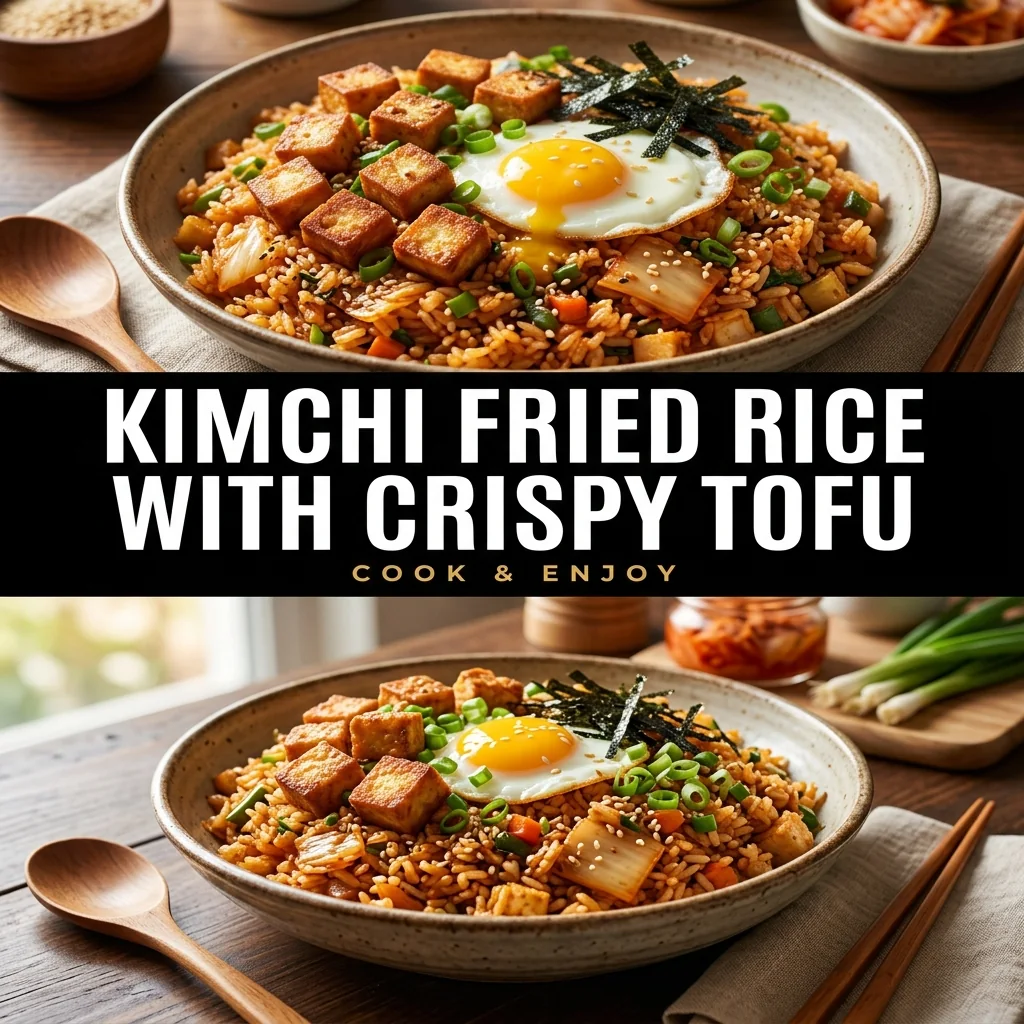
Kimchi fried rice, known traditionally as kimchi-bokkeumbap, delivers an exceptional balance of sour, spicy, and savory flavors. The heart of this comforting home-style dish lies in naturally aged, fermented cabbage kimchi that has developed a sharp, mouthwatering acidity. When cooked in hot oil, the fermented sugars in the kimchi caramelize slightly, mellowing the sharpness into a deep, savory backdrop. Pairing the fiery rice with golden, cornstarch-dusted firm tofu transforms a simple side into a satisfying main meal. Each bite contrasts fluffy, gochujang-glazed rice grains with the shatteringly crisp exterior and tender center of pan-fried tofu. Simple to prepare on a weeknight, this plant-forward recipe utilizes cold leftover rice to create an intensely flavorful, aromatic skillet dinner in under thirty minutes.
Selecting and Preparing Kimchi
For the most vibrant flavor, choose well-fermented, sour kimchi rather than freshly prepared varieties. The acidity cuts through the starchy rice, imparting balanced complexity. Ensure the packaging carries halal certification or lists strictly permissible ingredients, avoiding any unverified fermentation alcohol or prohibited additives. When chopping the kimchi, work over a cutting board with a juice groove to capture all the brine. That vibrant red liquid provides essential seasoning and dissolves the gochujang smoothly, coating the grains without clumping or burning during high-heat stir-frying.
Achieving Shatteringly Crisp Tofu
Extra-firm tofu contains significant internal moisture that prevents browning if unaddressed. Pressing the cubes beneath modest weight for 15 minutes eliminates surface liquid, allowing the cornstarch coating to form a thin, starch-rich barrier. When laid into hot oil, this starch gelatinizes instantly and dries into a rigid, crunchy crust. Keep the cubes spaced evenly apart in your skillet to prevent steam build-up. Turn them only when a solid golden crust forms beneath, preserving the delicate bean curd structure while delivering substantial crispness.
The Technique of Stir-Frying Rice
Proper grain separation defines excellent fried rice. Chilling the cooked rice overnight retrogrades the starch, firming the grains so they tumble freely in the pan rather than clumping. When introducing the rice to the sizzling kimchi aromatics, use the flat edge of your spatula to gently break apart clusters using a slicing motion rather than downward mashing. Pressing the grains briefly against the hot pan surface creates desirable lightly toasted edges, introducing a subtle nutty nuance that elevates the overall dish.
Before you start
For the best texture, always use cold, day-old cooked rice. Freshly steamed rice holds too much moisture, which causes the grains to steam rather than fry, resulting in a sticky texture. If you must use freshly cooked rice, spread it out in a thin layer across a wide baking sheet and freeze it uncovered for 20 minutes before cooking. Ensure your chosen kimchi brand is certified halal, guaranteeing it uses seafood extract or vegetable bases without unverified alcohol additives.
THE RECIPE
Kimchi Fried Rice with Crispy Tofu
4 servings · 20 minutes preparation · 18 minutes cooking · 15 minutes cooling, chilling or resting
Ingredients
Step-by-step instructions
- Wrap the drained tofu cubes in clean kitchen towels, place them on a rimmed sheet pan beneath a weighted cutting board, and let them press for 15 minutes to release excess moisture.
- Transfer the pressed tofu to a medium mixing bowl, sprinkle evenly with the cornstarch and fine sea salt, and toss gently until every piece is lightly coated.
- Heat 2 tablespoons of the neutral oil in a 12-inch nonstick skillet or flat-bottomed wok over medium-high heat until shimmering.
- Add the coated tofu cubes in a single layer and pan-fry for 8 to 10 minutes, turning every 2 to 3 minutes, until all sides are deep golden and crisp; transfer them to a plate lined with paper towels.
- Pour the remaining 1 tablespoon of oil into the same skillet over medium heat, then add the minced garlic and scallion whites, cooking for 1 minute until fragrant.
- Stir in the chopped kimchi and cook for 3 minutes until slightly softened and translucent around the edges.
- Whisk together the reserved kimchi brine, gochujang, and soy sauce in a small bowl, then pour into the pan and cook for 1 minute until bubbling and combined.
- Increase the heat to medium-high, add the cold cooked rice, and use a wooden spatula to press the grains flat against the skillet floor, stir-frying for 3 to 4 minutes until thoroughly heated and tinted ruby red.
- Remove the skillet from the heat, drizzle with toasted sesame oil, gently fold in the crispy tofu cubes and scallion greens, and sprinkle with toasted sesame seeds before serving. Verify the reheated rice mixture reaches at least 165 F (74 C) throughout.
Kitchen notes
For the best texture, always use cold, day-old cooked rice. Freshly steamed rice holds too much moisture, which causes the grains to steam rather than fry, resulting in a sticky texture. If you must use freshly cooked rice, spread it out in a thin layer across a wide baking sheet and freeze it uncovered for 20 minutes before cooking. Ensure your chosen kimchi brand is certified halal, guaranteeing it uses seafood extract or vegetable bases without unverified alcohol additives.
Storage & make-ahead
Cool leftovers quickly and place in an airtight container in the refrigerator within 2 hours. Store safely chilled at or below 40°F (4°C) for up to 3 days. Reheat portions in a hot skillet with a teaspoon of oil or in the microwave until steaming throughout, reaching an internal food temperature of at least 165°F (74°C). The tofu will lose crispness during storage but crisps up slightly when reheated in a dry, hot skillet.
An original recipe guide inspired by themes in our Pinterest research. Recipe has not been independently kitchen-tested. AI-generated image is illustrative; your finished dish may look different.
Frequently asked questions
Can I use soft or silken tofu for this recipe?
Soft or silken tofu is not suitable here because its high water content causes it to disintegrate when pan-fried. Stick strictly to extra-firm or super-firm tofu, which holds its structural integrity during pressing, searing, and subsequent tossing with the rice.
What if my kimchi is fresh and not very sour?
If your halal-certified kimchi is mild or recently made, stir one-half teaspoon of rice vinegar or fresh lime juice into the skillet along with the kimchi brine to supply the bright, tangy punch that defines authentic kimchi fried rice.
Can I substitute brown rice for white rice?
Yes, cold cooked medium-grain or short-grain brown rice works well. Ensure it is chilled overnight and dry. Brown rice provides a chewier, nuttier texture, though it may absorb slightly less sauce than white grains during frying.


