WHY MAKE IT
A little comfort, a lot of flavor.
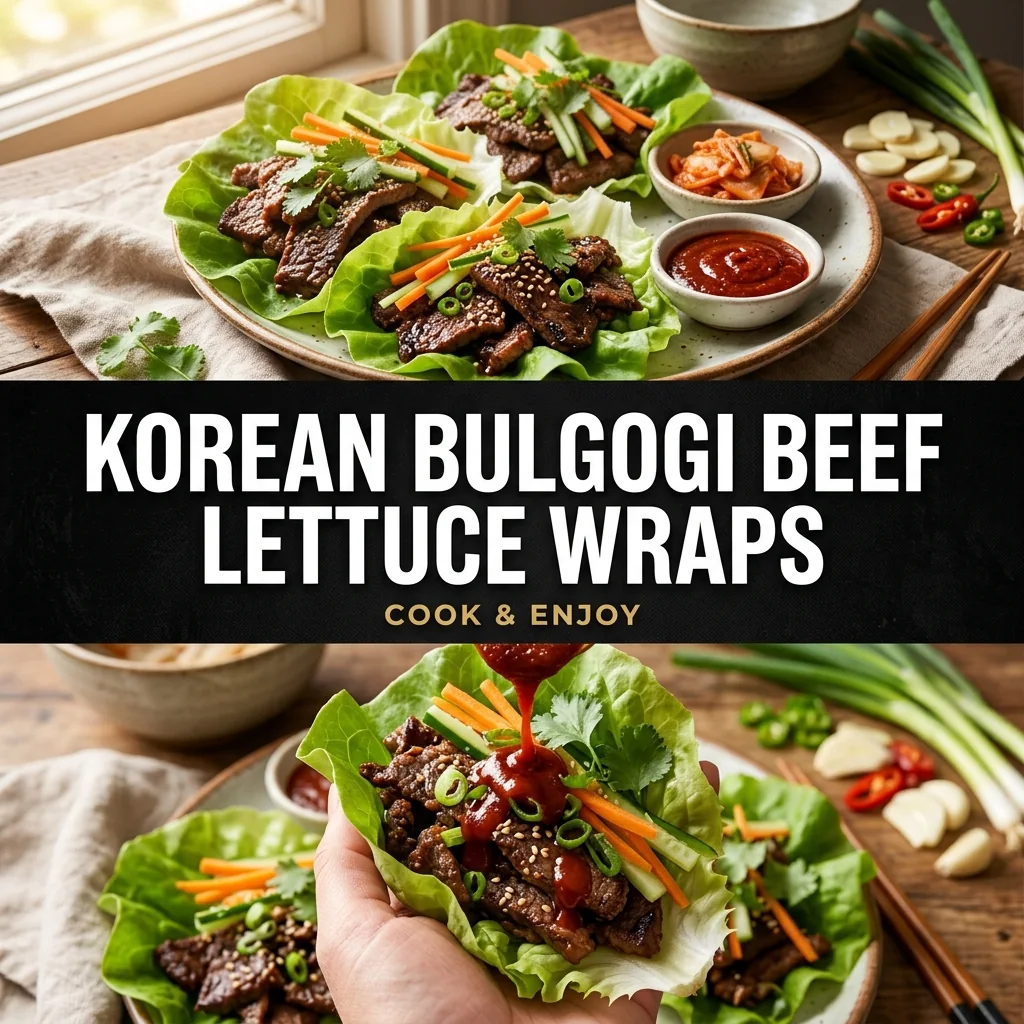
Bulgogi stands as one of the most beloved pillars of Korean cuisine, celebrated for its seductive blend of savory umami, delicate sweetness, and smoky charred edges. This halal-friendly recipe honors authentic preparation methods while avoiding non-halal cooking wines or unverified sauces. Grated Asian pear serves as both a gentle tenderizer and a natural sweetener, pairing harmoniously with robust garlic, fiery ginger, and nutty toasted sesame oil. Searing the paper-thin ribbons of well-marbled ribeye in a screaming-hot cast iron skillet captures the essence of open-flame Korean barbecue right on a home stovetop. Wrapped in crisp, refreshing lettuce cups alongside savory ssamjang and sticky rice, each bite provides a complete sensory contrast of hot and cold, tender and crisp.
The Science of Pear Marinades
Asian pear contains calpain, a natural proteolytic enzyme that tenderizes muscle fibers without turning the meat mushy when monitored carefully. Combined with naturally brewed halal soy sauce and toasted sesame oil, the pear provides a clean, fruity sweetness that balances pungent garlic and ginger. If Asian pears are unavailable at your local market, a ripe Bosc pear or sweet grated apple works as a suitable substitute. Avoid using acidic citrus juices or vinegars here; the Korean bulgogi flavor profile relies strictly on natural fruit sugars and caramelized aromatics.
Knife Skills and Slicing Technique
The defining characteristic of tender bulgogi is its whisper-thin cut. Achieving this at home requires chilling your halal ribeye in the freezer for roughly 20 minutes until the exterior feels firm and resistant to your touch. Using a very sharp chef's knife or slicing knife, shave the beef across the grain into thin ribbons. Cutting across the muscle fibers guarantees that the seared meat separates tenderly when bitten. Well-marbled ribeye is the gold standard for juiciness, but leaner top sirloin or flank steak can also be utilized effectively.
Assembling the Perfect Ssam
Eating bulgogi as 'ssam' (lettuce wraps) is an interactive, communal dining ritual. Butterhead or Bibb lettuce offers a soft, cup-shaped vessel, whereas green leaf or perilla leaves introduce distinct textures and herbal notes. To construct a wrap, lay a lettuce leaf flat in your palm, place a small spoonful of warm sticky rice in the center, top with several hot strips of bulgogi, and dot with a dab of savory ssamjang. Fold the greens inward into a compact packet eaten entirely in one or two satisfying bites.
Before you start
For authentic restaurant-style bulgogi, the beef must be sliced as thin as possible. Partially freezing the meat makes precision knife work effortless. Cooking in two separated batches over smoking-hot cast iron prevents the beef from boiling in its marinade juices, guaranteeing the smoky, caramelized edges that define traditional barbecue. Do not marinate the beef beyond two hours; the natural enzymes in fresh Asian pear are powerful tenderizers that can break the meat fibers down into an unpleasantly soft texture.
THE RECIPE
Korean Bulgogi Beef Lettuce Wraps
4 servings · 25 minutes preparation · 10 minutes cooking · 60 minutes cooling, chilling or resting
Ingredients
Step-by-step instructions
- Place the beef ribeye into the freezer for 15 to 20 minutes until firm but not frozen solid, then slice crosswise against the grain into paper-thin strips roughly 1/8-inch thick.
- In a medium glass bowl, whisk together the grated pear, halal soy sauce, dark brown sugar, toasted sesame oil, minced garlic, grated ginger, and black pepper until the sugar dissolves completely.
- Add the sliced beef and scallion matchsticks to the marinade, tossing with clean hands to ensure every strip is well-coated; cover and refrigerate to marinate for at least 45 minutes, up to 2 hours.
- Heat a large, heavy 12-inch cast-iron skillet or grill pan over high heat for 3 to 4 minutes until smoking hot, then add 1/2 tablespoon neutral cooking oil, swirling to coat the surface.
- Remove half of the marinated beef from the bowl, letting excess marinade drip back into the bowl, and spread the strips in an even, single layer across the hot skillet without overcrowding.
- Sear undisturbed for 2 minutes until caramelized and charred on the edges, then flip with metal tongs and stir-fry for 1 to 2 minutes more until just cooked through; transfer immediately to a warm serving platter.
- Wipe out the skillet with a folded paper towel, add the remaining 1/2 tablespoon oil, and cook the remaining beef batch in the same rapid manner for 3 to 4 minutes total.
- Garnish the hot bulgogi with toasted sesame seeds and serve immediately alongside cold lettuce cups, warm short-grain rice, and bowls of halal ssamjang.
Kitchen notes
For authentic restaurant-style bulgogi, the beef must be sliced as thin as possible. Partially freezing the meat makes precision knife work effortless. Cooking in two separated batches over smoking-hot cast iron prevents the beef from boiling in its marinade juices, guaranteeing the smoky, caramelized edges that define traditional barbecue. Do not marinate the beef beyond two hours; the natural enzymes in fresh Asian pear are powerful tenderizers that can break the meat fibers down into an unpleasantly soft texture.
Storage & make-ahead
Store leftover cooked bulgogi beef in an airtight container in the refrigerator within 2 hours of cooking; keep lettuce leaves stored separately in a paper towel-lined container. The beef keeps well for up to 3 days. To reheat, flash-sear the beef in a hot dry skillet over medium-high heat for 2 to 3 minutes until sizzling and thoroughly warmed to an internal temperature of at least 165 F (74 C). Avoid microwaving, which can make thin beef strips rubbery.
An original recipe guide inspired by themes in our Pinterest research. Recipe has not been independently kitchen-tested. AI-generated image is illustrative; your finished dish may look different.
Frequently asked questions
How do I ensure my bulgogi ingredients are strictly halal?
Source certified halal ribeye, naturally brewed soy sauce free from added alcohol, and check the ingredient list on packaged ssamjang to confirm it contains no cooking wines, spirits, or animal derivatives. Authentic halal-certified Korean condiments are readily available in specialty international markets.
Can I prepare the beef marinade in advance?
You can mix the marinade ingredients and refrigerate them in a sealed jar for up to 3 days. However, do not combine the marinade with the shaved raw beef until 45 to 60 minutes before cooking to prevent over-tenderizing.
Why did my beef release water instead of browning?
Overcrowding the skillet drops the pan's temperature instantly, causing the meat to steam rather than sear. Use high heat, cook in small batches, and drain excess wet marinade from the beef strips before placing them in the skillet.