WHY MAKE IT
A little comfort, a lot of flavor.
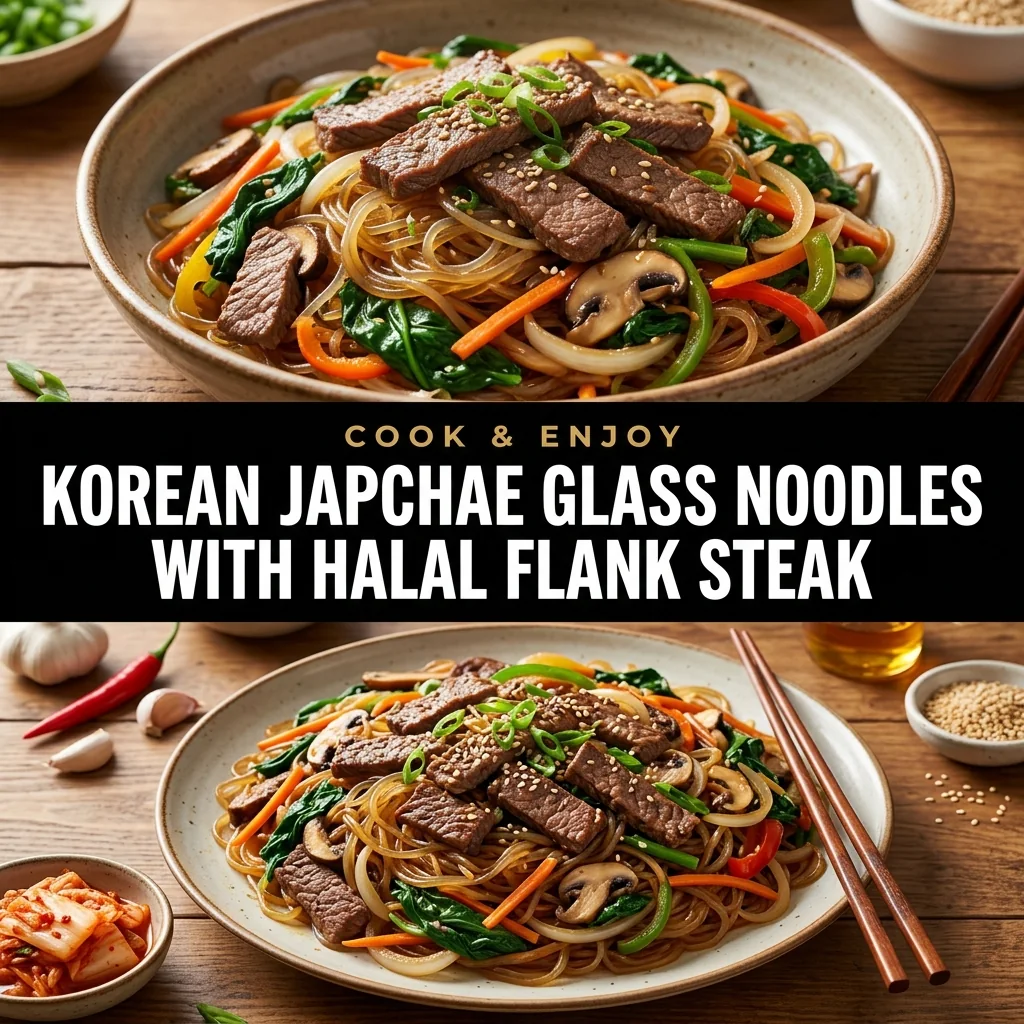
Japchae is a celebrated staple of Korean celebratory dining, renowned for its distinctive sweet potato starch noodles called dangmyeon. When boiled, these translucent glass noodles develop an unmatched chewy, slippery, and bouncy texture that absorbs savory sauces effortlessly. In this halal preparation, succulent strips of halal flank steak are marinated in garlic, brown sugar, and toasted sesame oil before hitting a smoking-hot wok. Accompanied by earthy fresh shiitakes, sweet matchstick carrots, crisp yellow onion, and tender blanched spinach, the dish provides a kaleidoscope of harmonious textures and vibrant colors. Lightly sweetened with unrefined brown sugar and glazed with aromatic toasted sesame oil, japchae can be enjoyed piping hot from the wok or at room temperature.
Mastering Sweet Potato Glass Noodles
Dangmyeon noodles are made purely from sweet potato starch and water, naturally gluten-free and distinct from rice or wheat noodles. When boiled for precisely 7 minutes, they become crystal-clear and extraordinarily chewy. Because they lack fat, hot drained noodles stick together quickly. Rinsing briefly or immediately tossing them with fragrant toasted sesame oil coats each strand, keeping them slick and preventing clumping. Cutting them with kitchen shears allows the tangled starch strands to blend smoothly with the sliced beef and julienned vegetables.
Marinating Halal Flank Steak
Flank steak possesses long, distinct muscle grains that make it an ideal cut for high-heat stir-frying when sliced thinly against the grain. Slicing against the muscle fibers shortens them, ensuring the cooked beef remains wonderfully tender. Marinating halal flank steak in a mixture of naturally brewed soy sauce, garlic, and unrefined brown sugar seasons the beef throughout. Cooking the beef swiftly over high heat ensures deep caramelization on the edges without overcooking the lean interior.
Wok Strategy and Separate Sautéing
Traditional Korean preparation dictates sautéing each vegetable independently to preserve individual textures, moisture levels, and distinct colors. Moisture-heavy vegetables like spinach are blanched and squeezed dry rather than fried, preventing excess water from thinning the savory glaze. Quick stir-frying of carrots and onions leaves them tender-crisp, while mushrooms absorb savory wok oils. Combining all cooked elements off-heat in a grand mixing bowl ensures uniform distribution of the sweet-savory soy sauce without turning delicate produce mushy.
Before you start
Do not skip cutting the sweet potato noodles with kitchen shears after draining. Dangmyeon noodles are exceptionally long, bouncy, and elastic; cutting them makes tossing the components and eating the dish far easier. Cooking each vegetable separately or in quick successive stages prevents overcrowding the pan and maintains each vegetable's unique color, crunch, and delicate texture.
THE RECIPE
Korean Japchae Glass Noodles with Halal Flank Steak
4 servings · 25 minutes preparation · 20 minutes cooking · 23 minutes cooling, chilling or resting
Ingredients
Step-by-step instructions
- In a medium bowl, whisk together 1/4 cup low-sodium soy sauce, 2 tablespoons dark brown sugar, 1 1/2 tablespoons toasted sesame oil, 4 minced garlic cloves, and 1/2 teaspoon black pepper to create the seasoning sauce.
- Place the sliced halal flank steak in a small bowl, spoon 2 tablespoons of the prepared seasoning sauce over it, toss to coat, and let marinate at room temperature for 20 minutes.
- Bring a large pot of water to a boil, drop in 5 ounces of baby spinach for 30 seconds until just wilted, then transfer immediately with a slotted spoon to a colander and rinse with cold water.
- Squeeze all excess liquid from the blanched spinach with your hands, roughly chop it, place in a large mixing bowl, and toss with 1/2 teaspoon of sesame oil.
- In the same pot of boiling water, cook 8 ounces sweet potato noodles for 7 minutes until soft, translucent, and chewy; drain thoroughly and use clean kitchen shears to cut the noodles across several times into manageable lengths.
- Toss the warm drained noodles into the large bowl with the spinach and drizzle with 1/2 teaspoon sesame oil and half of the remaining seasoning sauce.
- Heat 1 tablespoon neutral oil in a 14-inch wok or large skillet over medium-high heat; stir-fry the sliced onion and julienned carrot for 2 to 3 minutes until tender-crisp, then transfer to the noodle bowl.
- In the same hot wok, stir-fry the sliced shiitake mushrooms for 2 minutes, then add the marinated flank steak and cook rapidly for 3 to 4 minutes until browned and the beef registers an internal temperature of at least 145°F (63°C); remove from heat and let rest for 3 minutes.
- Transfer the rested cooked steak and mushrooms into the noodle bowl, pour in the remaining seasoning sauce and the remaining 2 teaspoons toasted sesame oil, and toss everything together thoroughly using kitchen tongs; sprinkle with 1 tablespoon toasted sesame seeds before serving warm or at room temperature.
Kitchen notes
Do not skip cutting the sweet potato noodles with kitchen shears after draining. Dangmyeon noodles are exceptionally long, bouncy, and elastic; cutting them makes tossing the components and eating the dish far easier. Cooking each vegetable separately or in quick successive stages prevents overcrowding the pan and maintains each vegetable's unique color, crunch, and delicate texture.
Storage & make-ahead
Store leftover japchae in an airtight container in the refrigerator within 2 hours of serving. It will keep well for up to 3 days. Sweet potato noodles absorb liquid and firm up when chilled; reheat in a wide skillet over medium heat with 1 to 2 tablespoons of water and a splash of sesame oil until bouncy and reaching 165°F (74°C).
An original recipe guide inspired by themes in our Pinterest research. Recipe has not been independently kitchen-tested. AI-generated image is illustrative; your finished dish may look different.
Frequently asked questions
Can I serve Japchae cold or at room temperature?
Yes, japchae is traditionally served warm or at room temperature. If serving from the refrigerator, allow it to come to room temperature or warm it briefly to restore the elastic bounce of the sweet potato noodles.
What is an acceptable substitute for fresh shiitake mushrooms?
Dried shiitake mushrooms that have been soaked in warm water for 30 minutes and sliced work exceptionally well. Alternatively, standard brown cremini or portobello mushrooms provide a suitable earthy flavor.
Can I use regular cellophane or bean thread vermicelli?
Bean thread vermicelli made from mung bean starch is much thinner and softer than Korean dangmyeon. While edible, it lacks the signature thick, chewy elasticity essential for authentic japchae texture.


