WHY MAKE IT
A little comfort, a lot of flavor.
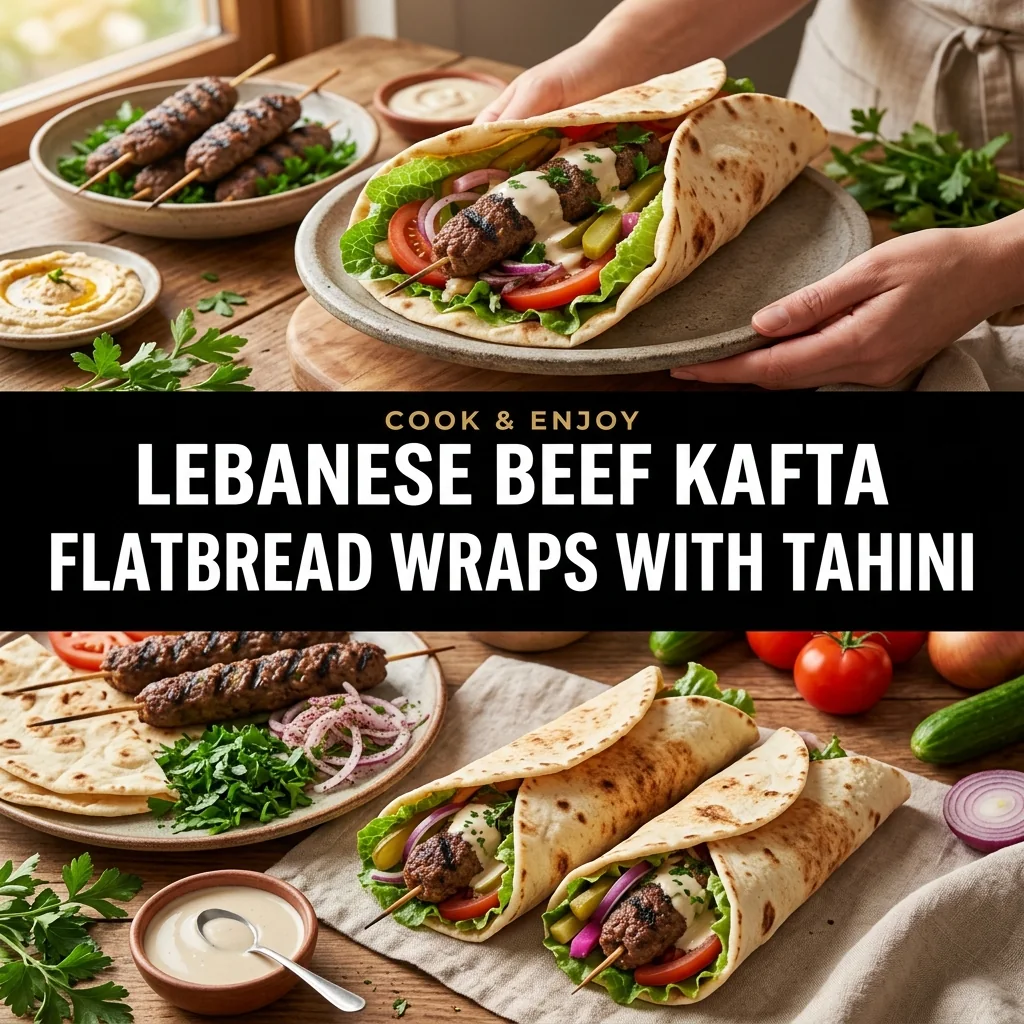
Lebanese beef kafta wraps represent one of the most beloved street foods across the Levant, marrying robust savory spices with the clean crunch of fresh herbs and cooling sesame sauce. The key to authentic kafta lies in blending quality halal beef with finely minced parsley and onion until the mixture achieves an emulsified texture that clings tightly to skewers during grilling. As the meat hits the searing heat, the rendered fat carries the fragrant aroma of allspice and sweet cinnamon throughout the kitchen. Wrapped inside soft flatbread with creamy tahini and a sprinkle of tart sumac, this balanced meal delivers immense satisfaction with straightforward prep.
Emulsifying the Kafta Mixture
Achieving the proper springy texture in homemade kafta requires active kneading rather than gentle folding. When you work the minced beef against the bowl alongside salt and spices, myosin proteins dissolve and create a sticky matrix. This mechanical action ensures the meat binds firmly onto skewers without requiring breadcrumbs or egg binders. Squeezing every drop of moisture from your grated onion is equally critical, as excess free water creates steam pockets that force the meat apart during grilling.
Balancing the Lemon Tahini Sauce
Pure sesame tahini behaves uniquely when whisked with acidic lemon juice, initially seizing into a thick paste before smoothing out as cold water is introduced. Whisk patiently in a small bowl, streaming in cold water one tablespoon at a time until you achieve a glossy ribbon consistency. The sauce should possess enough body to cling to warm flatbread without dripping through the seams, providing a tart, nutty counterweight to the rich beef.
Grilling Technique and Assembly
High, direct heat is essential for developing a caramelized crust while keeping the interior juicy and tender. Use flat, wide metal skewers rather than round wooden sticks, as flat blades prevent the meat from slipping when turned over the griddle. Once seared, allow the meat to rest briefly so the internal juices settle before rolling into warmed flatbread with fresh vegetables and seasoned sumac onions.
Before you start
For the juiciest kafta, do not omit squeezing the liquid out of the grated onions before blending them into the ground beef. Excess vegetable moisture prevents the meat proteins from binding properly, which causes the skewers to crumble over the grates. Resting the mixed meat in the refrigerator allows the natural fat to firm up, ensuring the cylindrical kebabs retain their shape during the initial sear on the hot grill.
THE RECIPE
Lebanese Beef Kafta Flatbread Wraps with Tahini
4 servings · 25 minutes preparation · 15 minutes cooking · 20 minutes cooling, chilling or resting
Ingredients
Step-by-step instructions
- In a large chilled mixing bowl, combine the ground beef, squeezed grated onion, chopped parsley, 1 teaspoon sumac, allspice, cinnamon, sea salt, and black pepper.
- Knead the meat mixture vigorously by hand for 3 minutes until the proteins bind and form a cohesive, slightly sticky paste.
- Divide the seasoned beef into 8 equal cylindrical portions, press each portion securely along flat metal skewers, and transfer to a parchment-lined tray to chill in the refrigerator for 15 minutes.
- While the meat chills, prepare the tahini sauce by whisking together the sesame tahini, lemon juice, grated garlic, and cold water in a small ceramic bowl until light in color and smooth.
- Preheat a cast-iron grill pan or outdoor griddle over medium-high heat to roughly 425 F (218 C) and lightly brush the surface with olive oil.
- Place the chilled skewers on the hot grill pan and cook undisturbed for 4 minutes, turn carefully, and cook for another 4 to 5 minutes until deeply browned on all sides and the internal temperature registers 160 F (71 C).
- Transfer the cooked kafta to a clean cutting board and rest for 5 minutes, then slide the kebabs off the skewers and assemble by rolling two kafta portions into each warmed flatbread with drizzled tahini sauce, sliced cucumbers, and a pinch of remaining sumac.
Kitchen notes
For the juiciest kafta, do not omit squeezing the liquid out of the grated onions before blending them into the ground beef. Excess vegetable moisture prevents the meat proteins from binding properly, which causes the skewers to crumble over the grates. Resting the mixed meat in the refrigerator allows the natural fat to firm up, ensuring the cylindrical kebabs retain their shape during the initial sear on the hot grill.
Storage & make-ahead
Cool remaining cooked kafta portions completely and place into an airtight glass container within 2 hours of cooking; store in the refrigerator for up to 3 days. Keep the prepared tahini sauce in a separate sealed jar for up to 5 days. To reheat leftover kafta safely, place the portions in a covered oven-safe dish with a splash of water at 350 F (177 C) until thoroughly heated through to 165 F (74 C).
An original recipe guide inspired by themes in our Pinterest research. Recipe has not been independently kitchen-tested. AI-generated image is illustrative; your finished dish may look different.
Frequently asked questions
Can I use wooden skewers instead of metal skewers?
Yes, but you must soak wooden skewers in warm water for at least 30 minutes before shaping the meat around them. This moisture barrier prevents the wooden skewers from catching fire or scorching over high direct heat.
Why did my tahini sauce seize up and turn thick?
Tahini naturally thickens and curdles when combined with acidic lemon juice. Continue whisking briskly while gradually adding small splashes of cold water; within moments, the emulsion will relax into a silky, pale, pourable sauce.
Can I shape the kafta without skewers?
Certainly. You can shape the meat into oval patties roughly 3 inches long and cook them flat in a hot cast-iron skillet for 3 to 4 minutes per side until properly browned and cooked through to safe temperatures.